-
 Manufacturing
-
 AI Automation
Manufacturing
AI Automation
One of the largest cement manufacturers was using advanced kiln shell monitoring systems to visualize kiln thermal performance through live thermal graphs. These systems gave operators important visual insights into kiln behavior. The core limitation was that the data remained trapped inside graphical interfaces. It could not be analyzed programmatically, centralized across facilities, or connected to modern analytics platforms.
The manufacturer needed an AI-driven solution that could recast visual kiln thermal data into actionable operational intelligence without replacing existing infrastructure.
Operators had to continuously watch and interpret live thermal graphs manually. There was no automated layer to process or flag what the data was showing.
The operations team had no reliable way to track kiln performance trends in real time across the operation.
Thermal visuals could not be converted into structured operational data. This made integration with any analytics or reporting tool impossible.
Identifying thermal anomalies and early signs of refractory issues depended entirely on manual observation, which introduced delays.
Without structured historical data, the team had no foundation to build predictive maintenance models or forecast refractory behavior.
Each facility operated independently. There was no centralized access to historical kiln thermal intelligence across plants.
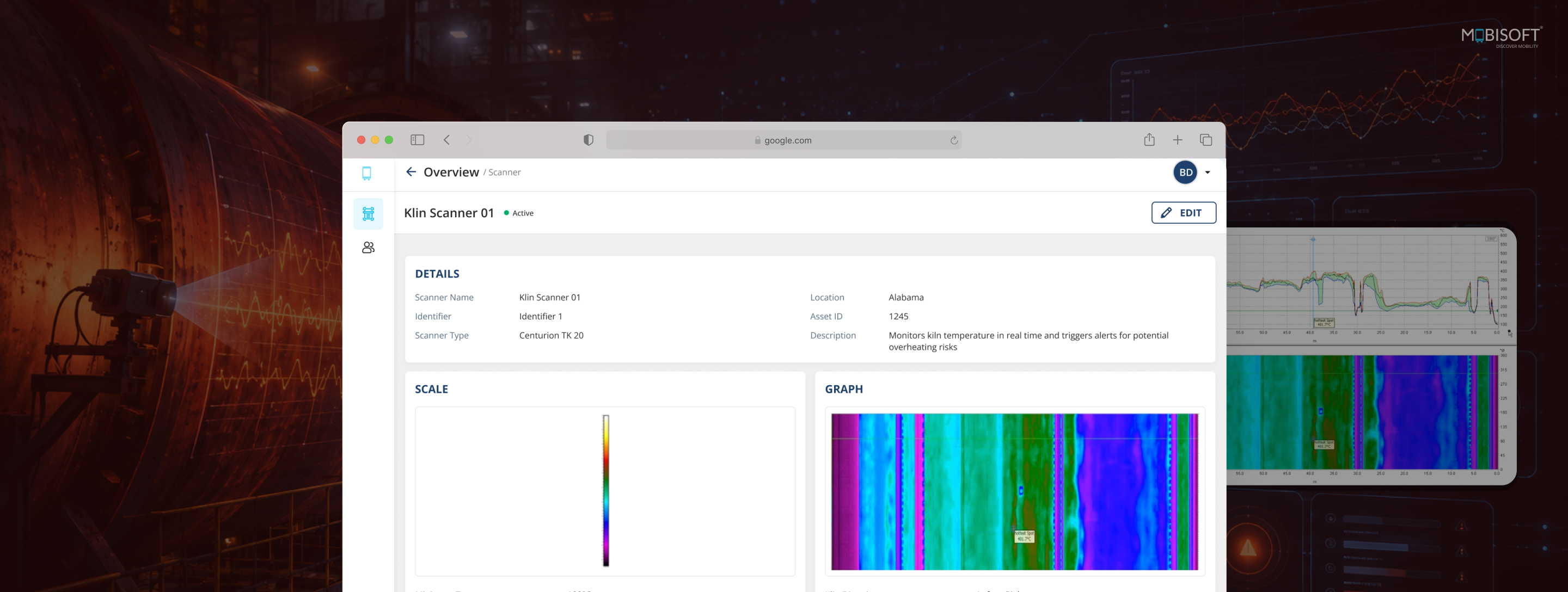
Our team developed an AI and computer vision-based AI-powered automation platform that converts kiln thermal scanner graphs into real-time, cloud-ready time-series data.
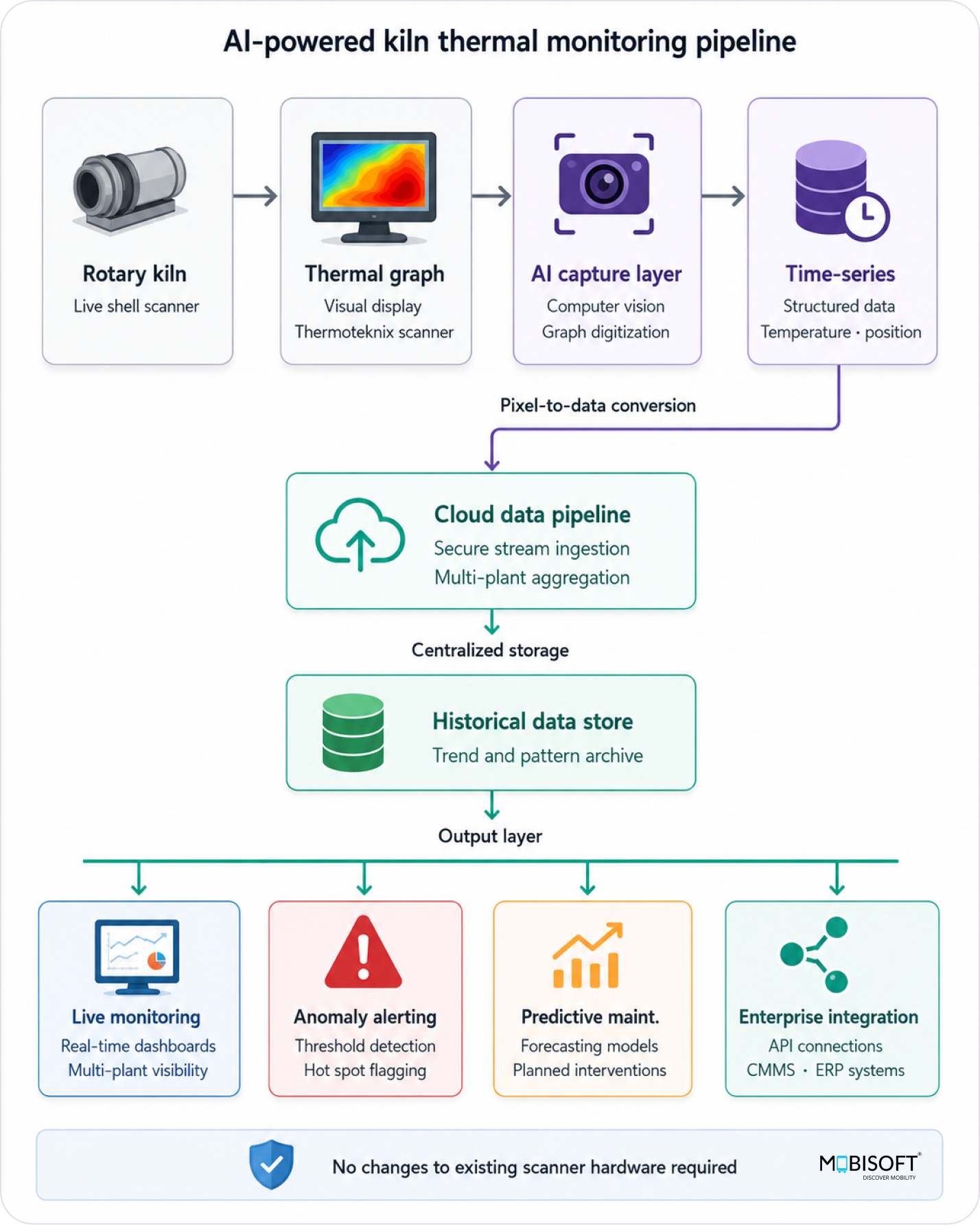
The platform automatically captures live kiln thermal graphs from existing monitoring systems. It then applies AI-powered computer vision algorithms to detect thermal profile curves, trace temperature patterns with high precision, convert graph pixels into structured time-series temperature data, and extract operational insights from legacy visual systems.
This eliminated the need for manual interpretation while enabling continuous digital monitoring across the operation.
Once extracted, the thermal data is securely streamed into a centralized cloud platform. This enables real-time kiln performance monitoring, multi-plant operational visibility, historical trend analysis, automated alerting and anomaly detection, predictive maintenance analytics, and API-based integration with enterprise systems.
Computer vision models transformed visual kiln scanner outputs into machine-readable operational datasets. Data that previously existed only as a rendered graph became a structured, queryable time-series feed.
Continuous monitoring enabled faster identification of abnormal kiln behavior and thermal inconsistencies. The system flagged developing conditions without waiting for manual observation to catch them.
Structured historical data laid the foundation for predictive maintenance and operational forecasting models. The manufacturer now had the dataset needed to move from reactive responses to planned interventions.
The cloud-native solution enabled centralized monitoring across multiple plants and production lines from a single platform.
Plant teams gained immediate access to live thermal intelligence instead of relying solely on manual graph interpretation.
AI-generated operational insights improved response times and reduced monitoring delays across the operation.
Historical thermal datasets enabled proactive maintenance strategies and earlier anomaly detection.
Automation minimized repetitive monitoring efforts and improved overall operational efficiency.
The manufacturer modernized kiln operations without replacing existing kiln scanner infrastructure.
Many industrial organizations already generate valuable operational data, but much of it remains locked inside legacy systems, dashboards, and visual interfaces. This case demonstrates a repeatable pattern that applies across heavy industry.
Every hour your thermal data stays locked in a graphical interface is an hour your team is working without the full picture. Let us show you what is possible.
Book an AI Discovery CallThis content is for informational purposes only and may include AI-assisted research or content generation. While we strive for accuracy, information may evolve over time. Readers are advised to independently verify critical information before making decisions.