Overview

This case study documents the design and deployment of a production-grade Kubernetes cluster built on bare-metal dedicated servers from an affordable cloud provider. The solution delivers a complete DevSecOps pipeline. It includes distributed storage, centralized logging, and automated CI/CD workflows. The team achieved full infrastructure control while maintaining strict cost efficiency.


Key Outcomes


  • Self-managed Kubernetes cluster on bare-metal servers
  • 70 to 80% cost savings compared to managed Kubernetes services
  • Complete ownership of infrastructure and security
  • Enterprise-ready observability with centralized logging
  • Automated CI/CD process supported by a monorepo architecture

Key Challenges

Organizations face a critical decision when deploying Kubernetes: managed services versus self-managed clusters. While managed services offer convenience, they come with:

  • High monthly costs with managed services such as EKS, GKE, and AKS
  • Limited customization options in managed Kubernetes environments
  • Vendor lock-in concerns due to platform dependencies
  • Reduced control over infrastructure-level security configurations
  • Additional network egress charges
  • Premium pricing required for enterprise-grade features

Solution: Bare-Metal Kubernetes Platform

The team selected bare-metal servers from a cost-effective cloud provider. Multiple industry benchmarks supported this decision.
Cost Optimization


  • Predictable monthly billing with dedicated hardware
  • No managed service markups or egress charges

Performance


  • Direct hardware access with zero virtualization overhead
  • Network latency is three times lower on bare-metal compared to VMs
  • Container performance improves by 25 to 30% on bare-metal
  • VMs retain 99% of bare-metal performance, yet the remaining 1% matters at scale

Control


  • Full control across the stack
  • Single-tenant architecture improves security
  • Custom kernel and hardware tuning
  • No vendor lock-in or platform restrictions

Security


  • Isolated private network with custom policies
  • Enhanced compliance support
  • Full control over all security configurations
  • Reduced attack surface with dedicated infrastructure

Flexibility


  • Customization at every layer
  • Tailored configurations for diverse workloads
  • Strong support for ML and analytics-heavy applications

Business Objectives


  • Build a production-ready Kubernetes environment
  • Control operational costs
  • Ensure high availability and data persistence
  • Establish strong observability
  • Automate deployments through CI/CD
  • Meet security and compliance standards

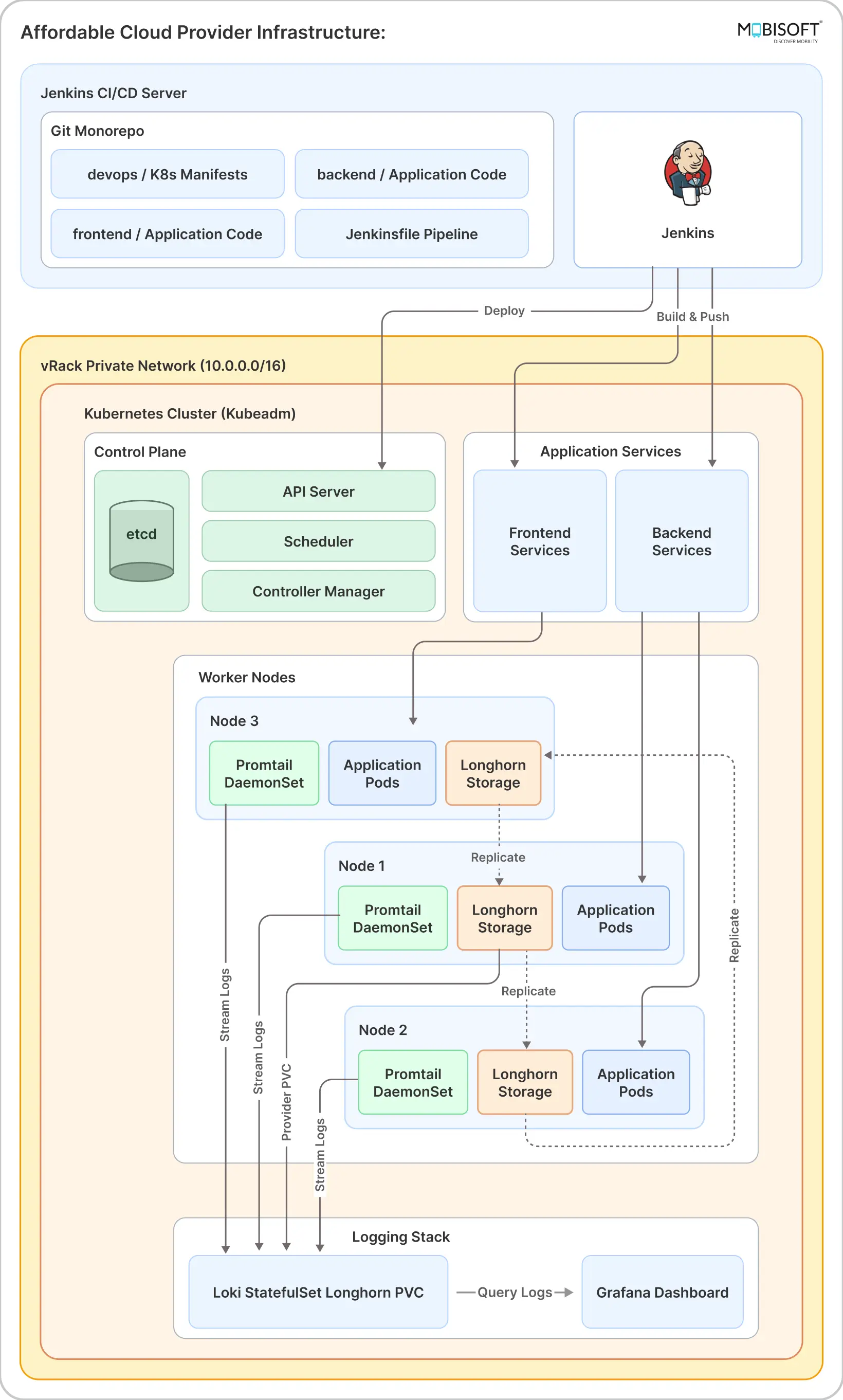
Technical Architecture


Infrastructure Foundation


Hosting Platform


  • Provider: Affordable cloud provider
  • Server Type: Bare-metal dedicated servers
  • OS: Ubuntu 24.04 LTS
  • Kubernetes Distribution: Kubeadm (self managed)

Network Architecture


  • Private network through vRack
  • Isolated public and private interfaces
  • Secure internal communication

Complete CI/CD Pipeline


Infrastructure Components


Kubernetes Control Plane (Kubeadm)

Purpose: Orchestration and management of containerized workloads

Components:

  • kube-apiserver: REST API for cluster operations
  • kube-scheduler: Pod placement decisions
  • kube-controller-manager: Maintains desired state
  • etcd: Distributed key-value store for cluster data

Why Kubeadm:

  • Industry-standard installation method
  • Full control over cluster configuration
  • Easy upgrades and maintenance
  • Active community support
  • Production-ready certification

Configuration Highlights:

  • Custom pod network CIDR for vRack integration
  • Configured for high availability
  • Integrated with private network for secure communication
  • Certificate management with automatic rotation

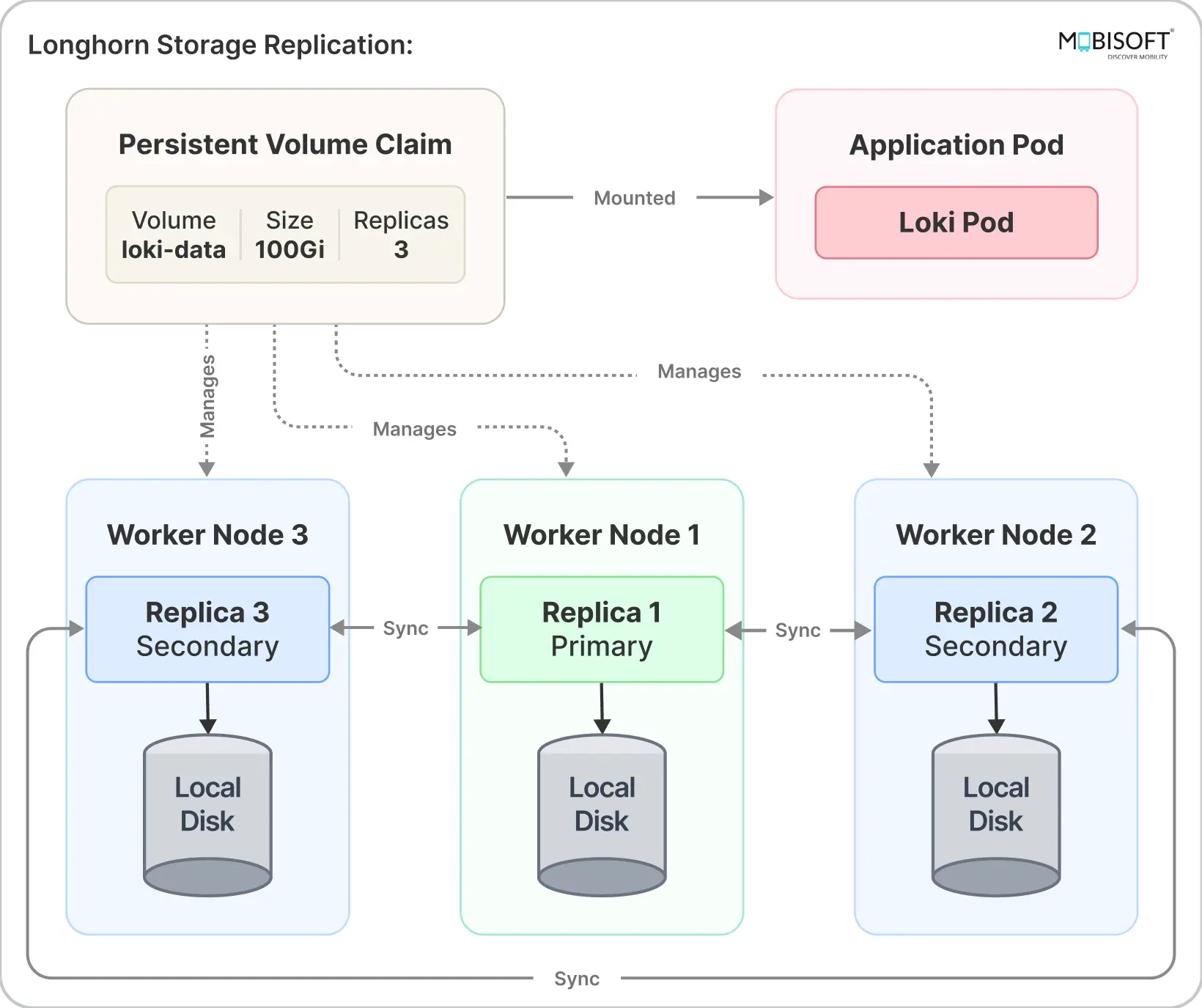
Storage Layer - Longhorn

Purpose: Cloud-native distributed block storage for Kubernetes

Architecture:

  • Distributed storage across all worker nodes
  • Replication factor configurable per volume
  • Thin provisioning with over-commit support
  • Incremental snapshots and backups

Key Features:

  • Container Storage Interface (CSI): Native Kubernetes integration
  • Replication: Data redundancy across multiple nodes
  • Snapshots: Point-in-time volume snapshots
  • Backups: Secondary backup to S3-compatible storage
  • Web UI: Centralized management dashboard

Benefits:

  • No dependency on cloud provider storage
  • Cost-effective compared to cloud block storage
  • High performance with local storage
  • Built-in disaster recovery features

Longhorn Storage Replication:


Complete CI/CD Pipeline


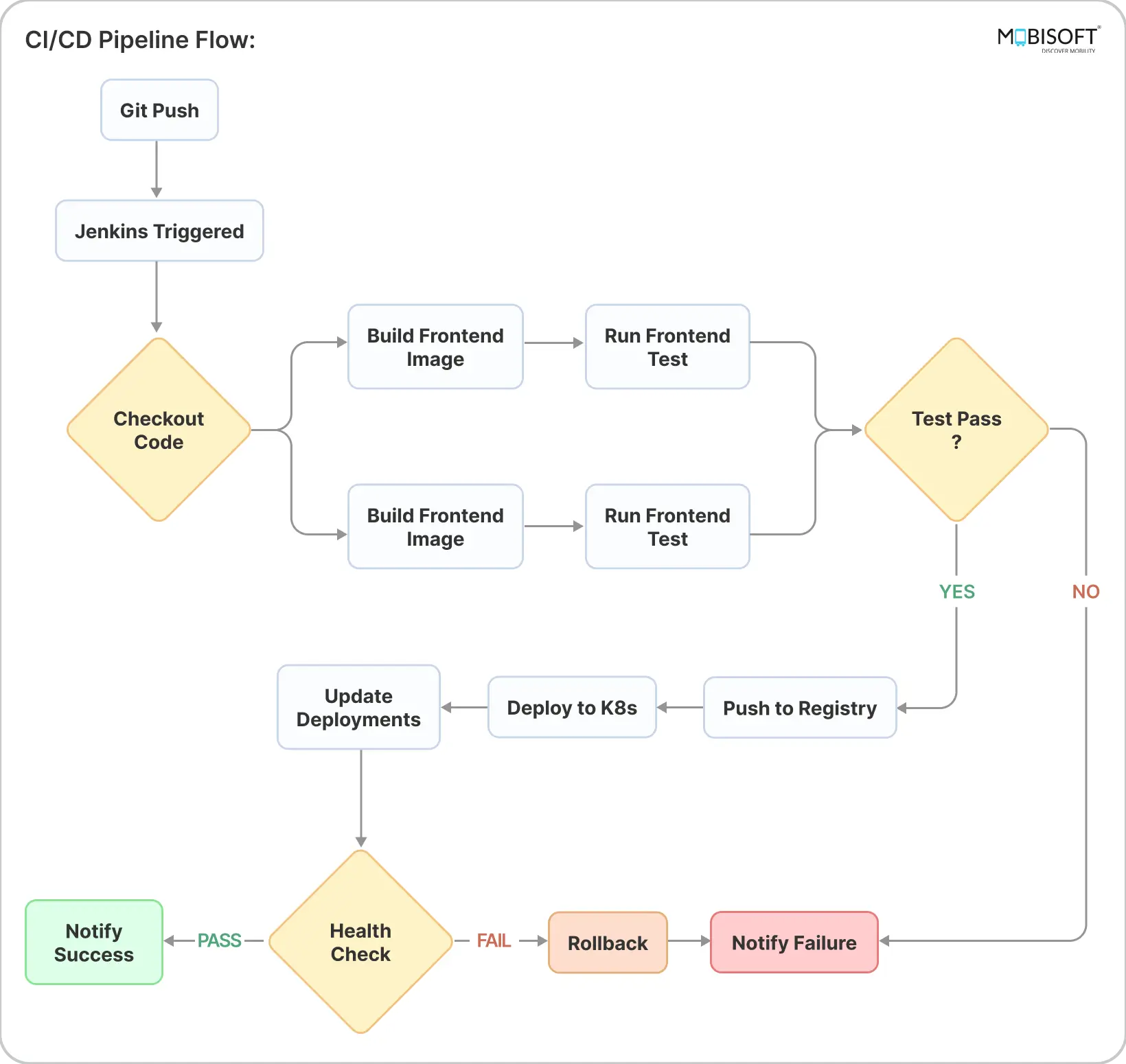
CI/CD Pipeline - Jenkins with Monorepo

Architecture: Single repository containing all application components

Monorepo Benefits:

  • Single source of truth for all code
  • Atomic commits across multiple services
  • Simplified dependency management
  • Consistent versioning
  • Easier refactoring across services

Integration Points:

  • Git webhooks trigger builds automatically
  • Docker registry for image storage
  • Kubernetes API for deployments
  • Slack/email notifications for pipeline status

CI/CD Pipeline Flow:


Complete CI/CD Pipeline


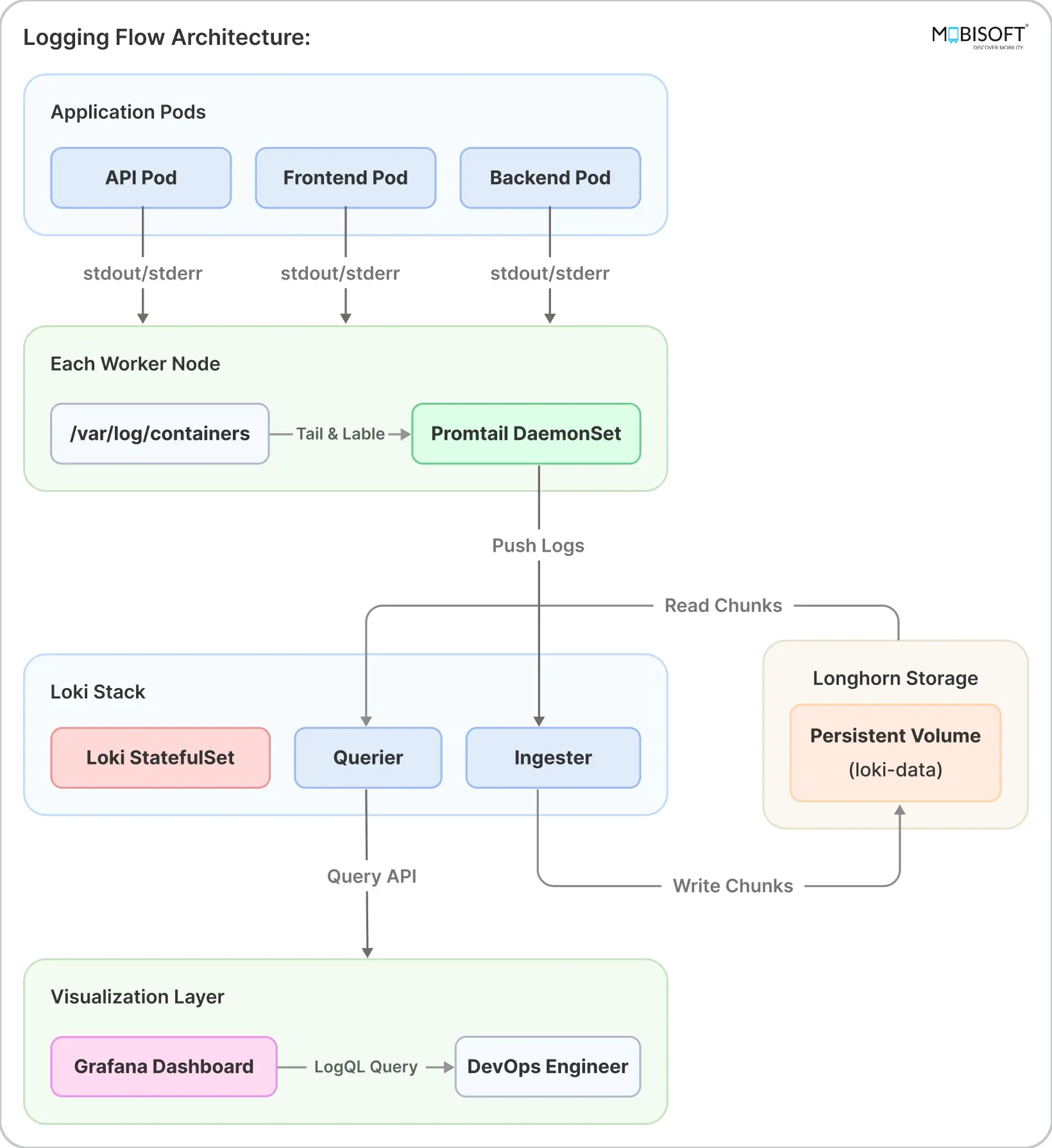
Logging Stack - Loki + Promtail + Grafana

Architecture: Modern log aggregation inspired by Prometheus

Promtail

Deployment: DaemonSet (runs on every node)

Responsibilities:

  • Discovers log files from containers
  • Attaches metadata labels
  • Parses and processes log lines
  • Streams logs to Loki

Loki

Deployment: StatefulSet with Longhorn PVC

Architecture:

  • Index-free log aggregation
  • Label-based organization (like Prometheus)
  • Object storage for log chunks
  • Efficient compression

Storage Requirements:

  • Persistent volume for index and chunks
  • Longhorn provides replication
  • Configurable retention policies

Grafana

Purpose: Visualization and dashboard platform

Features:

  • Loki data source integration
  • LogQL query language
  • Pre-built dashboard templates
  • Alert management
  • User access control

Dashboard Examples:

  • Application error logs
  • Request/response logs by service
  • Container restart events
  • Resource usage correlation

Benefits:

  • Cost-effective (no per-GB indexing cost)
  • Easy to operate and scale
  • Powerful query language
  • Integrated with existing Grafana dashboards
  • Low resource overhead

Logging Flow Architecture:


Complete CI/CD Pipeline

Cost Analysis


Bare-Metal Cost Breakdown

  • Three dedicated servers: ~$300 per month
  • vRack: No cost
  • Bandwidth: No cost for 1Gbps with 5TB included
  • Total monthly cost: ~$300/month
  • Annual cost: $3,600-4,000

Advantages

  • No egress bandwidth charges
  • No load balancer fees
  • No managed service premiums
  • Predictable spending
  • Higher performance per dollar

Trade-offs

  • Additional operational work
  • Manual updates and maintenance
  • Need for internal expertise
  • No automatic scaling for the control plane

Bare-metal is effective when:

  • Teams understand Kubernetes operations
  • Cluster is relatively stable
  • Workloads scale predictably
  • The organization values infrastructure control

Not recommended for:

  • Small team without K8s experience
  • Rapid scaling requirements
  • Limited operational resources
  • Prefer managed services
  • Need 24/7 support SLA

Conclusion

The SaaS company successfully transformed its cloud deployment process. This helped them build a fully automated software delivery ecosystem. They brought together infrastructure automation, continuous deployment, and security monitoring. This completely changed the way their platform operates in the cloud.

The combination of Terraform for infrastructure management and GitHub Actions for CI/CD automation delivered measurable business value. Teams can now deploy with confidence multiple times per day, maintain complete security compliance, and respond to customer needs faster than ever before.

Key Success Factors


  • Strong Kubernetes expertise
  • Clear architectural planning
  • Reliable tools such as Longhorn, Loki, and Jenkins
  • Early automation for deployments
  • Deep observability from day one

Appendix

Technology Stack Summary

Component Technology Purpose

Infrastructure

Affordable Cloud Provider

Dedicated servers

OS

Ubuntu 24.04 LTS

Operating system

Network

vRack

Private networking

Orchestration

Kubernetes (Kubeadm)

Container orchestration

Storage

Longhorn

Distributed block storage

CI/CD

Jenkins

Automation pipeline

Repository

Self Hosted Gitlab

Source code management

Log Collection

Promtail

Log agent

Log Storage

Loki

Log aggregation

Visualization

Grafana

Dashboards


Key Metrics

  • Cluster Size: 3+ nodes
  • Storage Replication: 3x
  • Log Retention: 30 days
  • Deployment Frequency: Multiple per day
  • Cost Savings: 50-70% vs managed K8s
  • Setup Time: 5-6 weeks

Ready to accelerate your cloud infrastructure with automated DevOps?