




















Disconnected healthcare systems lead to inefficiencies, data inaccuracies, and compliance risks. Our healthcare system integration solutions bridge these gaps by ensuring seamless communication between providers, payers, health tech startups, and medical systems.
Key Challenges We Solve:
Difficulty in exchanging data between disparate healthcare systems.
Ensuring adherence to HIPAA, HL7, FHIR, and ONC standards.
Implementing robust security protocols for safe data exchange.
Automating administrative tasks to reduce overhead.
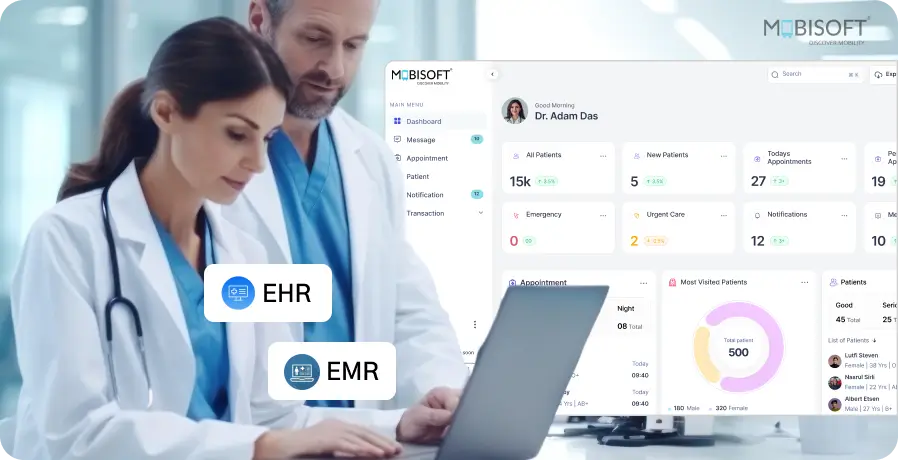
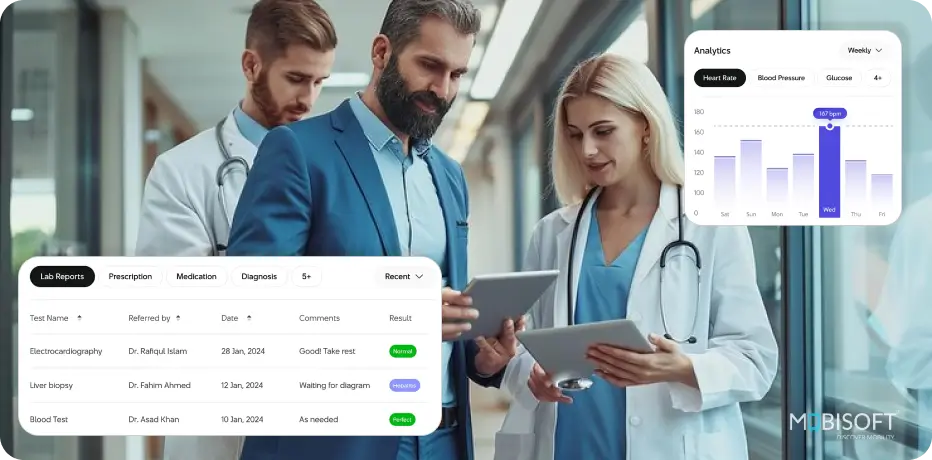
From EHR and HL7 integration to HIE, RCM, APIs, and telehealth, we connect every part of your care ecosystem.
Our healthcare third-party integration capabilities extend your platform with tools for medication, coding, sign-on, video, EMS compliance, and monitoring.
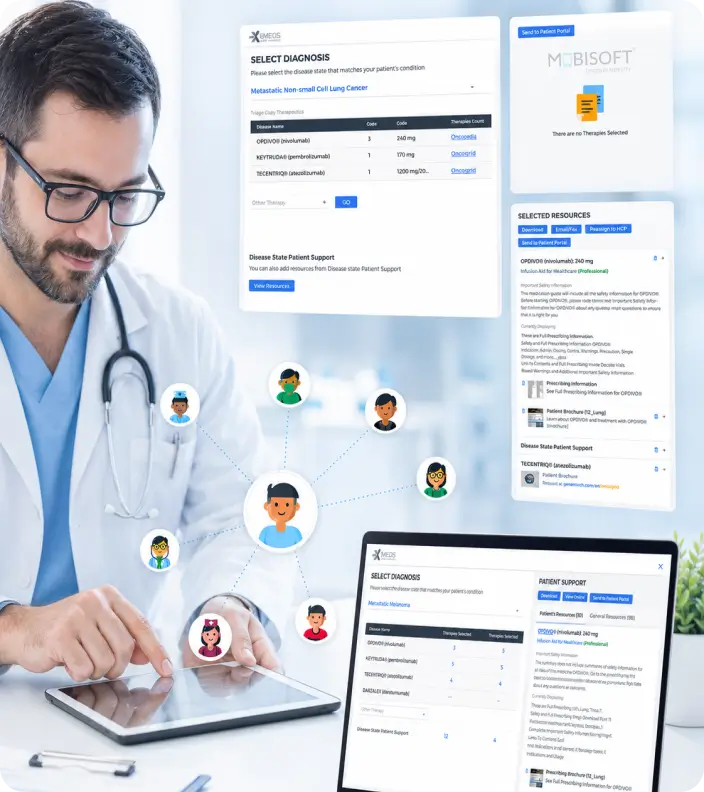
A Medication Management & Decision Support tool that enables accurate medication selection under patient charts. It provides comprehensive drug data, including interactions and adverse effects, and enhances clinical decisions.
A useful tool for Clinical Data & Medical Coding. This enables quick and efficient ICD-10 code search for accurate diagnosis and billing, enhances the efficiency of EHR systems, and reduces errors in medical documentation and claim processing.
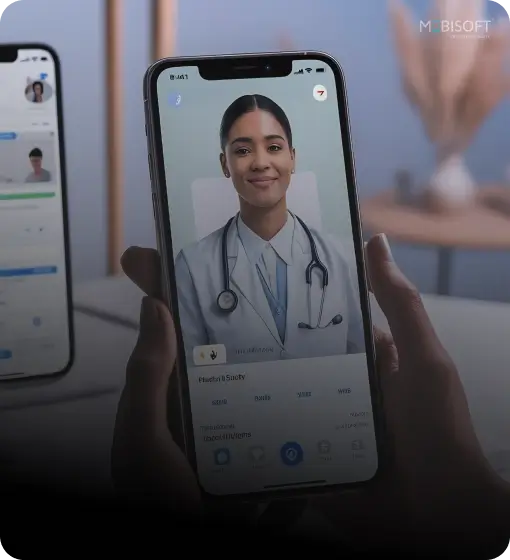
VSee provides a HIPAA-compliant telehealth platform for video consultations that enables virtual clinic setup with real-time doctor-patient interaction. It has great support for secure documents and medical image sharing during consultations.
Okta Integration implements secure authentication and single sign-on (SSO) for healthcare platforms, ensuring HIPAA-compliant access control to secure patient data.
Zoom service enables secure and scalable video conferencing for healthcare teams. It’s well-known and proven to be compliant with HIPAA and data security standards, with high-quality video and audio.
This service ensures adherence to EMS (Emergency Medical Services) data standards and facilitates accurate data storage and secure transmission between emergency care providers.
Telnyx is a secure and HIPAA-compliant faxing service for medical records and prescriptions, which ensures fast, cloud-based document transmission for healthcare providers. Twilio supports secure SMS and automated notifications and video consultations for patient engagement, improving accessibility to healthcare. Enhances communication between patients, providers & caregivers.
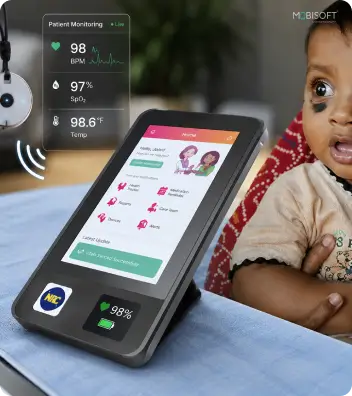
TelliHealth and HealthSaas are Remote Patient Monitoring (RPM) services to test vitals such as blood pressure, glucose levels, and ECG, using IoT-enabled medical devices. Such services are found to be quite helpful in enhancing chronic disease management and telemedicine capabilities, and in improving proactive patient care.
Better patient care, less manual work, stronger compliance, scalable architecture, and seamless healthcare system connectivity across your systems.
Real-time access to accurate health records for better decision-making.
Reduced administrative burden and automated workflows.
Ensuring HIPAA, GDPR, FHIR, HL7, and ONC compliance from the start.
Secure and scalable cloud-based architecture with AI-driven insights.
Connecting EHRs, payers, HIEs, telehealth, and IoMT seamlessly.
16+ years of experience in healthcare technology and integration.
Successful implementations across hospitals, payers, and startups.
Secure data handling with encryption and access control.
Adherence to global healthcare data protection laws and standards.
Cloud-native infrastructure for flexible and scalable integrations.
AI-powered insights and automation for enhanced performance.
24/7 expert assistance for ongoing maintenance and troubleshooting.
Personalized integration strategies tailored to unique business needs.
Our healthcare software integration services support providers, home health, payers, startups, pharma, device and IoMT companies, and MIHCP organizations.


Explore how our healthcare interface development helped organizations connect their systems.
Our five-step approach to healthcare data integration runs from assessment and strategy to testing, deployment, and ongoing support.
Identifying key challenges and regulatory requirements.
Understanding your existing systems and integration needs.
API development and interoperability planning.
Crafting secure, scalable, and future-proof integration frameworks.
Ensuring seamless data flow across all healthcare touchpoints.
Custom API development, HL7/FHIR configuration, & system integration.
Conducting rigorous testing for seamless deployment.
Verifying security, performance, and regulatory compliance.
Future enhancements for evolving healthcare needs.
Continuous monitoring and proactive issue resolution.
Connect systems, eliminate data silos, and improve care coordination through robust healthcare integration services.
Schedule a Discovery CallYes, our healthcare integration services run in parallel with your existing systems before any cutover. We test every connection point in a staging environment and only switch over once validation passes. Clinical and billing teams keep working without any disruption.
We isolate each integration in its own test environment before touching production data. Rollback procedures are documented and rehearsed ahead of go-live, so a failed connection point does not take down the live EHR. This keeps patient-facing systems protected during the transition.
Cost for healthcare system integration across a multi-site network depends mainly on the number of EHR instances and third-party systems involved. We provide a fixed-scope quote after a short discovery assessment, so there are no surprise change orders mid-project. Most hospital networks see the investment pay back through reduced manual billing work within a year.
Yes, our healthcare integration solutions include a dedicated workstream for post-merger system consolidation. We reconcile duplicate patient records, merge EHR instances, and align billing systems under one architecture. This keeps compliance intact while the two organizations operate as one.
Most clients see a measurable drop in manual entry errors within 60 to 90 days of go-live. Automated data exchange between systems removes the double entry that causes most transcription mistakes. Full impact becomes clear once a complete billing cycle runs through the new integration.
Yes, our healthcare system integration services are built on APIs designed to onboard new payer connections without a system rebuild. We add each new payer through a standard configuration process rather than custom development. This keeps your connectivity layer stable as your payer network grows.
Discover trends, insights, and strategies for digital success