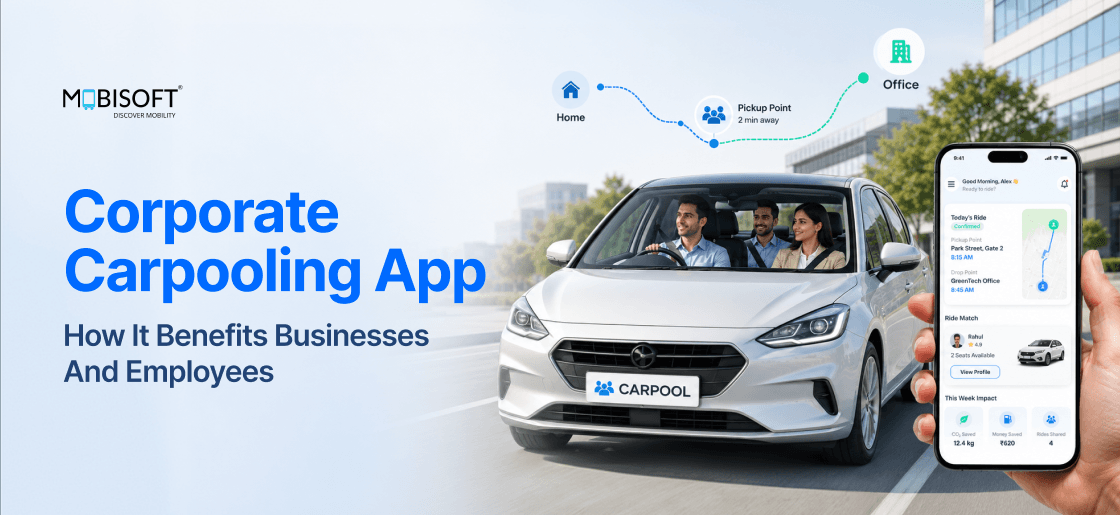
Employees today want an easy commute. They don’t want the travelling to drain their entire day. Rising fuel prices make every trip feel more expensive. Traffic congestion also keeps getting worse across most cities. Whether someone commutes daily or works a hybrid schedule, reliable transport matters equally. Corporate carpooling software gives both groups a practical answer. It connects employees heading in the same direction into shared rides. Shared rides cut fuel costs and reduce vehicles on the road. Hybrid employees benefit just as much as full-time commuters do. Fewer wasted hours in traffic mean a calmer start to work.
Businesses also see fewer parking headaches and lower transport costs. Route planning stops being a manual task for admins too. Planning a ride should feel effortless, not like another daily chore. A well-built enterprise carpooling platform makes that possible for every employee. It matches riders by route, timing, and office location automatically. Drivers, admins, and passengers all stay connected through one simple system. This blog looks at how a connected platform works today. You will see the features, costs, and benefits worth knowing about. Let’s dive in.
Why Employee Commuting Is Back In The Spotlight
Office attendance policies have tightened sharply over the past year. Commute quality now directly affects hiring and retention outcomes. Executives who once treated transportation as a side issue are rethinking that stance.
Attendance Mandates Keep Getting Stricter
Nearly 89 percent of employers now require three or more office days weekly. That number sat at 78 percent just one year earlier. Fixed in-office day requirements have also grown across most industries. Roughly 62 percent of organizations now enforce set attendance schedules. Very few companies still allow fully remote arrangements for most roles.
Employees Are Pushing Back On Rigid Policies
Employees are responding to this shift with clear expectations. About 28 percent say a shorter commute would ease their return. Separately, 62 percent say an inconvenient office location keeps them away. Many workers admit they would consider leaving over rigid mandates. These numbers show commuting is no longer a side issue. It sits at the center of workforce planning decisions today. Businesses that ignore this reality risk losing strong talent.
The Market Is Responding
The rideshare market reflects how businesses are caring about their employees’ commute. Industry estimates place the global market near 59 billion dollars in 2026. That figure is projected to surpass 100 billion dollars by 2031. Growth at that pace signals sustained demand for smarter commute tools. A modern corporate carpooling app sits right at the center of that demand.
HR leaders and mobility teams are now evaluating vendors more carefully than before. Budget owners want proof of impact before signing multi-year contracts. That scrutiny is pushing vendors to build stronger reporting and analytics tools.
What Is Corporate Carpooling Software
Corporate carpooling software is a platform that matches employees for shared rides. It studies shift timings, office locations, and home addresses. The system then groups employees traveling similar routes together automatically. Matching happens in seconds instead of through manual spreadsheets.
How It Differs From A Public Carpool App
This differs from a basic corporate carpooling app built for the public. A workplace-focused system integrates with HR systems and shift schedules directly. It also gives fleet managers dashboards to monitor rides in real time. Every trip gets logged, timestamped, and made available for review later. The goal stays simple across every deployment. Make commuting safer, faster, and more predictable for every employee.
Why Businesses Choose Custom Platforms
Many companies now build custom platforms instead of relying on generic apps. A tailored corporate carpooling solution matches specific shift patterns and office policies. This approach gives businesses far more control over ride quality and safety. It also lets companies enforce internal rules around passenger limits and routes.
A Quick Example
Consider a company with three hundred employees across two office locations. Shift start times vary between early morning and late afternoon teams. A carpooling platform groups riders by proximity and shift within minutes. Drivers see optimized routes before their first pickup each day. Admins watch ride completion rates from a single dashboard view. This kind of visibility was nearly impossible with manual coordination before.
Essential Features In A Modern Employee Carpooling App
A strong corporate carpooling app needs more than basic ride matching. The right feature set determines whether employees actually adopt it. Weak adoption often traces back to missing or clunky features.
Core Features Every Employee Carpooling App Needs
| Feature | Why It Matters |
| GPS Ride Tracking | Lets employees and admins monitor rides live |
| Shift-Based Matching | Groups riders by shift timing and route overlap |
| In-App Payments | Removes cash handling and simplifies fare splitting |
| Driver Verification | Confirms driver identity before every scheduled ride |
Smaller Details That Drive Adoption
Beyond these core features, employees also expect a few conveniences. Fast profile setup makes onboarding smooth from day one. In-app chat lets riders coordinate pickup details directly with drivers. Ride history logs help employees track fare, time, and distance. Push notifications keep riders informed about delays or route changes. Feedback and rating tools let employees flag issues after each ride. Together, these details shape whether an app feels trustworthy.
Getting The Architecture Right
Combining these features requires strong backend architecture and reliable APIs. A dedicated rideshare platform development partner can help design this system correctly. This matters especially when a platform needs to scale across multiple offices. Poor architecture early on often causes costly rework later. A capable development partner also plans ahead. Future feature additions should factor into the plan from day one.
How To Choose The Right Corporate Carpooling Solution
Selecting the right platform requires looking past flashy features alone. A few practical questions help narrow down the right fit for your workforce.
Questions Worth Asking Every Vendor
Does the platform integrate cleanly with existing HR and shift systems? Can the software scale as headcount grows across locations? Does the vendor offer real support after the platform goes live? Answering these honestly avoids costly platform switches later.
Checking Vehicle Upkeep Support
Businesses running mixed fleets should also check vehicle upkeep support. Reliable fleet maintenance software keeps vehicles road-ready and reduces unexpected downtime. This becomes especially important for companies running dedicated shuttle routes alongside carpooling. A single missed inspection can disrupt an entire route.
Vendor contracts should spell out response times for repairs clearly. Ask how quickly a replacement vehicle gets deployed during downtime. Preventive maintenance schedules also matter more than reactive fixes. Businesses that skip this step often face higher costs later. Well-maintained vehicles also keep employee trust in the overall program intact. A short checklist during vendor selection can prevent most of these headaches early.
Carpooling Versus Shuttle Programs
Some businesses need shuttle routes rather than one-to-one ride matching. Choosing the right model depends entirely on workforce size and office spread.
In that case, dedicated shuttle app development services can help. These teams build systems suited to fixed routes and schedules. Large campuses often benefit from a hybrid of both models.
Matching The Model To Your Workforce
A dedicated shuttle setup works well for large campuses. Carpooling apps tend to suit distributed teams with varied commute routes better. Evaluating both options before committing saves time and budget later. Piloting one location first also reduces overall rollout risk.
Corporate Carpooling Software Implementation Roadmap
Rolling out a new platform works best in clear stages. Rushing this process usually creates confusion among early users.
Assess Current Commute Patterns
Start by mapping where employees actually live and work. Shift timings and office locations shape the entire matching logic. This data becomes the foundation for every route the system builds.
Survey employees about current commute pain points directly. Long wait times, unsafe routes, and high costs surface quickly this way. That feedback often reveals which office locations need attention first.
Pilot With One Office Or Team
Launching everywhere at once creates unnecessary risk early on. A single-office pilot surfaces bugs before they affect the whole company. Feedback from this smaller group shapes the wider rollout plan.
Track adoption rates, ride completion numbers, and support tickets closely. These metrics reveal whether the corporate carpooling app actually fits daily habits. Adjust matching rules or features based on what the pilot shows.
Scale Across Locations And Shifts
Once the pilot performs well, expand to additional offices steadily. Each new location may need slightly different routing rules. Shift patterns, traffic conditions, and vehicle availability all vary by site.
Ongoing training for admins keeps the rollout smooth during expansion. Clear communication with employees also reduces confusion during each new phase. A phased approach protects both the budget and employee trust throughout.
Three Trends Defining Today’s Corporate Carpooling
Mobility technology has moved fast over the past two years. Three trends stand out for any business evaluating a carpool program. Understanding them helps leaders make smarter platform decisions early. Choosing the right rideshare management software now shapes commute strategy for years ahead.
Return To Office Mandates Are Raising The Stakes
Stricter attendance policies mean more employees need reliable transportation daily. Public transit alone often cannot handle this demand consistently. Delays, overcrowding, and route changes disrupt schedules on a regular basis. Employees arriving late affect meetings, shift handovers, and team output.
A dependable employee transportation app removes this uncertainty for staff. It gives HR teams a tool to support mandatory attendance policies. Employees get a predictable ride instead of hoping the train runs on time. This predictability reduces stress before the workday even begins.
AI-Powered Route Matching Is Replacing Manual Scheduling
Manual ride coordination used to eat up hours of admin time. Someone had to map routes, confirm seats, and adjust for changes. AI now handles this matching instantly and far more accurately. Modern employee carpooling software analyzes traffic, distance, and shift overlap in seconds.
It also improves ride safety and route efficiency together. Drivers get optimized paths that account for live road conditions. Employees receive accurate pickup windows instead of vague estimates. Fewer last-minute changes mean fewer missed rides overall.
Sustainability Reporting Is Becoming A Business Requirement
Many companies now report emissions data to investors and regulators. Employee commuting makes up a meaningful share of that footprint. A workplace carpooling app gives businesses hard data to include in these reports. This data used to be nearly impossible to track accurately.
Fewer vehicles on the road directly reduce fuel consumption and emissions. This data also strengthens corporate social responsibility disclosures. Sustainability has moved from a nice extra to a tracked metric. Investors increasingly expect this data during annual reviews.
Pros And Cons Of A Corporate Carpooling System
Every technology investment carries tradeoffs worth understanding upfront. Corporate carpooling software is no exception to this rule. Weighing both sides helps businesses set realistic expectations before launch.
Advantages Businesses Gain
A carpooling platform delivers value across several business functions at once. It touches operations, employee experience, and long-term cost planning together.
- Better stakeholder visibility: Admins, drivers, and fleet managers all see ride data in one dashboard.
- Flexible and scalable architecture: Businesses can add routes, shifts, or locations as headcount grows.
- Data-backed transportation policy: Ride history and KPIs help shape smarter commute decisions over time.
- Custom feature development: Businesses can request features suited to their specific workforce needs.
- Consistent performance monitoring: Teams can track rider behavior, app usage, and service quality continuously.
Challenges To Plan For
No platform works perfectly without proper planning and maintenance. Two challenges come up consistently during rollout.
Building a platform from scratch takes real time and coordination. Integrations with HR systems and shift tools add further complexity. Testing across multiple office locations also extends the development timeline. Ongoing maintenance also demands attention after the initial launch. Bug fixes, security patches, and performance tuning need dedicated resources. Skipping this step usually leads to a weaker rider experience over time. Employees notice quickly when an app feels outdated or unreliable.
Corporate Carpooling Pros And Cons At A Glance
| Category | Business Impact |
| Visibility | Real-time dashboards for admins and fleet managers |
| Scalability | Easy to expand across new offices and shifts |
| Development Time | Requires upfront investment and integration work |
| Maintenance | Needs ongoing updates and security patching |
How Corporate Carpooling Software Benefits Businesses
Businesses gain measurable returns once a carpooling program matures. These benefits go well beyond simple cost savings and touch daily operations directly.
Safer and Better Monitored Rides
Safety improves because every ride gets tracked in real time. Employers can monitor drivers and vehicles without manual check-ins. This visibility also helps limit passenger counts during specific shifts. Incident response also becomes faster when location data stays current.
Lower Operating Costs
Costs drop because the process becomes largely paperless. Companies spend less on parking, printed passes, and office supplies. Route planning also becomes automated instead of manually built each week. Fuel savings compound as more employees share fewer vehicles.
Stronger Productivity
Productivity rises when employees arrive on time consistently. Late arrivals caused by unreliable transit disrupt team schedules often. A steady commute lets employees focus on actual work output. Fewer disruptions mean fewer rescheduled meetings and handovers.
A Better Employer Reputation
Employer reputation improves when carpooling becomes part of the benefits package. Many candidates now weigh commute support during job searches. Companies offering this benefit stand out in competitive hiring markets. Retention often improves once employees trust their daily commute.
A well-run employee transportation app also strengthens internal trust over time. Employees who feel supported during their commute tend to stay longer. That loyalty shows up directly in retention numbers each quarter.
How Corporate Carpooling Software Benefits Employees
Employees notice the difference a good carpooling system makes daily. The benefits touch both safety and everyday convenience directly.
Safer Daily Travel
Employees get a safer ride compared to unpredictable public transport. Vehicle tracking and driver verification build genuine trust in the system. Passengers also avoid overcrowded buses and trains during peak hours. Parents in particular value the added visibility into daily travel.
Real Cost Savings
Cost savings matter for employees using shared rides regularly. Splitting fuel and vehicle costs lowers individual commuting expenses. Some companies also subsidize rides as part of their benefits structure. Over a year, these savings can add up meaningfully.
More Time Back In The Day
Time savings come from smarter route planning and fewer delays. Employees no longer wait long stretches for connecting transit options. A direct ride to the office frees up personal time daily. Many riders use that saved time to rest before work.
Greater Flexibility
Flexibility grows as employees choose pickup points that suit their schedule. Real-time tracking also lets riders plan their morning more accurately. Notifications about delays remove the guesswork from daily planning. A dependable office commute app turns a stressful routine into a manageable one.
Corporate Carpooling App Development Cost
Businesses often ask about the corporate carpooling app development cost before committing. The answer depends on several factors working together. No two projects end up costing exactly the same amount.
Feature Complexity
Feature complexity plays the biggest role in defining total cost. A basic ride-matching app costs less than a full enterprise platform. Adding AI-based route optimization increases both cost and development time. Real-time tracking and payment integration also add to the budget.
Integration Requirements
Integration requirements also affect the final price significantly. Connecting to existing HR or attendance systems takes extra engineering work. Platforms needing live GPS tracking add further backend complexity. Testing across devices and operating systems adds more time, too.
Team Structure And Location
Team structure and location influence pricing as well. Working with an experienced corporate carpooling app development team can reduce long-term costs. Fewer bugs and better architecture mean less spending on fixes later. Choosing a team with prior mobility experience often shortens timelines.
Ongoing Maintenance Budget
Ongoing maintenance should factor into any budget conversation. A platform is never truly finished after the initial launch. Regular updates keep the app secure and performing well. Budgeting for this early avoids surprises down the road. Businesses that plan maintenance costs upfront avoid painful budget gaps later.
Measuring Return On Investment From Corporate Carpooling Software
Leadership teams eventually ask whether the investment paid off. A few concrete metrics answer that question clearly. This applies equally to carpooling apps and corporate shuttle management software deployments.
Parking And Vehicle Costs
Track parking costs before and after rollout across each office. Reduced vehicle counts on-site often translate into direct savings. Fewer parking spaces needed can also free up real estate for other uses.
Punctuality And Retention
Compare punctuality records from before the platform launched. Fewer late arrivals point directly to a more reliable commute. HR teams can pair this data with retention numbers over time.
Employee Satisfaction Scores
Employee satisfaction surveys add another useful data point. Ask specifically about commute stress and overall travel experience. Rising satisfaction scores often correlate with stronger long-term retention.
Fuel And Emissions Data
Fuel and emissions data round out the full picture. Fewer vehicles on the road lower both cost and environmental impact. This combination gives leadership a complete view of program success.
Review these metrics on a quarterly basis rather than once a year. Trends become clearer with consistent, regular measurement over time. Sharing results with employees also builds continued trust in the program.
Build Versus Buy: Choosing Your Development Path
Businesses evaluating corporate carpooling software eventually face a build or buy decision. Both paths carry distinct advantages depending on company size and needs.
Off-The-Shelf Platforms
Off-the-shelf platforms launch faster and cost less upfront. They suit smaller companies with straightforward commute requirements. However, customization options often stay limited within these packaged tools.
Custom-Built Platforms
Custom-built platforms take longer but offer far greater flexibility. Businesses can shape every feature around specific shift patterns and policies. This path suits larger enterprises with complex, multi-office commute needs.
Hybrid Approaches
Hybrid approaches are also becoming common among growing companies. Some businesses start with an off-the-shelf tool during the pilot phase. They later migrate to a custom employee carpooling software platform as needs grow. This staged approach balances speed with long-term flexibility effectively.
Common Mistakes Businesses Make With Carpooling Rollouts
Even a well-designed platform can underperform without proper planning. A few recurring mistakes cause most rollout problems.
Skipping The Pilot Phase
Skipping the pilot phase often causes the biggest setbacks. Businesses that launch corporate carpooling software company-wide immediately miss early warning signs. Small bugs turn into large complaints once thousands of employees join at once.
Ignoring Employee Feedback
Ignoring employee feedback during onboarding creates slow adoption. Riders who feel unheard tend to stop using the app quickly. Simple in-app surveys catch these issues before they spread further.
Underestimating Maintenance Needs
Underestimating maintenance needs causes long-term frustration. A corporate carpooling solution left unpatched grows unreliable within months. Security gaps also widen when updates get delayed repeatedly.
Choosing The Wrong Vendor
Choosing a vendor without mobility experience adds unnecessary risk. Generic app developers often miss details specific to commute logistics. Route optimization and shift-based matching need specialized expertise to work well.
What This Means For Your Workforce Strategy
Commuting has moved from a background concern to a strategic priority. Stricter office attendance policies are not slowing down anytime soon. Employees expect employers to solve this problem directly and reliably.
An office commute app built around real employee needs pays off quickly. It improves punctuality, safety, and overall workplace satisfaction. Businesses that invest early gain a real edge in retention. Delaying this decision only pushes the cost further down the road.
What would change if every employee had a predictable ride to work? That question is worth sitting with before your next planning cycle. The answer often points straight toward a carpooling investment.
Key Takeaways For Business And Mobility Leaders
A few core points stand out across this entire discussion. Keep these in mind while planning your next commute strategy.
- Attendance mandates keep tightening. Reliable transportation now directly affects retention and hiring outcomes.
- AI has replaced manual scheduling. Route matching happens instantly instead of through spreadsheets and guesswork.
- Sustainability data matters more. Emissions reporting increasingly depends on accurate commute tracking.
- Pilots reduce rollout risk. Testing with one office first protects budget and employee trust.
- Maintenance is not optional. Ongoing updates keep any corporate carpooling app secure and reliable long term.
Conclusion
Employee commuting has become a genuine business priority. Stricter office attendance rules make reliable transportation more important than ever. Corporate carpooling software helps businesses solve this challenge with real data and structure. It gives employees safer rides and gives employers better visibility into every trip. Both sides benefit when the daily commute stops being a source of stress.
Building the right platform takes careful planning around features, cost, and scale. Partnering with an experienced employee carpooling app development team makes that process far smoother. The right partner also shortens timelines and avoids costly early mistakes. Clear goals from day one keep the rollout focused and measurable. Connect with Mobisoft Infotech to design a carpooling platform suited to your workforce.

Frequently Asked Questions
How long does it take to build a corporate carpooling app?
Timelines vary based on features and integrations needed. We usually complete corporate carpooling app development within three to six months. Complex HR integrations can add extra time to that estimate.
What does corporate carpooling app development cost depend on?
Several factors shape the final price of your platform. The cost depends on feature complexity, integrations, and team experience. We provide a detailed cost breakdown after reviewing your requirements.
Can Mobisoft Infotech build an employee carpooling app for multiple offices?
Yes. We design platforms that scale across locations easily. Our employee carpooling software adapts routing and shift matching for each office. You get one dashboard to manage every site from a single view.
Does Mobisoft Infotech offer a workplace carpooling app with driver verification?
Yes, safety features come built into every deployment. We include driver verification as standard within our workplace carpooling app. You get added assurance for every employee riding to work.
Can rideshare management software integrate with our existing HR tools?
Yes, integration is a core part of our approach. We build rideshare management software that connects directly with your HR and shift systems. This keeps employee data accurate across every platform you use.
Does Mobisoft Infotech also build corporate shuttle management software?
Yes, we support both carpooling and shuttle-based commute models. Our corporate shuttle management software handles fixed routes, schedules, and vehicle tracking. You get one partner for your entire transportation strategy.
This content is for informational purposes only and may include AI-assisted research or content generation. While we strive for accuracy, information may evolve over time. Readers are advised to independently verify critical information before making decisions.

Nitin Lahoti
Read more
Nitin Lahoti is the Co-Founder and Director at Mobisoft Infotech. He has 15 years of experience in Design, Business Development and Startups. His expertise is in Product Ideation, UX/UI design, Startup consulting and mentoring. He prefers business readings and loves traveling.
 Nitin Lahoti
 November 16, 2022