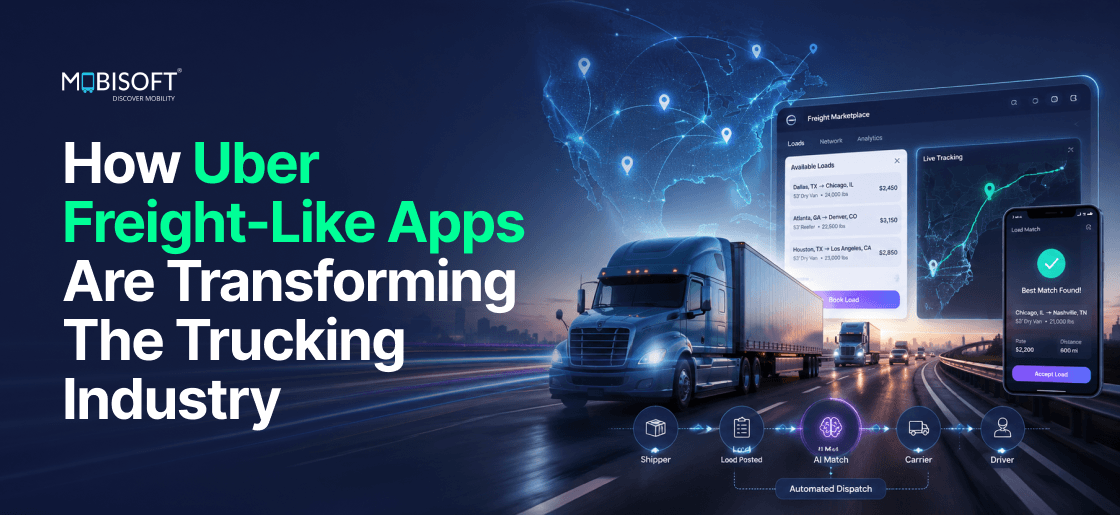
Running a trucking company still means juggling calls and constant guesswork. Many carriers manage loads through spreadsheets and endless calls to brokers. This old approach wastes time and drains driver morale. An on-demand trucking app replaces that chaos with a single digital system. It connects carriers, drivers, and shippers on one shared platform. Uber Freight proved this model could work at national scale. Startups like Convoy and Cargomatic tested similar ideas even earlier.
Carriers using this technology now report fewer empty miles and stronger margins. Drivers get clear job details and faster payouts through their phones. Shippers get live updates instead of nervous waiting. This guide breaks down why that matters now for every fleet.
The Trucking Industry Is Still Fighting Old Problems
Trucking has changed less than most industries since the 2010s. Owners still juggle phone calls, paper logs, and manual routing decisions daily. These old habits create real costs across every part of the business. Most carriers absorb those costs without realizing how much they add up.
Cut Manual Dispatch Delay
Dispatchers spend hours matching operators to loads by phone. Every call, text, and paper ticket adds friction to the process. A single missed call can delay a shipment by hours. Purpose-built trucking dispatch software removes most of that friction instantly. Owners running this software free up hours every single week. Many owners now switch to automated dispatch software for exactly this reason. Owners regain hours that manual coordination used to consume. Those saved hours go toward sales calls and driver check-ins. The rest go toward route planning instead of chasing paperwork. Small carriers often feel this pain the most. One dispatcher usually juggles every load alone.
Stop Losing Money To Empty Trucks
Underused capacity remains one of the costliest problems in freight.
- Trucks return empty on roughly one in five trips nationwide
- Fuel costs climb sharply without a paying load onboard
- Idle capacity blocks carriers from accepting new bookings
- Weak freight matching platform access limits backhaul opportunities
- Empty legs also raise per-mile maintenance costs over time
Every empty mile burns fuel without producing revenue. Smarter load matching turns those wasted miles into paid trips. Tracking this single metric often reveals hidden savings fast. A fleet running 500 trucks can lose real money to empty backhauls. Losses can reach hundreds of thousands of dollars a year. That makes this one of the highest-value problems technology can solve. Even a small percentage gain here changes a fleet's yearly numbers.
Cut Broker Commission Costs
Brokers often charge commissions between 15 and 25 percent per load. Carriers depend on brokers for steady business despite these steep fees. A direct freight marketplace cuts out that costly middle layer. Lower fees mean carriers keep more revenue per shipment. Fair pricing also builds trust between shippers and small fleets. That trust often turns into repeat, long-term business. A five-point drop in commission sounds small at first. Over a full year, that drop can rescue a carrier's entire margin.
Close Visibility And Security Gaps
Many carriers still lack a real-time view of their trucks. Check-ins that use calling are slow and often inaccurate. Cargo theft and unexplained delays become harder to catch. GPS fleet tracking closes this visibility gap for good. Owners finally see exactly where every truck sits. Insurance premiums also often drop once tracking data becomes available. Cargo theft has climbed sharply across major freight corridors in recent years. Carriers without live tracking often learn about a stolen load too late.
A Turning Point For Freight Technology
Several forces are pushing trucking toward digital tools faster than before. Driver shortages, rising freight volumes, and shipper expectations all point in the same direction.
Face The Driver Shortage Reality
The driver shortage keeps tightening year after year. The numbers explain why carriers feel the squeeze.
- Roughly 60,000 driver positions remain unfilled nationwide
- Median driver age now sits near 47 years old
- Fewer than 20 percent of active drivers are under 35
- New federal licensing rules have tightened the eligible pool further
Recent labor data revisions suggest the real shortfall runs deeper than headline figures show
Carriers cannot afford wasted driver hours on manual paperwork anymore. Every efficiency gain from an on-demand trucking app matters more this year. Carriers now compete harder than ever for the operators who remain.
Track Freight Marketplace Growth
Industry research values the digital freight marketplace near 9.7 billion dollars in 2026. Analysts project a compound annual growth rate above 27 percent through 2034. This growth signals a real change in how loads get booked. Carriers who ignore that change risk losing business to faster rivals. Nearshoring trends have also pushed more freight volume across the Mexican border this year. Cross-border trade now accounts for a growing share of total dry van volume. That growth adds fresh pressure on carriers still relying on manual booking methods.
| Year | Market Value | Primary Growth Driver |
| 2025 | $7.61 billion | Demand for real-time visibility |
| 2026 | $9.73 billion | Driver shortage pressure on capacity |
| 2034 (forecast) | $68.89 billion | Platform based booking becoming standard |
Meet Shipper Service Expectations
Shippers grew used to instant booking through everyday consumer apps. They now expect that same speed from freight partners. A slow freight booking platform simply loses business to faster competitors. Real-time updates have become a baseline expectation, not a bonus. Even long-term contracts now hinge on this kind of speed. Shippers also compare freight service against retail delivery standards. That comparison may not feel fair, but it still happens. Carriers who cannot match that pace risk losing long-term contracts. Faster competitors are ready to take that business instead.
What An On-Demand Trucking App Actually Does
An on-demand trucking app connects three groups on one shared system. Carriers, drivers, and shippers all work from the same live data.
Match Loads Automaticall
A freight matching platform pairs open loads with nearby available trucks. The system checks truck type, location, and driver hours automatically. This removes hours of manual searching for both brokers and carriers. Matching happens in seconds instead of calls that stretch on for hours. Carriers who pair this matching engine with full trucking management software gain one dashboard. That dashboard covers every load in one place. It replaces spreadsheets, sticky notes, and scattered phone calls. Everything lives in one clean source of truth.
Bid On Loads Transparently
A freight bidding platform lets carriers compete for loads transparently. Shippers post loads with clear rates or open bidding windows. Carriers accept, counter, or pass based on their own numbers. This transparency replaces the guesswork of old broker negotiations. Smaller carriers finally see the same rate information. Larger fleets have always had that same access. This level playing field helps independent operators compete fairly against much bigger competitors. This change gives smaller carriers a genuine seat at the table.
Book Freight In Minutes
Shippers use a freight booking platform to schedule pickups within minutes. They enter pickup details, drop details, and load weight once. The system then matches that request with an available truck. No phone tag and no waiting on hold for a quote. Repeat shippers can save preferred routes for later. Rerunning a booking then takes only seconds.
Core Benefits For Carriers And Fleet Owners
Carriers gain the most immediate value from switching to digital tools. Every stage of daily operations gets faster and much clearer.
A Smarter Way To Source Loads
Carriers stop chasing brokers for every new booking request. A digital freight platform feeds new load requests straight to dispatch. Owners can accept loads manually or let the system assign them. Pairing this with Transporters TMS software gives owners full control from booking through delivery. This kind of setup turns reactive work into planned work. Owners can forecast capacity days instead of scrambling each morning.
Improve Truck Utilization
An on-demand trucking app solves underutilization in several practical ways.
- Matches outbound and return loads along the same route
- Groups multiple smaller shipments into one full truckload
- Cuts fuel spend tied to unpaid empty miles
- Raises revenue earned per mile actually driven
- Suggests nearby backhaul options automatically after delivery
These gains compound month after month across a full fleet. Even a modest improvement adds real dollars to the bottom line.
Track Fleets In Real-time
Owners track every truck from a single browser based dashboard. GPS fleet tracking flags route deviations, speeding, and unplanned stops instantly. Combined with fleet maintenance software, owners catch mechanical issues before they cause breakdowns. Maintenance logs, fuel receipts, and delivery proofs all live in one file. This combination cuts roadside emergencies and keeps insurance costs lower. Fewer breakdowns simply mean fewer claims filed each year.
Retain Customers Longer
Shippers stay loyal to carriers who deliver a smooth booking experience. Reliable freight management software builds that trust automatically over time. Happy shippers return with repeat business and steady referrals. Word of mouth still brings new customers at almost no cost. Carriers who invest in service quality often earn more than rivals. Rivals that compete purely on price fall behind.
Core Benefits For Truck Drivers
Operators benefit just as much as the carriers who employ them. A dedicated app removes much of the daily uncertainty from the job.
Get Flexible Load Request
Operators receive new load offers directly on their phones. They review pickup time, drop location, and pay before accepting. This flexibility gives operators real choice over their daily schedule. No more waiting by the phone for a dispatcher call. Younger workers entering the industry expect this kind of control. They want digital, self-service access to their own workday.
Log Trips In One Place
- Paper-based logging has always been a pain point for operators.
- Signed bills of lading captured directly in the app
- Delivery confirmations logged instantly with a photo
- Fuel receipts and toll costs added on the spot
- Trip length recorded automatically through GPS data
- Damage reports filed with photos before leaving the site
This single record replaces a glovebox full of paper receipts. Operators get accurate data without chasing paperwork after every trip.
See Transparent Pay Data
Operators view job history and payment status in one screen. Performance scores and carrier feedback appear in that same place. This transparency reduces disputes over pay and mileage. Operators trust a system that shows them the full picture. On-demand trucking apps that offer this transparency also report lower turnover. That matters, since replacing an experienced hire costs carriers dearly today.
Core Benefits For Shippers And Brokers
Shippers gain speed, visibility, and pricing clarity through digital freight tools. These gains matter most for businesses shipping on tight schedules.
Book Loads Faster
Shippers enter shipment details once and get instant rate options. A freight booking platform removes the back and forth of phone quotes. Bookings that once took hours now finish within minutes. Smaller shippers gain access to pricing and capacity now. That access used to favor only large accounts.
Track Shipments Live
Shippers watch their freight move from pickup through final delivery. Automated alerts flag delays before they become a real problem. This visibility replaces anxious calls to the carrier for updates. Retail and e-commerce shippers rely on this data closely. It helps them keep their own customers informed in turn.
Pay Securely Online
Shippers pay securely once a delivery is confirmed complete. Digital receipts detail every charge without hidden line items. Upfront pricing through a freight bidding platform removes billing surprises entirely. Finance teams also save hours each month by skipping manual invoice reconciliation.
Common Roadblocks When Adopting Freight Technology
Switching to digital tools brings real gains, but the transition takes planning. Knowing the common roadblocks in advance helps carriers avoid costly mistakes.
Upfront Cost Concerns
Many owners worry about the initial cost of new software. A freight management software platform does require some upfront investment. That cost usually gets recovered within the first year. Savings from fewer empty miles and lower broker fees add up fast. Owners who wait too long pay a hidden cost instead. That hidden cost shows up as lost efficiency over time.
Driver Training And Adoption
Some operators resist switching from familiar paper processes. Good platforms solve this with a simple, mobile first design. Most drivers learn the basic app functions within a single day. Carriers who explain the benefits early see faster adoption across their fleet.
Data Migration From Paper Records
Years of paper records can feel impossible to digitize. Most modern platforms import spreadsheets and scanned documents automatically. A good implementation partner handles this migration during onboarding. Carriers rarely need to re-enter historical data by hand.
Avoid The Wrong Vendor
Not every freight dispatch software vendor understands trucking operations deeply. Some tools get built for general logistics instead of trucking specifically.
- Ask about direct experience with fleets your size
- Request references from carriers in a similar niche
- Check whether the vendor builds for trucking specifically
- Confirm ongoing support beyond the initial launch
A vendor without trucking experience often misses critical features.
The Technology Stack Behind A Modern Freight Platform
Behind every smooth booking experience sits a layer of connected technology. These systems work together instead of operating in separate silos.
Match Freight Using AI
Machine learning models study historical load and lane data closely. These models predict which trucks fit which loads best. Digital freight matching powered by AI cuts matching time dramatically. Fewer manual decisions mean fewer costly mismatches on the road. This accuracy keeps improving as more shipment data accumulates. Some platforms now factor weather, traffic, and fuel prices into every match. A human dispatcher simply cannot calculate that fast.
Automate Dispatch And Routing
Fleets running automated dispatch software assign loads based on driver hours and location. The system also builds routes that avoid traffic and tolls. This same software flags exceptions instead of forcing manual review. Dispatchers now manage exceptions instead of every single assignment. That change in daily work matters. One dispatcher can now oversee a much larger group of trucks. Manual methods never allowed that kind of scale.
Predict Maintenance Needs Early
Sensors feed engine and tire data into central fleet management systems. Predictive alerts flag problems before a truck breaks down mid-route. This approach cuts unplanned downtime and costly roadside repairs. Fewer surprise repairs also protect delivery schedules and customer trust. Fleets using predictive alerts often extend vehicle lifespan. Catching small issues early avoids expensive engine or transmission failures.
| Function | Traditional Process | On-Demand Trucking App |
| Load booking | Phone calls and paper tickets | Instant digital booking |
| Truck matching | Manual broker search | AI-based freight matching |
| Tracking | Periodic check-in calls | Live GPS fleet tracking |
| Payments | Delayed paper invoices | Digital, upfront pricing |
The Road Ahead For Digital Freight
Freight technology keeps advancing every year. A few emerging trends will define the next phase of on-demand trucking apps.
Autonomous Trucking Integration
Autonomous trucks already run limited routes in parts of the country. Full autonomy across all routes remains years away. On-demand trucking app platforms will likely coordinate human and autonomous trucks together. Dispatch systems will need to handle both driver types within one workflow.
Blockchain For Proof Of Delivery
Some platforms now test blockchain for proof of delivery records. This approach creates a tamper-proof paper trail for every shipment. Disputes over delivery times or damaged goods become easier to resolve. Wider adoption depends on cost and ease of integration.
Deeper AI Forecasting
Freight platforms increasingly forecast demand weeks before it happens. Carriers can plan driver schedules around predicted freight volume. Digital freight matching tools will keep getting smarter with more historical data. Fleets that adopt these tools early gain a real planning advantage.
Why Carriers Should Consider Custom Build
Public platforms work well for small carriers testing digital freight tools. Larger fleets often need something built around their exact operation.
Full Control Over Branding And Data
A custom app carries the carrier's own name and logo. Shippers see a branded experience instead of a shared marketplace. Carriers also keep full ownership of their operational data. That ownership matters more each year. Data privacy rules across freight and logistics keep tightening.
No Recurring Platform Commission
Public marketplaces charge ongoing fees on every booked load. Those fees add up fast across hundreds of monthly shipments. A custom-built freight dispatch software system avoids that recurring cost. Over several years, that saved commission adds up fast. It can fund the entire cost of building the app.
Build Features Around Fleet Needs
Every fleet runs slightly differently, and generic apps rarely fit perfectly.
- Custom weight limits and equipment types per fleet
- Region specific routing rules and compliance checks
- Direct integration with existing accounting systems
- Custom driver scorecards tied to company policy
- Flexible admin permissions for dispatch and finance teams
An on-demand trucking app built this way scales with the fleet. New features get added as the business grows. Owners never get forced into a rigid, one size fits all product.
How To Choose The Right Freight Management Software Partner
Picking the right development partner determines whether the app solves real problems. A few checks upfront save months of rework later.
Choose One Connected System
Choose a partner who builds dispatch, tracking, and booking together. Separate tools that do not talk to each other cause friction. One connected freight management software system keeps every team aligned. Ask for a live product demo rather than relying on marketing screenshots alone.
Confirm Integration With Existing Tools
Ask whether the app connects with current accounting and fuel systems. A good partner maps these connections before writing a single line of code. Smooth integration avoids duplicate data entry across separate platforms. Poor integration is a top reason freight projects run late. Many also run over budget for the same reason.
Ask About Support After Launch
App development does not end on launch day. Ongoing updates, bug fixes, and feature requests need a dedicated support plan. A reliable partner stays available long after the app goes live. Ask potential partners how quickly they resolve critical issues. Fast fixes matter once operators depend on the app daily.
Signs Your Fleet Is Ready For An On-Demand Trucking App
Not every carrier needs to switch immediately. A few clear signs point toward a fleet that is ready now.
Recognize Dispatch Overload
Dispatchers juggling more than a dozen trucks daily hit a wall fast. Missed calls and delayed load assignments start becoming routine. That pattern signals the fleet has outgrown manual dispatch methods. A trucking dispatch software system restores control almost immediately.
Watch For Rising Empty Miles
Rising empty mile percentages point to a real matching problem. Manual searching simply cannot scan enough lanes fast enough. A freight matching platform searches thousands of lane options within seconds. That speed alone often reverses the trend within one quarter.
Meet Shipper Update Demands
Repeated shipper requests for tracking links are a clear signal. Customers no longer accept vague delivery windows without complaint. GPS fleet tracking answers those requests before the question even gets asked. Carriers who respond early keep those accounts long-term.
Measuring ROI From An On-Demand Trucking App
Return on investment matters more than any single feature list. Carriers should track a few clear numbers before and after launch.
- Empty mile percentage across the full fleet
- Average time between booking a load and pickup
- Days between delivery and payment received
- Dispatcher hours spent per booked load each week
- Driver turnover rate measured over a full year
Fuel And Empty Mile Savings
Track empty miles as a percentage of total miles driven. Compare this number for three months before and after launch. Most fleets see that percentage drop within the first quarter. Fuel savings alone often justify the software cost quickly.
Faster Payment Cycles
Digital invoicing shortens the time between delivery and payment. Paper-based invoicing often takes weeks to process fully. A freight booking platform with built-in payments settles most invoices within days. Faster cash flow gives owners more room to take new loads. Vendors and fuel providers also get paid without unnecessary delay.
Lower Admin Overhead
Count the hours dispatchers spend on phone calls each week. Booking through a digital freight platform usually cuts that number by more than half. Fewer hours on the phone means lower staffing costs overall. Owners can redirect that saved time toward growing the business.
Driver Retention Savings
Replacing an experienced driver costs thousands of dollars per hire. Retention improves when operators trust their pay and schedule data. Fewer replacements mean lower recruiting and training costs each year. Stable driver rosters also make route planning far more predictable. That saved cost adds directly back into carrier profit.
Data Security And Compliance In Modern Freight Platforms
Digital tools handle sensitive data every single day. Strong security and compliance protect carriers from real financial risk.
- Encrypted storage for shipment and payment records
- Role based access limits for every team member
- Automated hours of service logging for compliance checks
- Clear privacy rules around GPS location data
- Regular audits that catch weak points before they matter
Data Encryption And Access Control
Modern on-demand trucking apps encrypt shipment and payment data by default. Role based access limits who can view sensitive records. Dispatchers, drivers, and finance teams each see only what they need. This structure reduces the risk of internal data leaks. Regular security audits catch weaknesses before they become real problems.
Stay Compliant With E-Logging
Federal rules require accurate electronic logging for most drivers. Integrated platforms sync hours of service data automatically. This removes manual log entry errors that trigger costly violations. Compliance reports generate instantly instead of taking hours to prepare. Auditors increasingly expect this kind of digital compliance trail.
Driver Privacy Protections
GPS tracking raises fair questions about driver privacy. Reputable platforms limit tracking to work hours and company vehicles only. Clear privacy policies build trust between owners and their operators. Drivers who understand these limits worry far less about surveillance. Transparency about data use keeps everyone comfortable with the system.
The Opportunity Is Too Big To Miss
The trucking industry cannot keep running on phone calls and paper forms. Every challenge covered here, from empty miles to broker fees, has a digital fix. An on-demand trucking app turns scattered manual work into one connected system. Carriers gain better load matching, live tracking, and stronger margins. Drivers get clearer job details and faster, more transparent pay. Shippers get instant booking and constant visibility into every shipment. Driver shortages keep tightening capacity across the country.
The market keeps rewarding carriers who move first. Waiting on outdated systems only gets more expensive from here. Custom built platforms offer more control than public marketplaces provide. Fleet owners keep their branding, their data, and their profit margins intact. The right development partner turns this opportunity into real results.

Frequently Asked Questions
Will our drivers actually use a new app daily?
Drivers adopt these tools quickly when the interface stays simple. GPS fleet tracking and clear job details give drivers a reason to open it daily. Most fleets see full adoption within a few weeks.
Can we track trucks without buying new hardware?
You do not need bulky equipment to get live visibility. A freight matching platform connects through the driver's phone for real-time location data. Optional hardware add-ons still work for fleets that already use them.
What happens to our data if we switch vendors?
Your shipment, driver, and payment records stay yours at all times. A well built freight management software system lets you export that information whenever needed. Mobisoft builds this ownership into every custom platform.
How does this compare to joining a platform like Uber Freight?
Joining a public marketplace gets you started fast, but commission applies to every load. A custom trucking dispatch software setup carries your own branding and keeps that fee in your business. You also decide which features get added over time.
What kind of support does Mobisoft provide after launch?
Launch day is just the starting point for any freight platform. Mobisoft provides updates, fixes, and new features through an ongoing support plan. You get a fleet management partner who stays involved as your operation grows.
This content is for informational purposes only and may include AI-assisted research or content generation. While we strive for accuracy, information may evolve over time. Readers are advised to independently verify critical information before making decisions.

Nitin Lahoti
Read more
Nitin Lahoti is the Co-Founder and Director at Mobisoft Infotech. He has 15 years of experience in Design, Business Development and Startups. His expertise is in Product Ideation, UX/UI design, Startup consulting and mentoring. He prefers business readings and loves traveling.
 Nitin Lahoti
 May 24, 2017