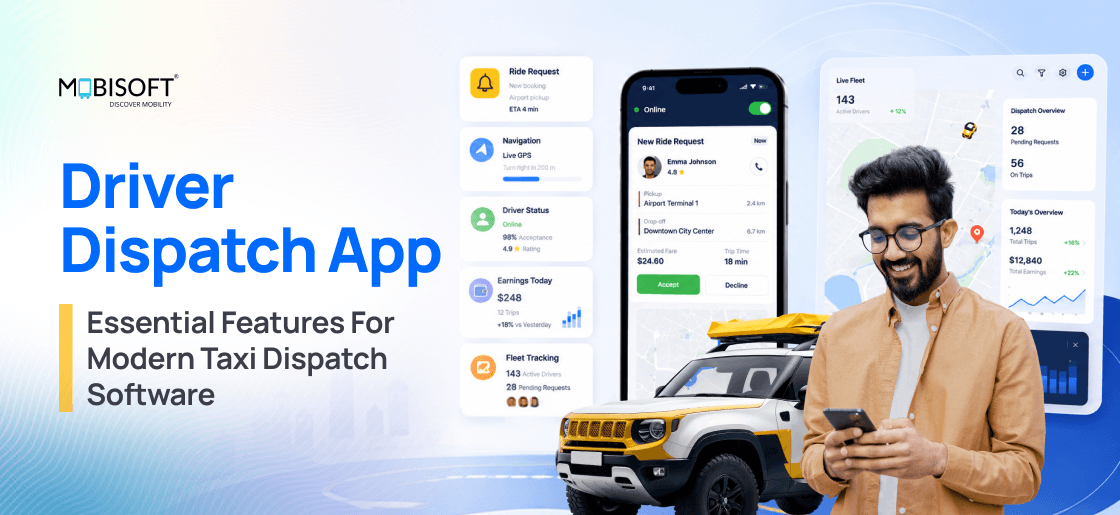
Most taxi businesses spend their entire budget polishing the passenger experience. Riders get slick booking screens and live tracking. Drivers, meanwhile, get an afterthought. A strong driver dispatch app is as essential as the passenger app. It is the engine that keeps pickups fast and cancellations low. It also keeps drivers loyal to your platform over time. Every booking and every completed trip depends on how well your driver app performs. Skipping this side of the platform creates cracks that show up later. The driver app forms one half of the fully operational taxi dispatch software. This article breaks down the features your driver app needs. It also covers the advanced capabilities that separate good platforms from great ones. Finally, it explains what a driver app actually costs to build.
The Driver App Is an Essential Business Tool
A driver dispatch app is not a side project built after the passenger app ships. It carries real operational weight across your business. Drivers cannot complete a single trip without it working properly. Treating it as secondary creates problems that surface everywhere. Operators sometimes assume drivers will tolerate a rough experience. Drivers, after all, are earning income through the app. That assumption rarely holds true for long, especially in competitive markets. Drivers today have more platform choices than ever before. A weak app simply pushes them toward a better-built alternative.
What Happens When the Driver App Falls Short
A clunky app creates real damage within days of launch. Consider these common failure points operators run into repeatedly.
- Slow notifications mean drivers miss ride requests during busy hours.
- Poor navigation leads to wrong turns and late pickups.
- Confusing earnings screens cause disputes and support tickets.
- Weak account tools frustrate drivers during their first week.
- Limited offline support strands drivers in low signal areas.
Each problem chips away at driver confidence over time. Once confidence drops, drivers start comparing your platform against nearby competitors. Small annoyances rarely stay small for long. They accumulate quietly until a driver decides enough is enough. At that point, no discount or bonus wins them back easily.
How Driver Experience Shows Up in Business Metrics
Driver experience is not a soft metric buried in a survey. It shows up directly in fleet utilization numbers every week. A driver who trusts the app accepts more rides. That same driver also cancels fewer trips overall. This raises your acceptance rate and shortens passenger wait times. Retention costs drop too, since replacing a trained driver is expensive. Recruitment, background checks, and onboarding all consume real staff hours. Every one of these outcomes traces back to app performance. Operators who track these numbers closely see the pattern clearly. Fleet health and app quality move together, almost always in the same direction. A properly connected online taxi management system ties these metrics together.
A Quick Scenario
Picture a driver who joins your platform on a busy weekend. The app crashes twice during his very first session. A booking request times out before he can respond. He loses that fare and grows frustrated within hours. By Monday, he has switched to a smoother competitor. That single bad session cost you a driver and his trust. It likely cost you future referrals from his network too. Multiply that scenario across dozens of drivers, and the damage compounds fast. Word about a bad experience spreads quickly among driver communities. Many drivers talk to each other through local groups and forums. A single frustrating story can discourage several potential signups at once.
Getting Drivers Onboard the Right Way
Recruitment starts the moment a driver opens the app. A smooth onboarding flow determines whether that driver finishes registration. A clumsy one often means the driver abandons it halfway through. Every taxi business competes for the same limited pool of drivers. The businesses that win this competition usually make signing up effortless. Complicated forms and unclear instructions cost more drivers than most operators realize.
Registration and Document Upload
New drivers should start their signup directly from the app. A clean form paired with document upload removes early friction. Licenses and permits should be simple to photograph and submit. This step is often the first real test of usability. First impressions rarely get a second chance from a hesitant applicant. Every extra step in this flow risks losing that driver entirely. Mobile-friendly forms matter here more than most operators realize. Many applicants sign up from their phone during a spare moment. A form that struggles on mobile screens loses applicants immediately. A properly built taxi booking app development process accounts for this reality.
Admin Review and Approval
Once a driver submits documents, your team needs to review them fast. The admin panel lets operators approve or reject applications quickly. Quick turnaround keeps your driver network growing steadily over time. A slow approval process discourages qualified drivers from waiting around. Many applicants simply move on to a faster-moving platform instead. Automated document checks can speed up the earliest review stage. Human review still matters for edge cases and unusual submissions. The two working together keep the process both fast and accurate.
The Account Tab
After approval, drivers need a dedicated space for their profile. The account tab covers personal details and vehicle information. It also handles general settings changes drivers make over time. Giving drivers control over their own profile reduces support requests. It also builds a sense of ownership that keeps them engaged. Drivers should be able to update vehicle details without contacting support. This becomes especially useful when a driver changes or upgrades their car. Small conveniences like this add up to a smoother overall experience.
Navigation and Trip Execution
Once a driver becomes active, the app becomes their daily tool. This section covers the mechanics that keep rides moving smoothly. Every screen a driver touches during a trip needs to work reliably. Small delays or confusing steps add up across dozens of daily trips.
Built-In Navigation
Drivers need dependable mapping to reach passengers without guesswork. Integration with a service like Google Maps ensures accurate routing. This holds true for both pickup points and drop locations. This single feature has an outsized impact on punctuality fleetwide. Poor navigation frustrates drivers and passengers within the same trip. Traffic-aware routing adds another layer of practical value here. It helps drivers avoid congestion and choose faster alternate routes. Passengers notice these small time savings even when they cannot see the map.
Accept or Decline Requests
Booking requests should include a time-bound window for driver response. If a driver misses that window, the system should react quickly. The request then forwards automatically to the next available driver. This keeps passengers from waiting too long on an unresponsive match. A well-tuned window balances driver flexibility against passenger patience fairly. Operators should test this window carefully before finalizing it. Too short a window pressures drivers unfairly during busy stretches. Too long a window frustrates passengers who are waiting nearby.
Trip Actions From Arrival to Completion
Drivers rely on a clear sequence of actions during every trip.
- The arriving button signals the passenger that pickup is close.
- The start trip button begins the ride once boarding happens.
- The end trip button closes the ride and triggers fare calculation.
- The report issue option flags problems for later admin review.
- This structured flow keeps both driver and passenger aligned throughout.
Contact Passenger With Number Masking
Sometimes a driver needs to call a passenger for pickup details. Number masking allows this call without exposing real phone numbers. Privacy protection like this builds trust on both sides of the trip. It also reduces the chance of unwanted contact after the ride ends. Masked numbers typically expire once the trip officially closes. This automatic expiry removes the need for manual cleanup later. Drivers rarely think about this detail, yet they benefit from it constantly.
Availability and Driver Control
Drivers value control over their own schedules just like passengers value speed. Giving drivers that flexibility keeps them engaged with your platform longer. Many drivers juggle other commitments alongside their taxi work. Rigid systems that ignore this reality push drivers toward more flexible, welcoming platforms.
The Availability Button
A simple toggle lets drivers switch between online and offline instantly. This single control decides whether a driver enters the dispatch pool. Removing friction here keeps drivers logging in more consistently each week. Delays or glitches in this toggle create real frustration quickly. A driver ready to start work should never wait on a loading screen.
Snooze and Pause Features
Drivers need short breaks throughout their working hours regularly. A snooze or pause option lets them step away briefly. They can do this without declining active requests outright. One tap brings them back online whenever they feel ready. This small feature shapes how drivers perceive platform flexibility overall. Without it, drivers often just decline every request during a break. Declined requests hurt their acceptance rate unfairly in that scenario. A proper pause option avoids that penalty altogether.
Real-Time Notifications
New booking requests should reach drivers instantly through in-app alerts. Backup channels like SMS and email prevent missed critical updates. This matters especially when the app runs quietly in the background. A missed notification often means a missed fare for the driver. Notification sound and vibration settings deserve attention during development too. Drivers often keep phones in pockets or mounted away from view. A distinct alert tone helps them react without checking the screen constantly. Pairing this with genuine best fleet management software keeps every alert accurate.
Earnings Performance and Trust
Money and performance data sit at the center of driver trust. Transparent access to both keeps drivers loyal over the long run. Drivers work to earn a living, not just to complete trips. Any confusion around pay creates immediate distrust toward the platform. Clear, timely, and accurate earnings data prevents most of these concerns entirely.
Automatic Fare Calculation
Fares should calculate automatically based on distance, rate, and duration. Surge pricing, when applicable, should factor in without manual input. Automation here removes a common source of disputes between parties. It also speeds up checkout for passengers waiting to finish their ride. Clear fare breakdowns help drivers understand exactly how a total formed. This transparency matters just as much to drivers as it does to riders.
The Earnings Tab and Trip History
Drivers want quick access to how much they have earned. A dedicated earnings tab paired with trip history builds real confidence. Clear records also help drivers plan their hours around demand. The table below shows how these two features typically differ.
| Feature | What It Shows | Update Frequency |
| Earnings Tab | Daily totals, weekly payout estimate, incentives earned | Real time |
| Trip History | Fare per trip, commission charged, surge applied | After each completed trip |
Together, these views give drivers a complete financial picture. Neither one requires outside spreadsheets or manual tracking on their part.
The Driver Dashboard
A dashboard brings performance data together in one convenient view. Drivers can see acceptance rates and ratings at a glance. Passenger feedback also appears here for quick review. This visibility helps drivers spot weak points and adjust accordingly. Over time, this feedback loop improves service quality fleetwide. Some dashboards also compare a driver's stats against fleet averages. This context helps drivers understand where they genuinely stand. It works best when framed as guidance rather than criticism.
Safety Features Are No Longer Optional
Safety expectations have risen sharply across the ride-hailing industry lately. A modern driver dispatch software platform must treat safety as core, not optional. Regulators, passengers, and drivers all expect these protections now as standard. Platforms that lag behind on safety risk losing trust quickly.
SOS Alerts
An in-app panic button gives drivers a direct emergency channel. This single feature can matter more than any other during a crisis. Fast access to help reassures drivers the platform genuinely supports them. The alert should also notify dispatchers and admins immediately. A coordinated response matters far more than the button alone. Speed and coordination together determine whether the feature actually helps.
Number Masking as a Safety Layer
Number masking already appeared earlier as a daily communication tool. It also functions as a meaningful safety layer after trips end. Hiding personal numbers reduces the risk of harassment or misuse. Drivers appreciate knowing their information stays protected throughout every interaction.
Help and Support Access
Drivers should reach support directly from the app when problems arise. Whether it involves a payment dispute or a passenger complaint, speed matters. Quick access to help keeps drivers from feeling stranded mid-trip. A responsive support channel often determines driver loyalty after a bad experience. In-app chat and a searchable help section both reduce wait times. Many simple questions get answered without a driver needing to call anyone.
Advanced Features That Separate a Good App From a Great One
Basic trip management keeps a platform functional day to day. Advanced features are what keep drivers choosing your platform over rivals. These capabilities once belonged only to major global players. A capable taxi dispatch app can now offer them to any business. Smaller taxi companies once could not match these capabilities at all. Modern platforms have closed that gap considerably in recent years.
Driver Destination Filtering
This feature lets drivers indicate where they are heading next. A common example is heading home after finishing work. The app then prioritizes ride requests aligned with that direction. Drivers gain flexibility, and the platform still fills seats efficiently. This balance keeps both driver satisfaction and fleet coverage intact. Operators sometimes worry this feature reduces available drivers on the road. In practice, it often increases total driving hours instead. Drivers stay online longer when their working hours naturally end near home.
Forward Dispatch
Forward dispatch lets a driver receive a new request mid-trip. Smart routing minimizes the distance to the next pickup point. Drivers spend less time idle between fares as a result. Passengers also wait less time for their ride to arrive. This feature alone can meaningfully improve fleet efficiency during peak hours. Fewer idle minutes translate directly into more completed trips daily. That efficiency gain benefits drivers, passengers, and the platform all at once.
Pause Requests and Smart Suggestions
A pause feature lets drivers step back from new requests briefly. This happens without the driver going fully offline. Some platforms also suggest higher demand areas based on patterns. These suggestions help drivers make better use of their time. Smarter suggestions also reduce unproductive idle time across the fleet. None of these tools require drivers to guess or gamble. Data-backed suggestions simply point toward better odds, nothing more.
How the Driver App Connects to the Full Dispatch System
The driver app never operates alone inside a well-built platform. It sits inside a larger taxi dispatch system working in constant sync. That system also includes the admin panel and the passenger app. Treating these three pieces as separate products leads to gaps. Those gaps often show up as delays, mismatched data, or confusion. A unified system avoids these issues by design, not by accident.
The Dispatcher and Admin Panel
Operators rely on the admin panel to assign rides in real time. They also use it to monitor vehicles and manage drivers. A capable admin panel gives dispatchers a single fleet view. Multi-city support within this panel helps a growing business scale. Managers can track every driver from one central dashboard easily. Role-based access also controls what each staff member can see. This matters as teams grow beyond a single dispatcher. Larger operations often split duties across support, dispatch, and finance roles.
The Passenger App Side
Riders interact with a separate app built for their own needs. Many of its features depend heavily on accurate driver-side data. Fare estimates only work when the driver app reports location correctly. Real-time tracking depends on the same accurate reporting as well. A smooth data connection between both apps keeps riders and drivers synchronized. Any lag between the two quickly becomes visible to a frustrated passenger. Rider trust depends heavily on accurate ETAs shown before booking. Every inaccurate estimate chips away at confidence in the entire platform.
One System Three Apps
The taxi driver app, passenger app, and admin panel form one loop. A booking starts on the passenger side of that loop. It then routes through the admin panel for assignment. Finally, it lands on the driver app for execution. Weakness in any single piece slows down the entire chain. Operators should evaluate all three apps together, not in isolation. Testing each piece separately misses how they behave under real load. A booking surge, for example, stresses all three systems at once.
What It Costs to Build a Driver Dispatch App
Cost varies widely depending on scope and ambition. A few clear factors push the final number up or down. Understanding these factors helps you plan a realistic budget early. Many first-time operators underestimate this planning stage entirely. Skipping it usually leads to budget overruns midway through development. A little upfront research saves both time and money later.
Build From Scratch vs White Label
Building a driver app from scratch demands significant developer time. Designers and quality assurance teams add further time on top. A white label taxi dispatch management software solution skips most groundwork. Core features already exist and only need branding and configuration. This approach typically launches faster with noticeably lower upfront risk. Many operators start with a white label platform and customize later. This staged approach spreads investment out as the business grows.
Feature Scope and Customization
The more features you want, the higher development costs tend to climb. Custom workflows and unique branding both add real build time. Specialized reporting tools add further time on top of that. A simpler feature set keeps costs lower initially. It may limit what drivers can eventually do, however. Balancing ambition against budget is worth deciding early in planning. A useful approach is separating must-have features from nice-to-have ones. Launch with the essentials, then add extras once demand proves itself.
Scale Regions and Payment Integration
Supporting multiple cities adds complexity around currency and language. Local regulations also vary from one region to the next. Payment integration difficulty depends on how many providers you support. Payout methods add further complexity depending on driver location. Working with an experienced technology partner simplifies these choices considerably. The table below summarizes how these factors typically affect cost.
| Cost Factor | Lower Cost Approach | Higher Cost Approach |
| Build Method | White label platform | Fully custom development |
| Feature Scope | Standard feature set | Extensive customization |
| Regional Reach | Single city launch | Multi-city or global rollout |
| Payments | One payment provider | Multiple providers and currencies |
Reviewing this table early helps set realistic expectations before requesting vendor quotes. It also helps operators ask sharper questions during vendor conversations. Clear expectations up front prevent budget surprises later in the project. Vendors also respond better to operators who arrive prepared.
Why Driver Experience Determines Whether Your Taxi Business Scales
A taxi business grows only as fast as its weakest app allows. If the driver side lags behind, growth stalls quickly. This holds true no matter how polished the booking screen looks. Operators who understand this early tend to build stronger, more durable platforms.
The Weakest App Sets the Ceiling
Passengers notice fast pickups and smooth trips above all. Those outcomes depend entirely on driver tools working correctly first. A business cannot out-market a genuinely broken driver experience easily. Word travels fast among drivers comparing platforms with each other. Strong dispatch tools and a reliable taxi driver app create real advantage. That advantage compounds in crowded, competitive markets over time. Operators who invest early tend to see the payoff sooner. Waiting until problems appear usually means playing catch up later.
A Question Worth Asking
Ask yourself honestly whether your current app could handle double the volume. Could it support twice the ride requests you handle today? If the answer feels uncertain, that uncertainty is telling on its own. It points directly toward where your next investment should go. A quick internal audit of your taxi driver app features often helps. It tends to reveal gaps operators have overlooked for months. Small fixes today often prevent larger problems down the road. Treat this audit as routine maintenance rather than a one-time task.
Ready to Strengthen Your Driver App
A taxi business succeeds when every part of its platform pulls equal weight. The driver app deserves the same attention as the passenger side. It carries the operational load that keeps your fleet running smoothly. You may need a complete dispatch management software build. Or you may only need targeted improvements to what you already run. Getting the driver experience right improves retention and supports steady growth. Fewer driver complaints usually mean fewer passenger complaints too. Drivers talk, and satisfied drivers bring other capable drivers along.

Frequently Asked Questions
How is a driver app different from a taxi dispatch system?
The driver app is one piece of a larger operational setup. A full taxi dispatch system also includes the admin panel and passenger app. Together, these three parts manage bookings from request to completion.
Can a small taxi business afford advanced dispatch features?
Yes, white label platforms have made advanced features widely accessible now. A capable taxi dispatch app offers forward dispatch and smart suggestions affordably. Small operators no longer need enterprise budgets to compete effectively.
How long does it take to launch a driver app?
Timelines depend heavily on scope, customization, and regional requirements. A white label taxi dispatch management software solution launches faster than custom builds. Most operators can go live within a few weeks.
What safety features should a driver app include?
Every driver app should include SOS alerts and number masking. These features protect drivers during emergencies and everyday interactions alike. Reliable driver dispatch software treats safety as a core requirement.
How should a taxi business prioritize which driver features to build first?
Start with whatever removes friction from a driver's daily workflow, not whatever looks most impressive in a demo. Navigation, accept or decline timing, and earnings clarity affect every single trip. Advanced features like destination filtering matter more once the daily basics are already solid and reliable.
This content is for informational purposes only and may include AI-assisted research or content generation. While we strive for accuracy, information may evolve over time. Readers are advised to independently verify critical information before making decisions.

Nitin Lahoti
Read more
Nitin Lahoti is the Co-Founder and Director at Mobisoft Infotech. He has 15 years of experience in Design, Business Development and Startups. His expertise is in Product Ideation, UX/UI design, Startup consulting and mentoring. He prefers business readings and loves traveling.
 Nitin Lahoti
 December 1, 2017