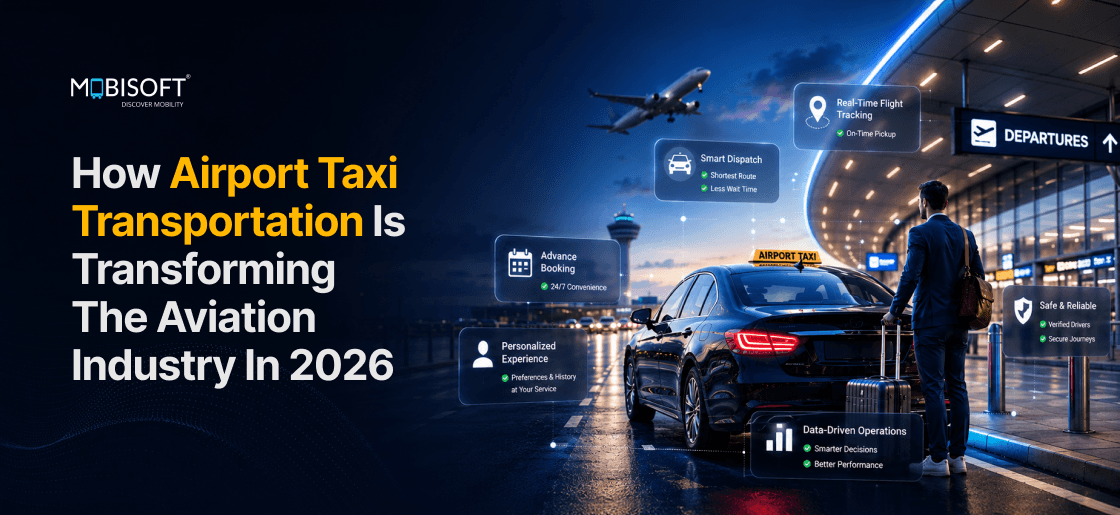
You have made your flight, and now there is no one to pick you up since you don't have an internet connection yet, or your driver didn't receive information about your flight being delayed. Regardless, here you are rebooking your ride while everybody else is leaving through the exit gates. And you are experiencing all this because you need an airport transportation solution and there is none.
A lot has changed in this corner of travel over the past few years. Booking moved online, drivers got sharper tools, and passengers now expect the same ease from a taxi that they get from any food delivery app on their phone. This piece looks at where things stand today, and why a dependable airport transfer service still beats gambling on whatever's waiting at the taxi rank.
Why Getting To and From the Airport Is Still a Gamble
Flying itself has gotten easier. You check in from your couch, and boarding uses a face scan at a growing number of gates. Ground transport hasn't kept pace with any of that, and a lot of travelers still walk out of arrivals with no real plan beyond hoping something works out.
There are a few recurring issues witnessed irrespective of the location:
- Drivers who won't wait: the flight is delayed, and the driver is not updated, so he leaves. You are now left rebooking from the baggage carousel.
- Confirmations that never arrive: confirmations and updates are often shared through text and mail which require internet. Since it is usually off during flights, the message just doesn't reach.
- Costs that creep up: Costs shoot up as the day of the flight comes close. So travelers unfamiliar with local rates sometimes pay way higher fares without realizing.
- Fees that show up later: extra luggage, tolls, or waiting time sometimes get added after the ride. It feels like a bait and switch even when it technically isn't.
- Safety standards that vary: credibility of a driver may go unchecked, and many vehicles are often not maintained as per schedule. Most of the time nobody notices, until something goes wrong.
None of this is new, honestly. What's changed is how little patience travelers have for it. People expect a certain baseline of reliability from nearly every app on their phone now, and ground transport is finally being held to that same bar.
What Counts as Airport Transportation Today
The term covers a lot more ground than it used to. A taxi outside baggage claim is still part of the picture, but it's just one option now among several, each built for a different kind of trip.
Shared Ride Shuttles
This is the budget option. You share a vehicle with other passengers heading roughly your way, which brings the fare down but adds a stop or two along the route. Leisure travelers with some slack in their schedule tend to like it.
Behind the scenes, decent shuttle service software is what keeps this from turning into a mess. It matches riders to the right van and sequences drop-offs sensibly, and without it, shared shuttles tend to devolve into long, meandering rides nobody enjoys.
Non-Stop Express Rides
No shared stops, no detours, just a direct route from where you are to where you're going. It costs more than a shared shuttle, but it saves real time, which makes it the obvious pick for anyone with a tight connection.
Luxury and Executive Car Service
Travelers need to arrive in a good mood, especially those who are traveling on business. A private chauffeur booked and dispatched through chauffeur booking software will definitely make an impact on that since people who use sedans, SUVs, or even limousines always arrive calmly. And such calmness is more important before important meetings than many people think.
Traditional Taxi Cabs
Even though a private chauffeur is one of the most reliable methods of airport transportation, it might not be suitable in certain cases since not everyone likes to plan their trip several days in advance. However, a well-managed taxi rank plus app-based booking solves this problem without the danger of hailing a cab at the end of your vacation.
Charter Buses for Groups
For wedding parties, sports teams, and other groups of travelers, a charter bus would be a more cost-effective and convenient way since the group will travel as a single unit. Also, it will be much cheaper per head than hiring separate cars for each passenger.
Picking between these usually comes down to three things: how many people are traveling, how much time everyone has, and what the group is willing to spend. None of it works particularly well, though, without solid coordination underneath it. That's where airport transportation management earns its keep, tying bookings and drivers together so things stay predictable even when a flight schedule isn't.
The Curbside Problem Nobody Talks About
Here's something most articles on this topic skip entirely. Airport curbs are getting more crowded, affecting how these services operate. Rideshare zones, taxi queues, shuttle bays, and private cars are all fighting for the same short stretch of pavement, and passenger numbers grew a lot faster than that pavement did.
Some major airports have responded by pushing pickups to dedicated lots well away from the terminal, which adds an extra shuttle leg to what used to be a direct grab at the door. A few cities have also started charging for-hire vehicles extra to enter busy zones, with New York's approach to Manhattan traffic being the most-cited example. Operators serving those regions now build that cost into pricing up front rather than surprising travelers with it later.
Running an Airport Fleet Is Harder Than It Looks
Travelers only ever see the smooth part, not the coordination underneath it. Running a fleet that serves an airport well means juggling driver shifts, vehicle maintenance, and sudden surges around a busy arrival bank, often all at once and with very little warning.
Solid airport fleet management cuts down idle time between trips and keeps maintenance predictable rather than reactive. It also makes sure the right mix of vehicles is ready when demand spikes. A dispatcher working without good visibility tends to hold extra cars in reserve just in case, which sounds cautious but actually just eats into margins over time.
Airports with heavy crew turnover face a slightly different version of this problem, and many lean on dedicated airline crew transportation services to move staff between terminals, hotels, and parking lots. Crew shifts cluster at predictable hours, and mixing that traffic into the same pool as passenger bookings tends to create bottlenecks for both groups.
Shared shuttle networks come with their own set of headaches. You've got multiple pickup points to manage, rerouting, and efficient allotment. It's a hard scheduling puzzle, and it gets worse as an operation scales up. Good airport shuttle management software handles that routing math so a dispatcher isn't drowning in spreadsheets trying to do it by hand.
Bigger operators run into a different scale of problem. If you're managing several ground transport providers under one roof, a single dispatch tool usually isn't enough anymore. That's when a custom transportation management system starts to make sense, since it pulls bookings, fleet data, and driver assignments into one place. You catch problems while they're small. Otherwise they turn into passenger complaints, or they show up in a quarterly report nobody wants to explain.
Why Travelers Skip the Random Cab
Hailing a cab off the street still works fine in plenty of cities. But it requires patience, a bit of luck, and sometimes a willingness to overpay in times of need.
- Reliability you can plan around: a scheduled pickup means the car shows up, and most reputable providers track flight status so a delay doesn't leave anyone stranded.
- Drivers who treat it as a job: professional chauffeurs tend to be more patient with luggage, and generally easier to deal with than someone trying to squeeze in one more fare before a shift ends.
- Pricing that's settled before you get in: no haggling, no guessing, no unpleasant surprise when the meter stops higher than expected.
Once the ride's booked and the driver has your flight number, you stop thinking about it. The price is locked in too, so there's no math to do later. You can actually doze off on the flight instead of running through what you'd say to a driver trying to overcharge you at the other end. Doesn't sound like much on paper. Anyone who's had that argument knows it's nothing.
What Booking Ahead Gets You
A Car That's Actually Waiting
No wandering the curb, no circling for parking, no standing behind twenty tired travelers in a taxi queue. The car is already there, and so is the driver, usually holding a sign right where he said he'd be.
Scheduling That Adjusts Itself
Booking now mostly happens through an app. Pick your vehicle, set a pickup window, done. The better airport transportation scheduling platforms take it further though, and shift your pickup time on their own if your flight runs late. It adjusts without you needing to call anyone.
Time You Get Back
A pre-booked vehicle sticks to a known schedule and takes the most direct route available. Drivers who know the area well tend to dodge predictable traffic too, and that adds up over a longer drive.
Costs Without the Fine Print
Luggage handling, tolls, and standard waiting time are usually built into the quoted fare, so you know roughly what you owe before the trip even starts. One less thing to think about after a long flight.
Drivers Who've Been Vetted
Reputable operators screen their drivers and hold them to a real standard. It shows in small ways, like helping with heavy bags, and in bigger ways too, like handling a delay without making the passenger feel like a burden.
Flight Tracking That Solves a Real Problem
When an operator tracks your flight directly, nobody waits at a curb indefinitely, and nobody's driver shows up before the plane has even landed. Small feature, genuinely useful one.
The Technology Running the Show
Easier booking, fewer delays, clearer pricing, most of what travelers notice is really just the surface of a lot of unglamorous engineering happening underneath. Modern airport transportation software now handles coordination that used to depend on phone calls and a dispatcher's memory.
Dispatch and Fleet Coordination
Getting the right car to the right passenger sounds like a small thing. Try doing it a few hundred times a day across one airport, and it stops being small fast. That's the job airport dispatch software does now. It watches traffic, flight status, and where every vehicle actually is, so a driver never sits parked somewhere while a passenger waits across the terminal for no reason.
Fleet visibility matters just as much as dispatch accuracy. Pair dispatch tools with proper fleet optimization software, and operators get a much clearer read on where every vehicle is and when it's due for maintenance, before a breakdown turns into a missed pickup.
Predictive Routing and Real-Time Data
Live traffic feeds and flight tracking let a vehicle get rerouted mid-trip when conditions shift. From the passenger's seat, this barely registers as a feature, but operationally it's often the difference between making a connection and missing it.
Payments Without the Cash Hunt
Cashless payment used to be a nice extra, and now travelers just expect it. Tapping a card at the end of a ride beats fumbling for unfamiliar currency, particularly for international arrivals who haven't exchanged money yet.
Chatbots and Self-Service Booking
A chat assistant that can confirm your booking or answer a fare question at two in the morning isn't glamorous. But try landing at that hour with a question and no human to ask. It matters more than it looks like on a feature list. Voice booking is also being added into these same apps too. You speak instead of typing, which sounds minor until your hands are already full with a suitcase and a boarding pass and you just want to book the ride without setting anything down.
According to IATA's 2025 Global Passenger Survey, customer satisfaction with biometric and digital identification solutions increased to 85% among users who experienced them, and mobile-first bookings are increasing year by year. Such trust in digital identity of the passengers goes far beyond terminal doors and brings the need for better airport mobility solutions.
Electrification Is Reshaping Fleet Decisions
Fleet electrification used to be mostly conference talk. Now it's an actual line item in procurement budgets. A growing number of airports, Ontario International among them, have started adding zero-emission vehicles to their ground fleets, and several regional authorities now offer grants specifically for electrifying airport-serving taxi and shuttle fleets.
The economics aren't entirely straightforward yet, though. Older airports often need real retrofitting for charging infrastructure, and electric vans still cost more upfront even with incentives factored in. But fuel savings on high-mileage routes add up fast over a vehicle's lifespan, and a few cities are starting to designate low-emission zones that will make electrified fleets less optional over time.
For operators weighing this shift, the sensible move seems to be starting with the highest-mileage routes first, the express and shuttle segments that rack up the most daily distance, rather than trying to electrify an entire fleet in one go. It's a gradual shift, and probably a wise one given how much charging infrastructure still needs to catch up.
International Arrivals Bring Their Own Headaches
Domestic ground transport is complicated enough on its own. Add a border crossing, and a whole new set of variables shows up. Customs and immigration times vary a lot by airport and by time of day, so a flight can land right on schedule while the passenger still walks out forty minutes later than anyone expected.
Providers who handle a lot of international pickups have generally learned to build in wider buffers for this. The better ones track actual walk-out time rather than just when the plane touched down, since those are two very different numbers in practice. A traveler clearing a long immigration line doesn't want to also wonder whether their driver gave up and left.
Currency friction shows up here too. Someone landing without local cash benefits a lot from a service where payment is already sorted through an app, since nobody wants to hunt for an ATM at midnight in an unfamiliar terminal. Language barriers matter as well, and more providers now offer driver notes or in-app translation so the passenger and driver aren't just guessing at each other.
Matching the Service to the Trip
There isn't one right answer here. It really depends on what the traveler actually needs that particular day.
- Tight on budget? A shared shuttle is usually your best bet, as long as the extra stops don't eat into a connection you can't miss.
- Racing to catch a flight instead? Skip the shuttle and take an express ride straight there.
- Traveling with a group? A charter bus almost always costs less per person than splitting into separate cars, and it keeps everyone together.
- A simple ride? A standard taxi booked through a provider you trust still gets the job done.
Whatever you end up picking, you're really asking for the same three things. Punctuality, fair charges, and don't make the traveler second-guess why they bothered booking ahead.
Where This Is Headed
Ground transportation was never going to be the exciting part of a trip. It doesn't need to be. But it's the part people remember, oddly enough, more than the flight itself sometimes. Land after a long haul and your ride's waiting exactly where it should be, and the whole trip feels like it went well. Miss that same pickup, and it doesn't matter how good the flight was; that's the part that sticks.
Booking tools keep getting sharper, fleets keep electrifying, and operators keep leaning further into automation and better curb coordination. Airport transportation services are only going to get more precise and more transparent from here. That seems worth welcoming, whether you're the one booking the ride or the one running the fleet behind it.

Frequently Asked Questions
My flight lands close to midnight in a country I've never visited. Should I really bother pre-booking?
Yes, and this is actually the scenario where it matters most. Late-night arrivals in unfamiliar cities tend to attract unlicensed drivers hanging around customs, and legitimate taxi supply also thins out overnight. Book ahead, and your driver already has your flight details on file, which is one less thing to sort out when you have zero energy left to deal with it.
Why do quotes for the same airport route vary so much between providers?
It usually comes down to distance, vehicle type, time of day, and whether tolls or curb fees apply. Operators with sharper dispatch tech can also price more competitively, since they're not padding fares to cover wasted vehicle time between trips. If one quote looks a lot cheaper than another for the same route, it's worth asking what's included before you book, since sometimes there's a fee waiting on the other end.
We're a small fleet operator still running scheduling off spreadsheets. What should we look for before switching to software?
Start with real-time flight integration and route optimization rather than fancy dashboards you'll rarely open. A good system adjusts pickups automatically for delayed flights, saving both headaches and time from a reporting feature. Also monitor how the platform handles seasonal spikes, since airport traffic isn't spread evenly across the year. A tool that buckles during peak weeks defeats the point of switching.
What if my ride books to the wrong terminal because my flight got reassigned last minute?
Most established providers track your actual arrival terminal, not just what was filed when you booked, and adjust the pickup point without you needing to call anyone. If a provider doesn't mention this anywhere, it's worth asking about their policy before booking, since terminal reassignments happen more often than travelers expect, especially at larger airports running multiple concourses.
This content is for informational purposes only and may include AI-assisted research or content generation. While we strive for accuracy, information may evolve over time. Readers are advised to independently verify critical information before making decisions.

Nitin Lahoti
Read more
Nitin Lahoti is the Co-Founder and Director at Mobisoft Infotech. He has 15 years of experience in Design, Business Development and Startups. His expertise is in Product Ideation, UX/UI design, Startup consulting and mentoring. He prefers business readings and loves traveling.
 Nitin Lahoti
 January 19, 2021