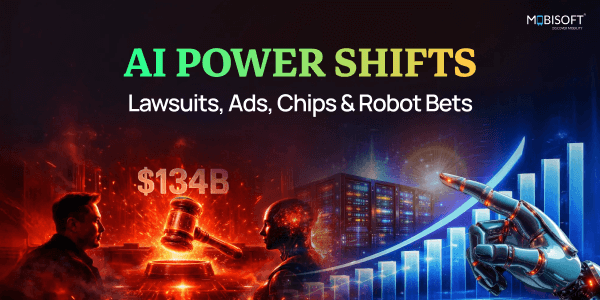
ChatGPT tests ads, Wikipedia licenses AI data, and Gemini gets personal.
OpenAI is introducing ads in ChatGPT for free and Go users in the U.S., aiming to expand access without forcing paid plans. The ads will remain separate from responses, ensuring that answers are guided by usefulness, not promotions. Paid tiers continue to stay ad free, and user conversations remain private, reflecting OpenAI’s commitment to trust and control while making the tool more widely available.
Meanwhile, Wikipedia is taking steps to monetize its content for AI access. Through Wikimedia Enterprise, major tech firms, including Amazon, Meta, and Microsoft, can now license structured data instead of scraping pages. This ensures AI models rely on verified human-edited knowledge, giving value to content that powers everything from chatbots to search engines. At the same time, Google’s Gemini AI is becoming more personal, connecting Gmail, Photos, YouTube, and Search in a single tap. Users can now access context-aware suggestions and retrieve information across apps, making everyday tasks faster and smarter.
Beyond these developments, OpenAI Translate has launched as a standalone tool, Skild AI raised $1.4 billion for versatile robotics, and Daimler Truck leveraged graph technology to modernize complex IT systems. These innovations showcase how AI and automation are rapidly advancing across industries.
ChatGPT Tests Ads to Keep Access Open While Protecting User Trust and Privacy
OpenAI is testing ads to fund wider access without pushing paid plans. ChatGPT ads will stay separate from answers and never guide replies. User chats remain private. Free and Go users in the U.S. see limited ads. Paid tiers stay ad free.
Wikipedia Starts Charging AI Giants for Clean Data Access, Not Scraped Pages
Wikimedia struck paid deals with major tech firms to share structured knowledge instead of scraping. Through enterprise access, Amazon, Meta, and others now license Wikipedia data to train models. Wikipedia AI licensing puts value on human-edited facts and formal data use.
Gemini Adds Personal Intelligence to Connect Your Apps Seamlessly
Google’s Gemini AI now links Gmail, Photos, YouTube, and Search with one tap. Personal Intelligence retrieves details from emails, photos, and videos to answer questions quickly. It makes daily tasks easier, offering context-aware suggestions based on your connected apps and activity.
Top AI Agent SDKs to Power Smarter Automation in 2026
Engineering teams face a maze of choices when picking AI agent SDKs. This guide reviews leading frameworks like LangGraph, Microsoft Agent Framework, and OpenAI Agents SDK, highlighting real strengths, trade-offs, and practical insights for building scalable, production-ready AI automation systems.
OpenAI Unveils ChatGPT Translate for Smarter, Interactive Language Help
OpenAI’s ChatGPT Translate now offers instant translations in over 50 languages. Users can type, speak, or upload images for context-aware results. The tool adapts tone, idioms, and style, letting you refine translations or continue conversations directly in ChatGPT.
Three Thinking Machines Co-Founders Return to OpenAI Amid Talent Shuffle
OpenAI is welcoming back Barret Zoph, Luke Metz, and Sam Schoenholz from Mira Murati’s startup. The move highlights aggressive OpenAI hiring as the company strengthens its team. Thinking Machines Lab adjusts leadership, naming Soumith Chintala as new CTO.
Elon Musk Seeks $134 Billion from OpenAI and Microsoft in Latest Legal Clash
Elon Musk claims his early contributions justify $134 billion from OpenAI and Microsoft. The lawsuit cites seed funding, employee recruitment, and influence. OpenAI disputes the numbers, calling the case a misrepresentation. The Microsoft OpenAI dispute adds another twist to ongoing AI legal battles.
Practical Guide to Fixing Bugs in Fast-Built Vibe-Coded Apps
Vibe-coded apps, often built quickly with AI, can be fragile and bug-prone. This guide shows how to stabilize AI-generated code, identify root causes, add tests, and refactor safely. Following these steps helps teams tame chaos and maintain AI-generated codebases with confidence.
Rupert Murdoch’s News Corp brings smart AI tools into the newsroom
Symbolic.ai’s platform helps journalists cut research and production time while keeping accuracy high. Dow Jones Newswires reports up to 90% faster workflows. By using AI in journalism, reporters can focus more on storytelling, analysis, and deep reporting instead of routine tasks.
Skild AI Raises $1.4B to Power Robots with a Versatile Smart Brain
Skild AI secured $1.4 billion from Nvidia, Jeff Bezos, and others to advance its Robotics AI funding efforts. Its Skild Brain model adapts to many robots, learns from human videos, and improves in real time, letting machines handle diverse tasks without extensive fine-tuning.
US Clears NVIDIA to Sell Advanced AI Chips in China Under New Rules
The US approved shipments of Nvidia’s H200 processors to China, with conditions on security and non-military use. The decision affects NVIDIA China AI chips, aiming to balance trade, tech access, and domestic supply while letting Nvidia expand its market under strict oversight.
Accelerate Software Delivery with Expert DevOps Automation Services
Mobisoft Infotech DevOps services help teams build, deploy, and manage projects faster. By automating CI/CD pipelines, deployments, and infrastructure, we improve productivity, security, and collaboration. With DevOps automation, businesses reduce errors, scale efficiently, and focus on delivering high-quality software consistently.
Daimler Truck Uses Graph Tech to Streamline Complex IT Systems
Daimler Truck leveraged graph databases to untangle 1,500 interconnected systems during its split from Mercedes-Benz. The approach improved visibility, uncovered hidden dependencies, and reduced applications by 40%, demonstrating how IT modernization can boost safety, efficiency, and long-term operational insight.
What Else is Happening?
- DeepMind CEO Says China’s AI Is Just Months Behind the US
- Israel Launches AI Supercomputer to Boost Tech Innovation
- Sequoia Talks to Join Anthropic’s $25B Funding Round
- OpenAI CFO: Revenue Surpasses $20 Billion in 2025
- ClickHouse Raises $400M, Buys AI Observability Startup
- Microsoft Predicts Personal AI Companion Within Five Years
- Microsoft Partners with PayPal, Stripe for AI Shopping
- Spotify Increases US Premium Subscription Prices
- YouTube Rolls Out Enhanced Parental Controls for Teens
What stands out this week is how quickly AI decisions are becoming business decisions. Pricing models are changing. Data ownership is being formalized. Talent is moving back to where scale and infrastructure matter most. At the same time, AI tools are getting closer to daily work, from translations and robotics to software delivery and IT operations. The common thread is control. Companies are tightening how AI is built, paid for, deployed, and governed. For teams watching from the sidelines, this is the moment to pay attention. The rules are still being written, but the direction is getting clearer.
Subscribe to our tech news newsletter. Receive regular insights that keep you informed. And if you find it valuable, please share it with your network to help spread the word. Catch you next time with fresh insights on AI and Tech, right here.
 Mobisoft Team
 January 21, 2026