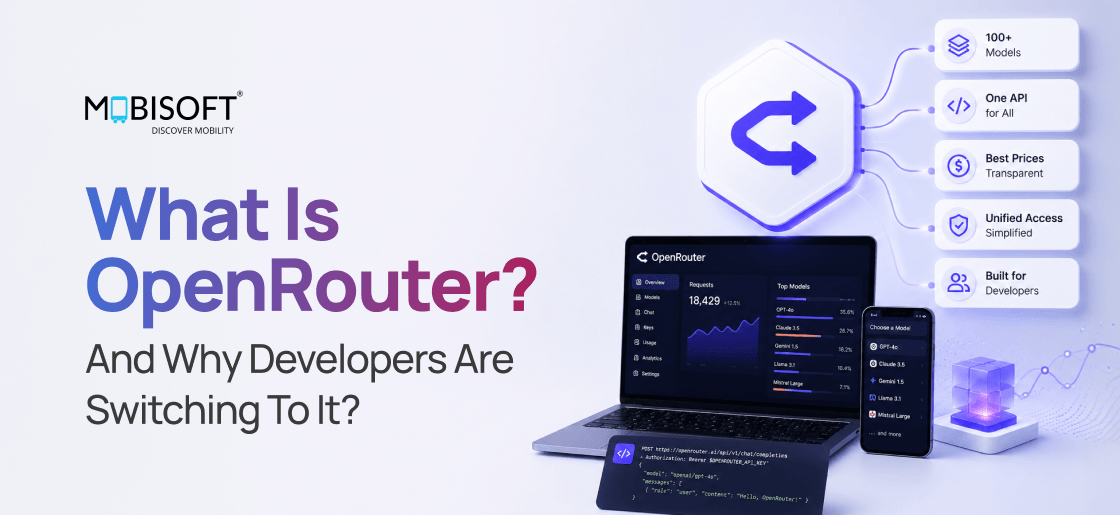
Modern software teams rarely rely on a single AI model. They test many models from many different providers. Each provider brings its own keys, billing, and quirks. Managing all of that quickly becomes a real burden. OpenRouter exists to remove that burden for good. It gives developers one doorway into the entire model ecosystem. This guide explains the platform, its features, and its pricing. We will also cover its remarkable growth through 2026.
The company recently closed a major Series B round. Its valuation more than doubled within a single year. Weekly token volume now sits at staggering levels. That momentum is why developers keep paying close attention. In May 2026, OpenRouter raised $113 million and hit a $1.3 billion valuation. The round was led by Alphabet's growth fund, CapitalG. That signal alone tells you the category matters.
What Is OpenRouter?
OpenRouter, at its core, is simple to grasp. It is a single gateway to the world of language models. Developers connect once and reach hundreds of options instantly. The platform handles the messy plumbing behind the scenes.
A Unified API Gateway For Language Models
At its simplest, OpenRouter is an AI API gateway for models. It accepts your request and forwards it to a provider. The provider runs the model and returns a response. You never touch the underlying provider integration yourself. This is the heart of what an LLM router does. The OpenRouter API wraps every supported model in one interface.
Think of it as a control tower for inference. Your traffic lands in one place and gets directed. Many teams pair this setup with proper AI business consulting to plan model usage. The gateway then carries out that plan in production.
One Connection To Hundreds Of Providers
OpenRouter sits between you and a vast catalog of models. It currently spans more than 400 models from many labs. These come from OpenAI, Anthropic, Google, and open source teams. You can access multiple AI models without separate contracts anywhere. The result feels like an AI model marketplace under one roof.
The platform behaves as a true multiple LLM API platform for builders. A few provider categories you can reach include:
- Closed frontier labs such as OpenAI, Anthropic, and Google.
- Open weight providers offering models like Llama and Qwen.
- Specialized labs focused on coding, reasoning, or speed.
This breadth is why an AI solutions company often standardizes on it. One integration covers nearly every model a team might want.
An OpenAI Compatible Design
The OpenRouter LLM API mirrors the familiar OpenAI request format. Developers already fluent in that format adopt it within minutes. You point your client at a new base URL. Then you swap the model name and keep your existing code. This drop in design removes most migration friction completely.
Because of that compatibility, switching models needs almost no rewrites. You change one parameter to test a different model entirely. That ease is the quiet superpower of this AI model router. It lowers the cost of trying something new.
A Brief History Of Its Growth
OpenRouter grew from a niche tool into core infrastructure. Its rise tracks the broader explosion in model variety. More models meant more keys, and more keys meant more pain. The platform answered that pain at exactly the right moment. Strong funding and adoption followed quickly through 2026.
The numbers below capture how fast things moved recently.
| Milestone | Detail |
| Series A valuation | Around $547 million in 2025 |
| Series B raise | $113 million led by CapitalG |
| Series B valuation | Roughly $1.3 billion in May 2026 |
| Supported models | More than 400 across many providers |
| Weekly token volume | About 25 trillion tokens |
Teams building on this scale often lean on cloud development services for support. The infrastructure demands grow alongside the token counts shown above.
How OpenRouter Works?
Understanding the mechanics makes the value much clearer. The platform turns many provider workflows into a single flow. Each request follows a predictable path from start to finish. Let us walk through that path step by step.
The Single API Key And Unified Request Format
You generate one key inside the OpenRouter dashboard. That key authenticates every request across every supported model. There is no separate login for each provider account. The unified request format stays identical no matter the model. You send messages, set parameters, and pick a model name.
This consistency saves enormous amounts of engineering time. Your team writes the integration once and reuses it forever. Switching from one lab to another stays trivial. The OpenRouter AI layer hides each provider's unique requirements neatly.
Automatic Routing Logic
Routing is where the platform earns its name. OpenRouter can choose a provider based on several factors. You guide that choice through simple preferences in the request.
Common routing criteria include the following options:
- Lowest cost among providers serving the same model.
- Fastest response time for latency sensitive workloads.
- Highest availability when one provider grows congested.
You stay in control of these priorities at all times. The router then applies your rules to every single call. Good data engineering consultants often help tune these routing decisions. Smart routing keeps both spending and latency under control.
Normalized Response Format
Different providers return data in slightly different shapes. That inconsistency usually forces teams to write fragile adapters. OpenRouter normalizes responses into one predictable structure instead. Your parsing logic works the same across every model.
This normalization matters more than it first appears. It means swapping models never breaks your downstream code. You read the output the same way every time. The LLM API gateway absorbs the differences so you avoid them.
Fallback Handling When A Provider Fails
Providers go down, hit limits, or slow to a crawl. A single provider setup leaves you exposed during outages. OpenRouter watches for these failures and reacts automatically. When one path fails, it retries through another provider.
This failover happens without any extra work from you. Your application keeps serving users while the platform reroutes traffic. That resilience is a core reason teams trust the gateway. Reliability becomes a built-in feature rather than an afterthought.

Key Features Of OpenRouter
The feature set extends well beyond simple routing. Each capability targets a real friction point developers face. Together, they explain the platform's rapid adoption curve. Here are the features that matter most today.
Access To Over 400 Models Through One Integration
The headline feature remains sheer model coverage. One integration unlocks more than 400 models instantly. You compare frontier and open source options side by side. New labs appear in the catalog soon after launch.
This catalog updates constantly as providers ship new releases. You rarely wait long for a freshly announced model. The breadth turns the platform into a genuine AI model marketplace. Choice on this scale was nearly impossible before.
Model Routing And Automatic Failover Across Providers
Routing and failover work together as one system. The router picks the best provider for each request. Failover steps in the moment that the provider stumbles.
Two practical benefits stand out from this design:
- Your uptime improves because no single provider is critical.
- Your costs drop because cheaper paths get used first.
Both benefits arrive without changing a line of code. The system quietly protects your application around the clock.
Model Fusion, Which Combines Multiple Models
Model Fusion is one of the platform's boldest features. It treats your prompt as a small expert panel. Several models analyze the prompt in parallel together. A judge model then synthesizes their answers into one.
The synthesis highlights consensus, contradictions, and unique insights clearly. It also flags blind spots that a single model might miss. You can choose a quality panel or a budget panel. Advanced users override both the panel and the judge. Fusion aims for stronger output than any lone model.
A Free Model Tier
OpenRouter offers a genuine free tier for experimentation. Models with an ID ending in : free cost nothing to call. As of mid 2026, more than 25 free models exist. The dedicated openrouter/free router picks among them for you.
These free options suit prototypes and learning projects well. Popular free models have included Qwen, DeepSeek, and Llama variants. You test ideas before committing any real budget. That low barrier pulls many newcomers onto the platform.
A Model Comparison Tool
Choosing a model involves several competing tradeoffs. OpenRouter provides a comparison tool to ease that decision. You evaluate pricing, context length, and benchmarks together. Everything sits on one screen for quick scanning.
This view removes guesswork from model selection entirely. You see exactly what each option costs per token. You also see how large a context each one accepts. Informed choices become fast instead of tedious research projects.
Presets And Support For Multiple API Formats
Presets let you save reusable configurations for your requests. You define settings once and reference them by name later. The Presets API now supports versioning directly from requests. That makes configuration management cleaner across large teams.
The platform also speaks more than one API dialect. It supports both chat completions and native Anthropic Messages formats. Recent updates added Anthropic Messages and Responses skins too. Teams keep their preferred format without awkward translation layers.
Speech And Transcription APIs
OpenRouter expanded beyond text during mid 2026. Two new endpoints added speech synthesis and audio transcription. Both run across multiple providers under the same key. Voice features now share the gateway with text models.
This addition widens the platform's reach considerably. You build voice interfaces without finding a separate vendor. Transcription and text to speech follow the familiar request pattern. One account now covers far more than chat alone.
Private Models And Enterprise Workspace Controls
Large organizations need more than public model access. OpenRouter answers with private models for enterprise customers. You route to your own fine tuned or dedicated deployments. These run alongside the public catalog you already use.
Workspace controls give teams structure and oversight together. Admins manage members, keys, and permissions from one place. This feature currently runs as an invite only beta. It targets companies with serious governance requirements.
IP Allowlist Enforcement And Security Controls
Security controls have matured significantly across the platform. IP allowlists now actively block requests from unauthorized addresses. A key with an allowlist rejects bad sources with a 403. That stops leaked keys from causing real damage.
These guardrails matter most for production deployments. You restrict where your keys can be used safely. Combined with usage alerts, they limit your exposure greatly. Security becomes configurable rather than an afterthought bolted on later.
Custom Data Policies For Compliance
Enterprises in regulated fields carry strict data obligations. OpenRouter lets organizations set custom data handling policies. You choose which providers may receive your traffic. You also enforce zero data retention where required.
This flexibility helps teams meet internal and legal standards. You align model usage with your compliance posture directly. Policies apply automatically to every request your team sends. Control over data flow stays firmly in your hands.
Rankings And Usage Analytics
OpenRouter publishes rich data about model usage trends. Public rankings reveal which models lead by token volume. A daily rankings dataset endpoint exposes this programmatically. Researchers and builders both tap into that resource.
The endpoint returns the top 50 models per day. It also bundles every smaller model into one aggregate row. You authenticate with any valid key to query it. This visibility makes market trends easy to track over time.
Pricing And Cost Structure
Pricing is often the first question developers ask. OpenRouter keeps its model unusually transparent and fair. You pay providers their normal rates in most cases. The platform earns money through a small, predictable fee.
A Flat Credit Purchase Fee Instead Of Per Token Markup
OpenRouter does not mark up provider token prices. The catalog price matches what each provider charges directly. Instead, the company charges a fee on credit purchases. That fee currently sits near 5.5 percent per purchase.
Crypto payments carry a slightly lower flat fee instead. This structure keeps per token spending fully predictable for you. You always know the true model cost upfront. The pricing approach feels refreshingly honest in this market.
Breakdown Of Free Tier Limits
The free tier comes with sensible usage caps. These caps keep the shared resource fair for everyone. The table below summarizes the key limits clearly.
| Tier | Daily requests | Per minute limit |
| Free, under $10 spent | 50 free requests | 20 per minute |
| Free, after $10 credits | 1,000 free requests | 20 per minute |
Failed attempts still count against your daily quota. Plan your testing around that detail to avoid surprises. The per minute cap stays fixed at twenty requests. Heavy free usage hits these ceilings fairly quickly.
When Paying For Credits Unlocks Higher Rate Limits
A single ten dollar purchase changes your free limits permanently. Your daily free request floor jumps from 50 to 1,000. That credit never expires once it lands in your account. Many developers buy credits purely for this benefit.
The per minute throughput on free models stays the same. Buying credits raises your daily ceiling, not your burst rate. For paid models, your spending scales with actual usage. This staged approach rewards committed builders without locking out beginners.
Cost Considerations For High Volume Enterprise Use
Large customers run very different math than hobbyists do. At scale, the percentage fee becomes a real line item. Enterprises can negotiate custom rates to address that concern. Volume commitments often unlock better terms behind the scenes.
High throughput teams should model their costs carefully first. Compare the convenience against the cumulative fee over time. For many, the saved engineering effort justifies the spend. Others with extreme volume push for negotiated agreements instead.
Why Developers Are Switching To OpenRouter
The pitch resonates because the pain is universal. Every multi model team has felt this exact friction. OpenRouter answers each frustration with a concrete feature. Here is why so many builders make the move.
Avoiding The Overhead Of Separate Accounts And Keys
Each provider once meant another account to manage. Separate keys, separate bills, and separate dashboards piled up fast. OpenRouter collapses all of that into one account. You manage a single key and a single balance.
This consolidation saves both time and mental energy. Onboarding a new model no longer means new paperwork. Your billing stays in one tidy place. The reduced overhead alone wins many teams over.
Faster Experimentation Across Models
Trying a new model used to require real effort. You wrote a fresh integration for each provider format. Now you change one parameter and run again. Experiments that took days now take minutes.
That speed encourages healthy comparison and tuning habits. Teams test more options and find better fits faster. The OpenRouter API turns model selection into a quick experiment. Innovation accelerates when friction nearly disappears.
Built In Reliability Through Automatic Failover
Outages hit every provider at some point. A single provider setup leaves you fully exposed. OpenRouter reroutes around failures without any manual steps. Your users rarely notice that anything went wrong.
This resilience matters most during traffic spikes and incidents. The platform spreads risk across many provider paths. You gain enterprise grade uptime without building it yourself. Reliability becomes the default rather than a costly project.
Cost Optimization By Routing To Cheaper Models
Not every task needs the most expensive model. Simple jobs run fine on cheaper, faster options. OpenRouter routes work to lower cost providers automatically. You preserve quality while trimming the bill noticeably.
Smart routing can cut spending without hurting output noticeably. You reserve premium models for genuinely hard problems only. The savings compound across millions of daily requests. Cost control becomes a feature instead of a constant worry.
Faster Access To Newly Released Frontier Models
New frontier models generate enormous excitement on launch day. OpenRouter often lists them within hours of release. You test the latest model without waiting for access. That speed keeps your product on the cutting edge.
The platform added five new models in ten days recently. Such cadence shows how quickly the catalog refreshes. You never feel stuck on yesterday's best model. Day one access has become a genuine competitive advantage.
Reduced Vendor Lock In
Committing fully to one provider carries real risk. Prices change, models deprecate, and terms get rewritten. OpenRouter keeps your options open at all times. You move between providers with a single parameter change.
This freedom extends to the open source world too. You can route to an open-source LLM when it fits. That optionality protects you against any single vendor's decisions. Flexibility like this is hard to give up later.
OpenRouter For Enterprises
Enterprises evaluate tools against stricter criteria than individuals. Governance, privacy, and compliance often outrank raw convenience. OpenRouter built features specifically for these serious buyers. Here is how the platform serves larger organizations.
Data Privacy And Default No Logging Policy
Data handling sits at the top of enterprise concerns. OpenRouter follows a zero data retention policy by default. It does not store your prompts unless you opt in. Many providers behind it honor the same standard.
This default protects sensitive information from unwanted retention. You decide explicitly whether any logging happens at all. That control reassures teams handling confidential or regulated data. Privacy by default removes a common adoption blocker.
Workspace Level Governance For Teams
Teams need a structure that individual accounts cannot provide. OpenRouter offers workspace level governance for exactly that reason. Admins manage members, keys, and spending limits centrally. Oversight stays clear even as the team grows.
These controls prevent chaos across large engineering organizations. You see who uses which models and how much. Budgets and permissions stay enforced automatically across the workspace. Governance becomes manageable rather than a spreadsheet nightmare.
Use In Agentic Systems To Control Spend
Agentic systems can rack up costs alarmingly fast. An agent may call models in long, recursive loops. OpenRouter helps cap that runaway spending with hard limits. You prevent escalation before it damages your budget.
The platform also lets you pin agents to cheaper models. That keeps autonomous workflows affordable and predictable over time. Spend controls matter enormously as agents grow more capable. Builders gain confidence to deploy autonomy safely.
Compliance Considerations For Regulated Industries
Finance and healthcare face especially demanding compliance rules. OpenRouter supports custom data policies to meet those standards. You restrict which providers may touch your data directly. Zero retention options align with strict regulatory requirements.
These tools help regulated teams adopt many models responsibly. You document your data flows for auditors with confidence. Compliance stops being a reason to avoid experimentation. The platform meets serious industries on their own terms.
Limitations And Considerations
No tool fits every situation perfectly. OpenRouter carries real tradeoffs worth understanding clearly. Honest evaluation helps you decide where it fits. Here are the limitations to weigh carefully.
Reliability Tradeoffs With Free And Randomly Routed Models
Free models offer great value but variable reliability. They can grow slow or unavailable during peak demand. Randomly routed requests may land on inconsistent providers. Production systems should treat free tiers with caution.
Critical workloads deserve paid models and explicit routing rules. You trade a little cost for far steadier behavior. Reserve free options for prototypes and low-stakes tasks. Reliability and price always pull against each other here.
The Non-Deterministic Nature Of Automatic Routing
Automatic routing can pick different providers across calls. That variability sometimes produces subtly different outputs each time. Use cases needing strict determinism may dislike this behavior. You can pin a provider to regain consistency.
Pinning sacrifices some flexibility for predictable results. Weigh that tradeoff against your reproducibility requirements carefully. Testing pipelines often prefer fixed providers for stable comparisons. Know your needs before trusting fully automatic routing.
Pricing Fees That May Not Suit Extreme Volume
The credit fee feels tiny on a small scale. At massive volume, that percentage becomes a meaningful expense. Teams sending billions of tokens should run the numbers. Negotiated rates may be necessary to stay competitive.
Some heavy users compare this fee against self hosting. Running a self hosted LLM can lower costs at extreme scale. Others choose to run AI models locally for full control. The right answer depends on your volume and team.
Dependence On OpenRouter As An Additional Layer
OpenRouter adds one more layer between you and providers. That layer brings convenience but also a dependency. If the gateway has issues, your access feels them. Some teams dislike relying on any intermediary at all.
For those teams, running LLMs locally offers an alternative path. You can run LLM locally to remove external dependencies entirely. Hosting local large language models keeps everything inside your walls. A local LLM setup trades convenience for total ownership. The choice between a gateway and self hosting stays yours.
Practical Use Cases
Theory matters less than real application in practice. OpenRouter shines across several common developer scenarios. Each one leans on a different platform strength. Here are the use cases where it excels.
Rapid Prototyping Across Multiple Models
Prototyping demands fast iteration above almost everything else. OpenRouter lets you swap models with one parameter. You compare answers from several models in minutes. Ideas move from concept to demo remarkably quickly.
This speed suits hackathons and early product exploration well. You discover which model fits your task best fast. No integration rewrites slow your momentum down. Prototyping becomes a genuinely enjoyable part of building.
Running Coding Agents That Need Several Providers
Coding agents often juggle many specialized models at once. One model plans while another writes the actual code. OpenRouter feeds all of them through a single key. The agent switches models without complex provider handling.
This setup keeps powerful coding agents simple to operate. You route reasoning and generation to their best models. Failover keeps the agent working during provider hiccups. Multi model agents become practical rather than painful.
Building Cost-Aware Applications
Budget-conscious apps must watch every token spent. OpenRouter routes requests based on cost rules you set. Cheap tasks use cheap models, and hard tasks escalate. Your spending tracks the actual value delivered.
This pattern keeps consumer apps affordable at large scale. You serve many users without runaway inference bills. Routing logic enforces your budget automatically on every call. Cost awareness gets baked directly into the architecture.
Academic And Independent Research
Researchers need broad model access on tight budgets. OpenRouter grants access through one affordable account. Free tiers support early experiments at no cost. The rankings dataset fuels studies on usage trends.
Independent researchers especially value the low entry barrier. You compare dozens of models without institutional contracts. Open weights and frontier models sit side by side. Serious research becomes feasible for small, scrappy teams.
Conclusion
OpenRouter has earned its place as the default infrastructure. It solves a problem every multi model team faces. One key, one format, and hundreds of models together. That simplicity explains the platform's rapid and lasting adoption.
The growth story reinforces the technical case strongly. A 25 trillion weekly token volume shows real momentum behind it. Looking ahead, routing layers will only grow more central. As models multiply, choosing among them gets harder. A strong AI model router turns that complexity into an advantage. OpenRouter is becoming a core plumbing for AI. Builders who adopt it now stay flexible for whatever comes next.

Frequently Asked Questions
What Is OpenRouter Used For?
OpenRouter is used to access many AI models through one API. Developers send requests to a single gateway instead of many providers. It handles routing, billing, and failover so you avoid that work.
Is OpenRouter Free To Use?
OpenRouter offers a free tier with more than 28 free models. Free accounts get 50 daily requests, or 1,000 after spending ten dollars. Paid models charge provider rates plus a small credit purchase fee.
How Is OpenRouter Different From Calling Providers Directly?
Direct calls mean separate keys, billing, and code for each provider. OpenRouter replaces all of that with one key and one format. You also gain automatic failover and routing that direct integrations lack.
Does OpenRouter Store My Prompts And Data?
OpenRouter follows a zero data retention policy by default. It does not keep your prompts unless you explicitly opt in. Enterprises can also restrict which providers may receive their traffic.
When Should I Self-Host Instead Of Using OpenRouter?
Self hosting suits teams with extreme volume and strict control needs. Running an open source LLM locally can lower costs at large scale. For most builders, the gateway saves more time than it costs.
This content is for informational purposes only and may include AI-assisted research or content generation. While we strive for accuracy, information may evolve over time. Readers are advised to independently verify critical information before making decisions.

Mobisoft Team
Read more
Get the latest insights, industry trends, and expert perspectives from the Mobisoft Infotech team. Stay updated with our teams collective knowledge, discoveries, and innovations in the dynamic realm of technology.
 Mobisoft Team
 June 25, 2026