Roughly two million animals travel by air in the US every year. Each one carries a folder of paperwork behind it. Airlines set their own acceptance rules. Governments demand health certificates and permits. Customs offices in different countries ask for different forms entirely.
This complexity is why professional pet transportation services now depend on dedicated software. Operators who process shipments at scale have replaced manual tracking entirely. They now rely on purpose-built systems for live animal logistics. Compliance failures and missed flights pushed the industry toward better tools. The global pet relocation market was valued at nearly 2.51 billion dollars in 2025. Yet 67 percent of companies in this space still manage compliance by hand.
That gap is exactly where pet transportation technology makes the biggest difference. What separates leading operators from the rest is infrastructure, not extra effort. This article walks you through the systems and integrations behind reliable pet shipping.
Why Pet Shipping Demands More Than Standard Logistics Tools
Reliable pet transportation services depend on far more than a delivery van. Shipping a bicycle internationally needs a label and a customs form. Shipping a dog needs far more than that. A living animal carries welfare needs no package ever will.
A single pet shipment typically requires:
- A microchip and a current health certificate
- Vaccination records matched to the destination country
- An import permit, where the destination requires one
- A crate meeting exact breed and airline specs
Each requirement carries its own deadline and rejection risk. A missed vaccination window can delay a flight by weeks. A wrong crate dimension can get a shipment turned away at check-in. This is why generic freight software rarely fits the job. A tool built for boxes cannot make judgment calls about a living animal. Live animal logistics needs software that understands welfare, not just weight and volume.
Why Generic Software Falls Short
Standard transportation software built for parcels cannot handle these variables. A pallet does not need a rabies titer test. A pallet also does not experience stress during a long layover. Live animal logistics carries welfare obligations that generic systems were never designed to track. This gap explains why so many shippers eventually build dedicated pet transportation software of their own. The investment pays off the first time it prevents a rejected shipment.
The Regulatory Layers Behind Every Shipment
Every international pet shipment moves through several checkpoints:
- An ISO 11784/11785 microchip implanted before travel
- A vet health certificate, valid for just ten days in most countries
- A rabies titer test (FAVN) from an approved lab
- USDA APHIS endorsement for US-origin travel
Missing any single checkpoint can delay an otherwise fully compliant shipment for weeks. Each of these steps has a different issuing authority. Each one has its own format and its own rules. A pet shipping platform must track every one of them. It has to do this per animal and per shipment.
This underlying coordination problem is not unique to pet shipping alone. Established transportation management system providers already solve similar problems for general freight. They coordinate capacity, driver assignments, and delivery windows at scale. The same underlying architecture adapts well to live animal cargo booking. It simply needs pet-specific rules layered on top of that foundation. Shippers building from this foundation avoid reinventing basic scheduling logic from scratch.
A Real-World Example
Consider a family relocating from Chicago to Sydney. They need an import permit approved months ahead. They also need a rabies titer test completed at an approved lab. That test alone carries a waiting period before travel becomes possible. Miss that window and the entire relocation date moves back by weeks. A platform built for international pet transportation catches this timeline risk early. It flags the issue before the family even books their own flights.
Early Visibility Through Real-Time Tracking
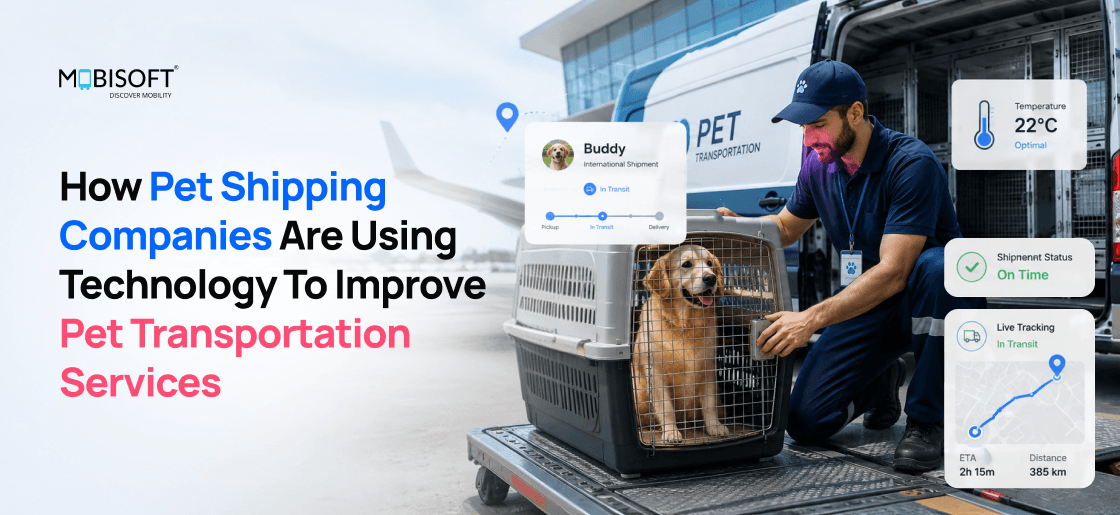
Modern pet transportation services now compete heavily on visibility. Owners now expect tracking from the very first pickup. A real-time vehicle tracking system covers this gap in the journey. It plugs directly into the ground transport leg of a shipment. GPS visibility then runs from home pickup through final delivery.
This visibility relies on a RESTful API linking two separate platforms:
- The pet taxi booking system
- The core case management system
Pet profiles and medical records get entered only once. Every handler in the chain can then access that same record directly. Owners simply check a single shared link instead of repeatedly calling for updates. This visibility alone reduces support calls and builds trust in the shipper.
Coordinating Vehicles And Handoffs
This connection depends on solid infrastructure beneath the ground transport layer. Strong fleet optimization software matches vehicles to animal size and breed. It also accounts for time-sensitive handoffs scheduled at airports. Without this layer, ground transport becomes its own disconnected silo. Operators often discover gaps only after a missed pickup.
A well-matched vehicle also reduces stress on the animal during transit. A large working breed needs different equipment than a small anxious cat. Matching the vehicle to the animal prevents unnecessary discomfort before the trip even starts. This kind of detail separates strong operators from ones still working off memory. Route sequencing must also protect narrow pickup windows before flight check-in closes.
A single shipment often passes through several separate handlers:
- A home pickup driver in the morning
- An airport handling agent for check-in
- A destination courier for final delivery
Coordinating these handoffs by hand creates gaps quickly. Each handoff needs a clear owner and a confirmed timestamp. A dedicated pet transportation management software removes most of this risk. It assigns each leg to the right handler automatically. It also confirms completion before the next stage begins. This structure prevents pets from arriving with no one assigned to collect them.
Why Manual Tracking Breaks Down At Scale
A single shipment might involve eight to twelve required documents. Multiply that across dozens of weekly shipments and spreadsheets stop working. Deadlines start to overlap across different cases. Documents get misfiled or forgotten entirely. A missed reminder can leave a pet stuck at an airport. The paperwork is simply not valid anymore by then. Growth exposes weaknesses that stayed hidden at smaller scale.
Operators who scale past a certain point feel this strain first in customer trust. An owner who calls twice for the same update starts to worry. A missed update, even a minor one, chips away at confidence in the shipper. That erosion happens gradually at first, then shows up in lost referrals later. Technology closes this gap before it ever becomes visible to the owner.
A custom pet transportation management software solves this problem directly:
- It attaches every document to a live case file
- It tracks validity windows without manual checking
- It flags missing items before a shipment gets scheduled
- Nothing reaches an airline booking without full clearance first
This change alters how operations teams spend their day entirely. Staff stop chasing paperwork and start managing genuine exceptions instead. A shipment that clears every check moves forward without any manual review. One that fails a check gets flagged for a human to examine. Automating the routine work frees people for the judgment calls that actually need them.

Core Technology Platforms Powering Modern Pet Shippers
Professional operators rely on a stack of connected systems. No single tool covers everything a pet shipper needs. Each platform handles one piece of the puzzle. Together, these systems form the backbone of reliable pet transportation services. Skipping any single layer eventually creates a visible gap somewhere in the process.
Case Management Software As The Operational Core
Every shipment functions as a project with its own timeline. It has an origin, a destination, and strict deadlines. Case management software tracks tasks and assigns them to staff. It stores every document in one central place.
- Smaller operators often customize Salesforce for this purpose
- Others use specialized platforms like PetTravel's built-in case tools
- Either approach beats tracking shipments through a shared inbox alone
Companies processing more than 100 shipments monthly usually outgrow these generic structures. At that volume, off-the-shelf tools start creating friction instead of removing it. A custom-built pet shipping management software system reflects the exact workflow a shipper runs. It does not force a generic sales pipeline onto a different process. Staff adapt faster to software modeled on their own daily routine.
A generic CRM treats a shipment like a sales deal moving through stages. A dedicated dispatch routing software for pet transportation treats it differently. Staff spend less time switching between tools and more time solving real problems.
Compliance Document Management At The Center Of Everything
Compliance is the single biggest source of delay in this industry. A dedicated document management layer tracks every requirement closely. It watches each item against its own validity window. The table below shows the documentation load a typical shipment carries.
| Document | Issuing Authority | Key Requirement |
| ISO Microchip Record | Veterinarian | Chip number and implant date logged |
| Health Certificate | Accredited Vet | Valid for 10 days in most countries |
| Rabies Titer Test (FAVN) | Approved Lab | Required for EU, UK, Japan, Australia |
| USDA APHIS Endorsement | USDA APHIS | Required for US-origin international travel |
| Import Permit | Destination Country | Mandatory for Australia, Japan, Singapore |
Automated systems flag documents that are close to expiry. They block shipment scheduling until every item clears review. Without this safeguard, a certificate can expire between manual checks. Nobody notices in time. The pet arrives at the airport and gets turned away at the counter. That single failure costs a rebooking fee and a frustrated owner. Automated tracking removes this entire failure mode from daily operations. The system catches the expiring certificate long before departure day arrives.
Why A Dedicated Platform Beats Generic Compliance Tools
Generic compliance software tracks generic deadlines only. It does not know that FAVN tests need a minimum waiting period. It also misses country-specific rules on certificate validity. Pet shipping technology encodes these rules directly into its logic.
Rules differ by country pair in ways generic tools cannot capture:
- A shipment from the US to Japan follows one documentation path
- A shipment from the US to the UK follows a different one entirely
- Staff relying on memory alone eventually misapply a rule from the wrong pair
A rules engine built around country-pair logic removes this guesswork entirely. Manual tracking simply cannot keep up with that level of variation.
Airline Integration And The Challenge Of Booking Live Cargo
Booking a pet on a flight differs completely from booking standard freight. Airlines apply species restrictions and breed restrictions that change constantly. Managing this by phone and email does not scale well. It breaks down fast once shipment volume increases.
Managing Airline-Specific Acceptance Policies
Airline pet policies vary widely and change without much warning:
- Many airlines refuse brachycephalic breeds in cargo holds entirely
- Others suspend pet acceptance during hot weather, often above 85 degrees Fahrenheit
- Crate size limits vary by aircraft type
- Cabin allowances vary further depending on route and fare class
A booking valid last month can become invalid without any advance warning. Seasonal patterns compound this further for shippers working across hemispheres. A summer embargo in one country can overlap with winter demand in another.
None of these policies live inside one standardized database. A shipper working across multiple carriers needs one system. That system must consolidate every policy automatically and reliably. Staff should never need to check ten separate websites to confirm one shipment.
Building Direct Airline Relationships Through Technology
Major freight booking platforms like Cargo Wise and WebCargo offer partial airline integration. Full pet acceptance confirmation usually requires direct airline API access. Companies that have built these connections hold a real edge. Some maintain direct relationships with fifteen to twenty major airlines.
Building these relationships takes time and rarely happens overnight. Airlines vet a shipper's operational history before granting API access. A shipper with a clean compliance record moves through this process faster. This is another reason why strong pet shipping technology compounds in value over time. Each verified integration becomes a permanent advantage over competitors still working by phone.
Ground Transport Integration Across The Full Journey
International pet relocation rarely begins or ends at an airport. Most pets travel from a home or clinic first. They move to a holding facility before final delivery to a new home. Technology needs to cover this entire chain, not just flights.
Coordinating Multiple Legs In One Day
Owners often underestimate how many separate legs a single relocation involves:
- A morning pickup from home or a clinic
- A midday check-in at a holding facility
- An evening flight departure
A missed pickup window at any leg can cascade further down the chain. Coordinated technology treats this entire sequence as one connected plan.
Matching also matters for the animal itself. A large-breed dog needs a specific crate size and a calm, experienced handler. A senior cat with mobility issues needs gentler handling during loading. A purpose-built system flags these details early and assigns the right equipment and crew. This kind of matching prevents avoidable stress at every stage of the journey.
Connecting Pet Taxi Platforms To Core Case Management
A complete journey links two systems into one continuous record. It combines ground transport booking with core case management software. Breed-specific vehicle matching happens on the ground transport side. Welfare monitoring data feeds directly into the same shipment record.
This kind of link removes a common failure point in the industry. Ground transport teams often work separately from airline booking teams. A compliance issue on one side can go unnoticed elsewhere. A connected system surfaces that issue to every team at once. The animal stays safely at the origin until every document clears.
This same coordination logic scales well beyond a single city or region. A shipper expanding into new markets adds handlers without rebuilding workflows. New drivers and agents simply plug into the existing routing structure. It is one clear sign of a pet shipping platform built to last.
Customer Experience Technology For Anxious Pet Owners
Shipping a pet is an emotional experience for most owners. Real-time visibility reduces anxiety throughout the entire journey. The best pet transportation services treat communication as a core product feature.
Mapping The Owner Journey From Booking To Delivery
A well-built customer portal sends updates at every meaningful milestone:
- Reminders at fourteen, seven, and three days before each deadline
- A confirmation within 24 hours of document upload
- A handler confirmation with a photo on arrival
This structured flow turns a stressful process into a transparent one. Owners always know exactly where their pet stands in the journey.
Reducing Support Load Through Automation
Automated milestone updates do more than reassure owners. They cut the volume of manual status calls significantly. Every update replaces a phone call a staff member would otherwise handle. This is where pet relocation software earns value beyond compliance tracking alone. It turns customer service into a byproduct of good design. It is not treated as a separate cost center anymore.
Owners rarely call to ask basic status questions once automation handles updates. Support staff can then focus on genuine exceptions instead. A smaller team can handle a much larger volume of shipments.
Protecting Owner And Pet Data Across The Journey
Every shipment record carries sensitive information about a pet and its owner. Medical history, home addresses, and payment details all live in one file. Security cannot be an afterthought once several parties touch that record.
Building Access Controls Into The Platform
Role-based access controls limit what each handler can actually see:
- A driver needs pickup details but not payment information
- An airport agent needs crate specifications but not full medical history
- Encryption protects records as they move between systems
These controls matter more as pet transportation software connects to more third parties. Every new integration point is also a new point of potential exposure.
Building The Complete Technology Stack
No single software category covers everything a pet shipper needs. Strong operators combine several layers into one system. The table below summarizes how these pieces typically fit together.
| Function | Technology | Pet-Specific Requirement |
| Case Management | Custom platform or Salesforce | Compliance tracking, deadline alerts |
| Document Storage | Cloud storage with version control | Expiry tracking, shareable vet links |
| Airline Booking | Direct API or Cargo Wise | Embargo monitoring, crate compliance |
| Customer Portal | Custom web application | Document upload, milestone tracking |
| Ground Transport | Pet taxi platform API | Welfare monitoring, GPS visibility |
| Communications | SMS and email automation | Milestone-triggered notifications |
Getting Staff And Handlers To Actually Adopt New Systems
Technology only helps if the people using it trust it. A platform that sits unused because staff prefer old habits delivers no value. Rolling out new pet transportation software needs a clear adoption plan alongside the purchase.
Training Handlers Across A Distributed Network
Pet shippers often work with a distributed network of handlers. Training needs to happen remotely and stay simple to follow. Handlers checking off tasks from a phone screen adopt tools faster. Complex desktop software often gets ignored in the field. The best pet transportation technology platforms are designed for this reality from day one.
A strong rollout plan usually covers a few basics:
- A mobile-first interface handler can be used between stops
- Short, task-specific training instead of long onboarding sessions
- A clear escalation path when something does not fit the workflow
Skipping these steps is the most common reason adoption stalls after launch. A rushed rollout often does more harm than the old manual process ever did.
Measuring Results Once The Technology Is In Place
Adopting new systems only matters if the results are measurable.
Metrics Worth Tracking
Four metrics matter most for pet shipping operators:
- Document rejection rate, once automated validation runs before submission
- Average turnaround time, once handoffs stop requiring manual phone calls
- Case resolution time, from open to close
- Support ticket volume, as a sign of how much manual reassurance owners still need
Operators running strong pet transportation management software typically see rejection rates drop sharply. Rates often fall below five percent within months. Support ticket volume often drops by a third once automated updates take over. These are not vague promises. They are measurable outcomes tied directly to the systems in place.
Why This Technology Investment Pays Off
Regulatory document assembly once took close to 48 hours per shipment. The right platform now cuts that down to roughly four hours. That difference goes well beyond simple time savings. It directly reduces the risk of a rejected or delayed shipment. Faster document turnaround also means happier owners and fewer emergency calls.
Faster Response To Changing Rules
Import requirements change periodically, sometimes with little notice. A platform with an updated rules engine adapts within days, not weeks. Shippers still relying on manual research risk missing these changes entirely. That gap can mean weeks of delay for owners caught mid-relocation.
Operators who invest in connected systems handle more volume with less staff. They also build the kind of trust that brings owners back. The pet relocation market keeps growing past 4.3 billion dollars each year.
What This Means For Pet Shipping Operators Today
Choosing the right combination of tools matters more than any single purchase. Compliance tracking, airline integration, and customer communication must work together. Ground transport cannot remain a disconnected piece bolted on separately.
Ground transport, compliance, and airline booking all need to work as one system. Companies that treat this as one complete technology stack gain a real edge:
- Staff spend less time on paperwork and more time on animal welfare
- Owners notice the difference through fewer delays and clearer updates
- Smaller operators can start with a few connected tools and expand gradually
- Larger operators benefit from custom systems built around their exact workflow
Either path starts with treating technology as core infrastructure, not an afterthought. That mindset is where reliable pet transportation services are heading next.

Frequently Asked Questions
How do pet transportation services handle sudden airline embargo changes?
A reliable pet transportation software tracks every airline's temperature and seasonal embargo calendar in one consolidated system. This prevents a booking from becoming invalid overnight without your team noticing in time. You get a heads-up before a shipment is affected, not after.
What makes the pet transportation platform different from regular shipping software?
General shipping software was not built for live animals. It misses welfare rules, crate specs, and country-specific document timelines. A dedicated pet transportation technology encodes these rules directly into the platform. You get judgment calls that generic freight tools simply cannot make.
Can a small pet shipping platform scale without rebuilding everything?
Certainly. A well-built pet shipping platform is designed to grow with you from day one. New handlers and routes plug into the existing structure without any workflow rebuild. You expand into new markets without losing the systems you already trust.
How does Mobisoft Infotech's approach to pet relocation software reduce support calls?
Mobisoft Infotech builds pet relocation software around proactive, milestone-based owner updates instead of reactive status calls. Owners get automatic notifications at every key stage of the journey. You free up your support team to focus on real exceptions instead of routine check-ins.
Why does international pet shipping need more coordination than domestic moves?
International transportation involves import permits, country-specific health certificates, and customs rules that domestic shipments never face. Reliable pet shipping platform ties all of these requirements to a single shipment timeline. You avoid the timing conflicts that cause last-minute rebooking costs.
This content is for informational purposes only and may include AI-assisted research or content generation. While we strive for accuracy, information may evolve over time. Readers are advised to independently verify critical information before making decisions.

Nitin Lahoti
Read more
Nitin Lahoti is the Co-Founder and Director at Mobisoft Infotech. He has 15 years of experience in Design, Business Development and Startups. His expertise is in Product Ideation, UX/UI design, Startup consulting and mentoring. He prefers business readings and loves traveling.
 Nitin Lahoti
 August 20, 2026