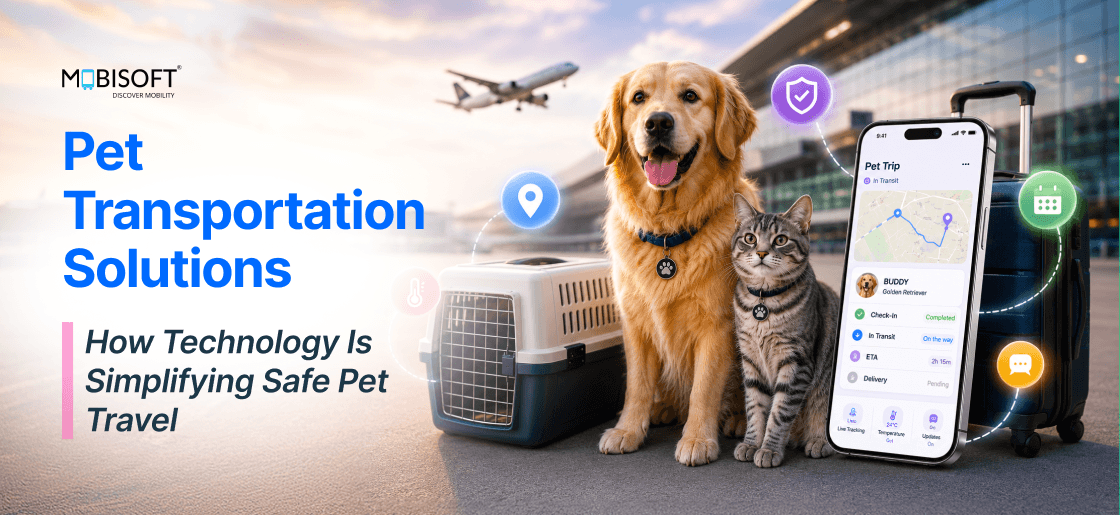
Moving a pet is not like moving a package. The animal cannot say it is too hot or anxious. The owner, often miles away, must trust a stranger with a family member. Pet transportation services aim to make it reliable. Live tracking, welfare sensors, and verified paperwork now catch problems before they turn into emergencies. The pet travel services market should reach 4 billion dollars by 2030, growing nearly 8.9 percent a year.
Owners now expect the same visibility they get from tracking a food delivery. A missed update reads as neglect, even when the trip is going fine. The right platform turns that expectation into an advantage. Live location, timely photos, and verified paperwork build the trust that earns repeat bookings. This piece examines the technology, rules, and design decisions defining pet transport through 2026.
The Trust Gap In Pet Transport
Human transport is mostly a logistics problem, solved with routes, timing, and pricing. Pet transport is a welfare problem wearing a logistics disguise, and the difference changes everything about how a platform should be built.
Every signal that matters has to come from somewhere other than the passenger. It comes from sensors bolted into the cabin, from a driver's judgment, or from a scheduled check-in built into the app. The passenger itself stays completely silent throughout the entire trip, which is precisely what makes the job harder than it looks from the outside.
This is why safe pet transportation depends on constant reassurance rather than sheer delivery speed. Owners are not simply tracking a parcel moving across a map. They are watching over a companion they cannot reach directly, sometimes for hours at a stretch. The emotional weight guides every related decision a platform makes.
The Core Product Is Trust
A live map, a fresh photo, and a temperature reading do more for customer retention than any discount code, because they speak directly to the owner’s concerns. Technology is simply the delivery mechanism for that reassurance at scale, across thousands of trips.
Picture a driver moving a senior cat across three states over two days. The owner cannot reasonably call every twenty minutes without becoming a dangerous distraction to someone behind the wheel. An automated update at each milestone solves that tension cleanly for both sides, giving the owner peace of mind without ever pulling the driver's attention off the road. This is the quiet mechanism behind why some pet transportation software builds fierce loyalty, and others do not.
Core Features Every Platform Needs
A functional Pet transportation management software starts with structured data on the animal itself, not loose notes scribbled onto an intake form and forgotten. That structure is the foundation every other feature depends on, since a driver working from incomplete information cannot make good decisions in the moment, no matter how good the routing engine underneath the app might be.
The Complete Pet Profile
Every booking should link to a verified profile covering species, breed, age, and weight. Also ensure anything else a handler might need mid-transit. Vaccination records with expiry dates matter just as much as a microchip number. This is because either piece missing can stall a booking, often right as a driver is standing at the door waiting to load the crate.
Behavioral notes
Pet transportation management software often treats behavioral notes as an afterthought compared to medical data. A dog that reacts poorly to strangers needs a noticeably different handling approach on the road than one that is easygoing with anyone. A cat requiring medication mid-journey changes what the driver has to be ready to do without needing a phone call to figure it out on the fly.
This is not optional paperwork sitting untouched in a digital drawer somewhere. It is the operational brief a handler relies on the moment something unexpected happens during transit. Without it, even a well-trained driver cannot respond correctly, because they are missing the context that would tell them what correct even looks like for that specific animal.
Real-Time Owner Communication
Owner communication is arguably the single feature that separates a trusted platform from a merely functional one. Four elements significantly affect pet travel safety, and each addresses a distinct slice of the anxiety an owner is carrying throughout the trip.
- Live GPS: position updates every 60 to 120 seconds, with a visible refresh timestamp that never lets stale data pass as current.
- Photo updates: automated shots at departure, mid-journey, and arrival, uploaded to the owner's portal without any manual step in between.
- Milestone alerts: pet collected, en route, near destination, and arrived safely, timed to match real progress rather than arbitrary intervals.
- In-app messaging: owners can ask a quick question, and drivers can reply by text instead of taking a call mid-drive.
Live temperature monitoring belongs on this list too, and it deserves its own dedicated explanation given how often heat stress causes genuine harm during transport. A sensor reading alone is the combination of that reading with a clear alert threshold and a visible history that actually builds confidence over the course of a trip.
Verifying Documents Early
Pet transport carries considerably heavier paperwork demands than most other logistics categories. Platforms that treat documentation as a formality tend to learn this the hard way. Vaccination records, health certificates, and permits all need checking well before a driver ever shows up at the door.
A platform that verifies documents upfront avoids the single worst version of this problem. That worst case is a driver arriving to find a required certificate missing or already expired, with an owner standing there expecting the trip to proceed on schedule. The table below outlines what typically needs checking for safe pet transportation, though the exact requirements vary by route and by species.
| Document | When Required | Verification Approach |
| Vaccination certificate | All journeys, species specific | Upload plus expiry check, vet API where available |
| Microchip registration | Mandatory in UK and many countries | Database lookup through registries like Petlog |
| Health certificate | International transport, airline travel | Document upload with vet signature check |
| Animal Health Certificate | UK to EU travel | Issued by an Official Veterinarian in required format |
Pet transportation management software that automates even half of this checklist saves genuine hours on every single booking. It also prevents the kind of last-minute cancellation that damages trust far more than the inconvenience alone would suggest, since owners tend to remember the day a trip fell through more clearly than a dozen trips that went smoothly.

Why 2026 Rules Changed For Cross-Border Travel
International pet transportation just became noticeably harder for one specific group of travelers. In April 2026, the EU tightened how it treats pet passports held by Great Britain residents, and owners who had relied on those documents for years were caught off guard. The change did not arrive with much warning. It is a regulatory update that cannot be anticipated by a static checklist.
Passports tied to an EU address no longer work for owners whose primary residence sits in Britain. Ferry operators and Eurotunnel staff now check that the address printed on the passport matches actual residency records. A mismatch stops a trip cold before it even reaches the border. Owners who assumed their existing paperwork still applied found this out the hard way, often at the check-in counter itself.
Owners without a matching passport must now obtain an Animal Health Certificate before departure instead. Mismatched documentation blocks travel outright, rather than simply triggering a warning as per the older rules. That distinction matters enormously for a platform trying to prevent a trip from failing at the border rather than merely flagging that it might.
This single regulatory update illustrates a much broader point about international pet transportation as a category. Rules move faster than a printed checklist can ever hope to keep pace with, and a platform still relying on static documentation lists is already behind before the ink dries.
Rethinking Document Logic
A platform relying on static PDF checklists will inevitably miss updates like the one described above. A platform built around a live requirements matrix, mapped by country pair and reviewed on a schedule, will not, simply because someone is actively responsible for keeping it current rather than trusting it was correct at launch.
That matrix needs a named owner inside the organization and a set review cadence, not a one-time setup that gets forgotten after the first version ships. Bodies like the Animal and Plant Health Agency publish changes fairly constantly, and a platform has to track these actively rather than waiting for a customer complaint to surface the gap.
This is also where international pet shipping operators genuinely separate themselves from casual local drivers picking up occasional long trips. Handling a cross-border DEFRA certificate correctly takes real, specific expertise that cannot be improvised on the fly, and owners moving pets internationally can usually tell the difference within the first phone call.
Safety Technology That Prevents Incidents
Welfare monitoring has moved from a nice-to-have extra to a genuine baseline expectation over the past few years. Owners now simply assume some form of sensor coverage exists inside the vehicle carrying their pet, whether or not a platform bothers to advertise it directly, and platforms that lack it are increasingly conspicuous by their absence.
The Vehicle Sensor Stack
A functional safety stack layers several distinct sensor types together rather than leaning on any single one. Each sensor type catches a different failure mode before it has the chance to turn into a genuine crisis on the road, and the combination matters more than any individual reading.
- Temperature sensors: alert above 24°C or below 10°C, with a tighter 20°C ceiling for flat-faced breeds like bulldogs and pugs.
- Air quality sensors: catch poor ventilation, a genuinely silent risk inside a closed crate that a driver would otherwise never notice.
- Vibration sensors: log sudden braking or acceleration events, useful for welfare review and for any post-incident investigation later.
- Door sensors: flag if a crate opens unexpectedly mid-journey, catching an escape risk before it becomes an actual escape.
Hardware Costs Are Falling
Sensor kits built around a small board like a Raspberry Pi Zero now cost meaningfully less than they did even two years ago. Total hardware, including a temperature sensor and an accelerometer, runs between 150 and 300 pounds per vehicle depending on the exact configuration chosen. That price point puts real-time welfare monitoring within reach of small independent operators.
Pet travel safety used to sit behind what was effectively an enterprise price tag, reserved for the platforms with the deepest pockets and the most engineering resources. Falling hardware costs are steadily turning it into a baseline feature across the entire market, which raises the bar for what owners expect from every operator regardless of size.
Matching The Right Driver To The Animal
Pet transport is not a job any available driver can simply pick up between unrelated jobs. Breed-specific handling and behavioral awareness are genuine, learnable skills, not soft personality traits a person either happens to have or does not. Treating driver assignment as interchangeable is one of the more common mistakes new operators make early on.
Key Driver Qualifications
A handful of specific qualifications tend to separate strong handlers from everyone else in the pool. Tracking these directly on driver profiles gives dispatch software something concrete to match against, rather than relying on a dispatcher's memory of who handled a similar job well last time.
- Species tags: filter out mismatched bookings early, so a cat specialist never defaults into a large-breed dog transfer.
- Breed training: teaches drivers to spot early heat distress signs in flat-faced breeds before symptoms escalate.
- First aid certification: rounds out a credible driver profile alongside standard background checks and references.
- Care insurance: needs an expiry date the platform tracks automatically, not one the driver has to remember alone.
Manual Matching Fails At Scale
A dispatcher matching drivers to bookings by hand works reasonably well at ten trips a day. It breaks down fast once volume climbs into the hundreds, because human attention simply does not scale the way a matching algorithm can, and mistakes start compounding under pressure exactly when they matter most.
This is where a custom transportation management system earns its place inside the operational stack. Matching logic applies breed rules and certification checks automatically, so no human needs to manually recheck every single booking before it goes out the door.
The AI Layer In Pet Transport Today
Artificial intelligence has moved well past marketing language and into genuine daily dispatch decisions across serious transport platforms. Predictive routing now factors in traffic, weather, and known heat risk windows for particular breeds, rather than treating every route on the map identically regardless of what is being carried.
Predictive ETAs Explained
Dispatch software increasingly forecasts delays before they actually happen, rather than reacting once a driver is already stuck somewhere. A hot afternoon route gets flagged and rescheduled for a flat-faced breed automatically, often before the owner has even noticed anything was adjusted on their behalf.
This kind of forecasting depends on solid infrastructure sitting underneath it already. A dispatch scheduling software platform already tracking driver location and vehicle capacity can add this predictive layer without a costly rebuild from the ground up.
Where AI Still Falls Short
AI-assisted document review speeds up vaccination certificate checks considerably compared to a purely manual process. It flags obviously expired dates and missing signatures faster than a human reviewer working through the same stack of uploads one at a time. Nuanced medical judgment calls still trip it up more often than platforms like to admit publicly. Ambiguous handwriting on an older paper certificate can confuse even a well-trained model.
Human review, therefore, remains genuinely necessary for these harder edge cases rather than optional. Specific, verifiable claims now land better with a skeptical audience than broad promises of some vaguely intelligent system watching over their pet.
GPS Tracking As The Backbone Of Trust
Location tracking sounds simple until you actually consider what pet owners need from it in a moment of real worry. Reliable GPS vehicle tracking software built originally for commercial fleets already solves most of the underlying technical problem. Adapting it for pet-specific milestones is far more practical than building tracking infrastructure again from zero, and most platforms that try to reinvent it end up worse off for the effort.
What Good Tracking Looks Like
Updates every 60 to 120 seconds strike a workable balance between accuracy and the battery or data cost involved on longer routes. Ride-hailing apps update faster because split-second precision matters more when pickup timing is the entire point of the interaction, but a pet transport trip spanning several hours does not need that same granularity to feel reassuring.
The interface should always show clearly when the data last refreshed, since presenting stale information as current is genuinely worse than admitting a short delay honestly upfront. Multi-day relocations deserve day-by-day progress views rather than a single moving dot that offers very little useful context on its own, especially to an owner checking in from a different time zone entirely.
Handling Incidents Without Losing Trust
Even a well-run platform will eventually face an incident, be it a delay, a health scare, or something more serious involving an escape. A trustworthy operator is judged by how fast and how clearly it responds once that moment arrives.
A Response Workflow That Works
An effective incident workflow needs a handful of clear, distinct components working together under pressure, not a single generic support button buried three menus deep where nobody can find it quickly.
- Incident flag: one tap alerts staff and the owner simultaneously, since any delay here damages trust more than the incident itself.
- Structured form: captures event type, location, animal condition, and immediate actions taken by the driver on the scene.
- Vet locator: uses current GPS position to find the nearest emergency clinic quickly when minutes genuinely matter.
- Human support line: covers business hours, since automation cannot reassure a frightened owner the way a real person can.
Regulatory Compliance Is A Technology Requirement
Welfare regulation is crucial, as it decides which features are legally mandatory. The specific requirements differ meaningfully depending on pet pickup and delivery.
UK Regulations
The UK Animal Welfare Transport Order applies to commercial journeys past 65 kilometers. Transporters covering that distance need Type 1 Transporter Authorisation from the relevant authority before operating legally. Vehicles carrying more animals, or animals showing signs of distress, need separate inspection certificates on top of that baseline requirement.
EU Regulations
EU Regulation 1/2005 sets broadly similar rules across every member state, covering space allowances, temperature ranges, and maximum journey time limits in fairly granular detail. The US Animal Welfare Act applies its own thresholds to commercial carriers that meet certain size criteria, enforced through USDA APHIS licensing rather than a single unified national standard.
Compliance records now need to be digital, searchable, and genuinely audit-ready rather than filed away in a paper folder somewhere in a back office. A pet transportation software that treats compliance as a checkbox exercise risks real financial penalties and lasting reputational damage that outlasts any single bad review.
Commercial Models Powering Platforms In 2026
Pricing varies considerably depending on service type and the distance actually involved in a given trip. Understanding these models helps both operators and platform builders choose the right revenue approach for their specific market rather than copying a competitor's pricing sheet wholesale.
| Segment | Price Point | Key Differentiator |
| Local pet taxi | 15 to 45 pounds per trip | Speed and live owner updates |
| Long-distance transport | 0.60 to 2.00 pounds per mile | IoT monitoring and welfare documentation |
| Airport pet collection | 50 to 200 pounds per collection | Flight tracking integration |
| Full relocation service | 200 to 2000-plus pounds | End-to-end documentation and overnight care |
Pet relocation services command the highest margins in this table for a fairly clear reason. They demand the most documentation, the most coordination, and the most direct owner communication of any segment, and pricing tends to reflect exactly that complexity rather than simple distance covered.
Choosing The Right Model
A new operator entering this space should match pricing structure to actual service capability, not to whatever a competitor happens to be charging. Copying a rival blindly rarely works out well, since the underlying cost structure supporting that price point may look nothing like your own operation.
Subscription-based clinic partnerships, covered in more detail later in this piece, tend to offer steadier revenue than pure per-trip commission alone. Blending a few different revenue streams tends to produce noticeably more stable growth over time than relying on any single channel by itself.
Building The Booking Layer Right
Behind every reassuring, polished owner-facing app sits an operational layer that has to work flawlessly, largely invisible to the person actually using it. This is where pet pickup and delivery logistics actually happen, well away from anything the owner ever directly sees on their screen.
Fulfillment Needs Priority
Booking confirmation, driver assignment, and route planning all depend on infrastructure built to absorb irregular demand gracefully. Volume spikes sharply around holidays and relocation season in ways general logistics platforms rarely anticipate correctly, since pet transport follows a very different seasonal rhythm than parcel delivery.
International moves often combine ground transport, boarding, and flight segments into one continuous trip. So pet shipping management software naturally needs to handle multi-leg journeys.
Solid fulfillment infrastructure is genuinely what turns a promising idea into a dependable business over the long run. Get this layer wrong, and even the most polished owner-facing features in the world will not save the overall experience from feeling unreliable underneath the surface.
Handling Peak Demand Well
Holiday weekends and back-to-school relocation season both create sharp, predictable demand spikes for pet transport operators every single year. A booking system without genuine dynamic capacity planning will overpromise availability during exactly these windows, right when reliability matters most to owners with fixed travel dates.
When demand outpaces supply, waitlist logic, automatic overflow routing to trusted partner drivers, and honest availability messaging all protect service quality. Owners often have less issue with waiting than a missed pickup window without being even informed.
Moving Species Beyond Dogs And Cats
Most platform design conversations understandably center on dogs and cats, and that focus tracks reasonably well with overall booking volume across the industry. Exotic and small animal transport still needs deliberate, dedicated design attention rather than a generic crate rule simply stretched to cover every case.
Rabbits
Rabbits are prone to stress-induced digestive problems that dogs rarely face during an ordinary transport journey. A routine trip that a dog would barely notice can trigger a genuine health crisis for a rabbit within just a few hours, which most drivers without specific training would never anticipate.
Birds
Birds need stable temperature and airflow held within a considerably narrower range than most mammals. Reptiles, by contrast, often require added heat sources during transport rather than protection from excess heat. This effectively reverses the usual welfare priority that applies to most other passengers.
Exotic Pets
A platform genuinely serving exotic pet owners needs species-specific handling profiles built directly into the booking flow. One generic template stretched thin across every possible animal type will inevitably fail somewhere, and driver training has to reflect that same level of specificity to mean anything at all in practice.
Specialist Demand Is Growing
Exotic pet ownership has climbed steadily across recent years, and specialist transport requests have climbed right alongside it in roughly the same proportion. A platform that ignores this segment entirely leaves real revenue sitting on the table, along with genuine welfare risk for the animals that do occasionally get booked anyway without proper handling.
Tagging driver species experience matters even more here than it does for standard dog and cat bookings. Few drivers are genuinely qualified to handle a snake or a large parrot safely, and pretending otherwise for the sake of filling a booking slot invites exactly the kind of incident a platform is trying hardest to avoid.
Vet Clinic Partnerships As A Channel
Booking volume does not have to come only from direct consumer marketing spend chasing individual owners one at a time. Veterinary clinics sit at a genuinely natural intersection point between pet owners and the exact moment transport need actually arises in their lives.
Clinics As Strong Partners
A clinic already holds vaccination records, weight history, and behavioral notes on file for essentially every patient they see. That existing data shortens onboarding dramatically when a client needs transport booked directly through the clinic's own familiar system, rather than starting from scratch on an unfamiliar app.
Clinics also tend to spot transport-triggering moments well before anyone else in the chain does. A referral to a specialist hospital, or a scheduled surgery requiring aftercare transport, both create a natural booking opportunity that a well-integrated platform can capture at exactly the right moment.
Technology Clinics Will Use
Integration with existing veterinary practice management systems removes that friction entirely and turns adoption into an easy, almost obvious decision for a busy practice manager. Direct booking through the clinic's own software, paired with a simple monthly subscription model, tends to perform better than a per-transaction fee that staff has to track separately on top of everything else. Predictable, flat pricing wins trust with practice managers faster than usage-based billing tends to.
This channel also meaningfully strengthens document verification quality across the entire platform. A vaccination record pulled directly from clinic software carries far more confidence than an owner-submitted photo of a paper certificate that may already be out of date.
Data Privacy And Security Matter Here
Pet transport software collects a surprising volume of sensitive data over the course of everyday operation. Home addresses, medical histories, payment details, and precise location patterns all end up sitting inside a single connected system. Owners often don’t fully realize the scope of what they have shared.
What Owners Worry About
Sharing a home address for pickup effectively discloses exactly when the house will sit empty for a stretch of time. That detail deserves the same careful security posture given to any other sensitive personal record, not a lighter one simply because it arrived through a pet booking form rather than a bank application.
Medical history tied to a named pet and a named owner also carries real privacy weight, particularly for high-value or otherwise notable animals. Breach risk here is not hypothetical or abstract; it carries genuine consequences for owner safety that go well beyond simple inconvenience or embarrassment.
Practical Steps To Take
A short list of baseline security practices covers most of what a platform genuinely needs to get right from day one, before any of the flashier features get built on top.
- Encrypt data: both in transit and at rest, treated as a default rather than a premium add-on.
- Limit access: only staff who genuinely need full address and medical history should be able to see it.
- Set retention limits: closed bookings should not linger indefinitely inside an active operational system.
- Write clear consent language: explain exactly what data reaches drivers, and what stays strictly internal to the platform.
Vague privacy policies steadily undermine the exact kind of trust this entire category depends on, even when every other feature on the platform happens to work perfectly well.
Reviews And Reputation Systems That Matter
A simple five-star average tells an owner surprisingly little on its own, since it blends several unrelated qualities into one flattened number. Pet transport genuinely needs a reputation system built around the specific factors that actually predict a safe, calm journey rather than a merely fast one.
What Good Scoring Measures
Generic star ratings blur speed, friendliness, and safety together into one figure that hides useful signal from someone trying to make a real decision. Separate scoring for communication quality, on-time performance, and animal handling gives a far clearer picture of what an owner should actually expect from a given provider.
Verified reviews tied to a confirmed booking help stop the fake review problem that plagues so many general service marketplaces online. A review should only be postable after a completed, paid transport has actually taken place, never before the trip has genuinely happened at all.
Building Long-Term Credibility
New owners researching a platform lean heavily on prior experiences shared on online forums. Detailed, category-specific reviews greatly help with the decision, instead of polished marketing copy.
Public reputation also creates an incentive structure for drivers that formal training alone genuinely cannot fully replicate. A driver who knows every single trip generates visible, specific feedback tends to maintain noticeably higher standards over time, almost regardless of how closely they are directly supervised.
Sustainability Pressures Reaching Fleets
Fleet electrification conversations have mostly focused on ride-hailing and general delivery so far, leaving pet transport somewhat behind the curve by comparison. That gap is starting to close as cities tighten emissions rules and environmentally conscious owners begin factoring it into their choice of provider.
Electric Vehicles And Climate
Electric vehicles handle cabin climate control quite differently than combustion engines do under the hood, and that difference matters directly for animal welfare rather than being a minor technical footnote. Running air conditioning draws far more heavily on battery range than most owners actually realize when comparing electric and combustion options.
A platform planning fleet electrification needs to model that climate control power draw against realistic route lengths before committing to a full rollout. A long-distance transport running through summer heat simply cannot risk losing air conditioning partway through the journey, since the consequences for the animal on board are immediate and serious.
Multi-Modal Trips Are Rising
Long relocations increasingly combine ground transport with rail or ferry legs rather than relying on a single vehicle for the entire distance covered. This approach reduces total emissions and can also reduce total stress on the animal, since fewer continuous hours are spent inside one enclosed space without a break.
Coordinating a genuinely multi-modal trip requires tighter systems integration than a single continuous drive from origin to destination. Each handoff point needs its own welfare check, its own documentation review, and its own owner notification built directly into the workflow rather than handled manually by someone remembering to send an update.
Gig Drivers Versus Employed Handlers
Platforms building out a driver network face a genuinely real structural choice fairly early in their growth. Gig-style independent contractors and directly employed handlers each carry distinct advantages specific to pet transport, and the right answer usually depends heavily on what the platform is actually optimizing for at that stage.
Why This Choice Matters
A gig model scales quickly and keeps fixed costs meaningfully lower during the early growth phase of a new platform. It also makes consistent training considerably harder to enforce across a large, loosely affiliated pool of drivers who may only take the occasional booking.
Employed handlers accept somewhat lower flexibility in exchange for standardized training, consistent equipment, and genuinely closer day-to-day supervision. For premium relocation work carrying real welfare stakes, that added consistency often justifies the higher cost of running a direct employed workforce rather than a purely gig-based one.
Many mature operators now run a hybrid model that draws deliberately on both approaches at once. Employed staff typically cover premium relocation and exotic species work, while a carefully vetted gig network handles the higher-volume local pet taxi bookings where the individual stakes tend to run lower.
What Comes Next For The Industry
Pet transport succeeds on how calm an owner feels throughout the entire trip, start to finish. Owner expectations also keep climbing every single year, largely set by mainstream delivery apps offering live tracking as a basic, unremarkable feature.
Building reliable pet transportation software means treating welfare monitoring, documentation, and communication as core infrastructure from the very first release. None of these features belong on some vague future roadmap. They belong in version one, built in from the start rather than bolted on afterward.
Operators who invest now in verified profiles, live sensors, and genuinely compliant document handling will earn the kind of premium pricing that trust reliably commands in this category. Pet owners remember which platform made them feel calm during a genuinely stressful journey, and that specific memory is what steadily drives repeat bookings and word-of-mouth referrals over time.

Frequently Asked Questions
How is pet transportation software different from a delivery app?
The passenger cannot speak, so real-time communication becomes the core feature. Welfare needs like temperature and trained handling need active monitoring. Good pet transportation software verifies documents before departure, not as an afterthought once a trip is already booked.
What should an owner check in the platform before booking pet relocation?
Look for live GPS tracking, a driver with species-specific experience, and verified health documents. Temperature monitoring and a clear incident process also matter. Reputable pet relocation services share this information upfront without being asked twice.
How does GPS tracking work during a pet transport trip?
Location data streams from a driver's device every 60 to 120 seconds. The map should always show when data was last refreshed. This visibility is central to pet travel safety, especially on multi-day relocations where daily progress matters more than one live dot.
How should an operator handle an incident during transit?
A one-tap flag should alert staff and the owner at once. The form should capture event type, location, and actions taken. A vet locator and a human support line round out true safe pet transportation during a genuine crisis.
How do platforms verify vaccination records today?
Most rely on document upload paired with human review. An agent checks species, dates, and signature before confirming. Better pet transportation management software adds a defined turnaround time, so owners always know when a booking gets confirmed.
This content is for informational purposes only and may include AI-assisted research or content generation. While we strive for accuracy, information may evolve over time. Readers are advised to independently verify critical information before making decisions.

Nitin Lahoti
Read more
Nitin Lahoti is the Co-Founder and Director at Mobisoft Infotech. He has 15 years of experience in Design, Business Development and Startups. His expertise is in Product Ideation, UX/UI design, Startup consulting and mentoring. He prefers business readings and loves traveling.
 Nitin Lahoti
 August 20, 2026