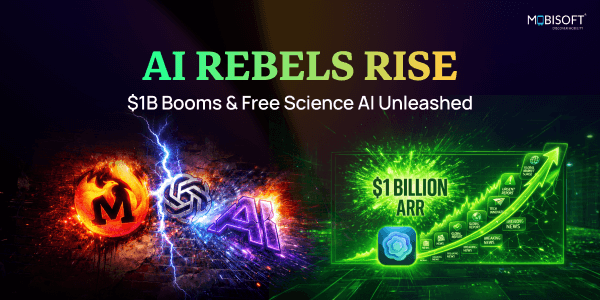
Google expands AI Plus, Meta experiments with subscriptions, and OpenAI scores $1B from APIs
Google has made its AI tools more accessible with the global rollout of Google AI Plus. At just $7.99 per month in all markets, users now get access to Gemini 3 Pro, Nano Banana Pro, Flow’s AI filmmaking tools, and NotebookLM research assistance. The plan also includes 200GB of storage and family sharing for up to five members, making advanced AI features affordable for casual users.
Meanwhile, Meta is testing premium subscriptions across Instagram, Facebook, and WhatsApp. These paid tiers promise advanced sharing controls, exclusive creative tools, and expanded AI capabilities like Manus and Vibes. At the same time, OpenAI quietly generated over $1 billion to ARR from its API business in one month, powering applications from legal software to internal productivity tools. Together, these developments highlight how major players are experimenting with monetization and accessibility in parallel.
Beyond these headlines, the AI space is bustling with innovation. From Microsoft’s Maia 200 chips to Arcee AI’s Trinity LLM and Mozilla’s mission-driven AI investments, new tools and models are reshaping workflows, research, and creativity.
Keep reading as we explore these breakthroughs and what they mean for users, developers, and enterprises alike.
Google’s Budget AI Plan Lands Worldwide at Just $7.99 for Millions Users
Google rolls out its Google AI Plus subscription to more countries, including the US, at $7.99 a month. The plan bundles Gemini tools, NotebookLM help, AI filmmaking features, 200GB storage, and family sharing, giving casual users cheaper entry into Google’s growing AI product stack.
Meta Wants You to Pay for Social Apps With AI Extras Included
Meta plans to test a premium subscription across Instagram, Facebook, and WhatsApp soon. Paid tiers may include advanced sharing controls, exclusive creative tools, and expanded AI features like Manus and Vibes, while core app access stays free for everyday users.
OpenAI Quietly Builds Billion Dollar Engine Beyond Its Famous ChatGPT
OpenAI reports over $1 billion in annual recurring income from its OpenAI API revenue, separate from ChatGPT subscriptions. Businesses use these APIs to power search tools, legal software, and internal apps, turning OpenAI into core infrastructure for many fast growing tech products.
Why Smart Companies Fix AI Memory Before Scaling Their Agents
Enterprises now focus on Context Engineering to keep AI agents consistent in real workflows. Instead of relying only on prompts, teams manage memory, retrieval, and tool flows so systems avoid confusion, policy drift, and instruction loss when deployed at scale.
Microsoft’s Maia 200: Nvidia’s Nightmare Just Launched
Microsoft begins deploying new AI chips called Maia 200 across its data centers. Built on a 3nm process, the accelerator promises stronger performance than Amazon Trainium and Google TPU, while running large AI models like GPT 5.2 with better efficiency per dollar.
Tiny Team Drops 400B Giant Model, Dares to Rival Big Tech Titans
A 30-Person Startup Arcee AI unveiled Trinity, a 400B parameter open source LLM released under an Apache license. The model targets developers and researchers, competes with Meta’s Llama offerings in benchmarks, and focuses on coding and complex tasks, with vision and speech features planned later.
Mozilla’s Rebel Army Declares War on OpenAI, Anthropic – Game Over?
Mozilla is backing startups and nonprofits through a growing Mozilla AI effort funded by its $1.4 billion reserves. The group wants more transparency, accountability, and public interest influence in AI development, offering an alternative voice alongside dominant commercial labs.
iOS 26 Unlocks Powerful On Device AI for Smarter Private Apps
Developers can now build Apple Intelligence Apps using on device foundation models in iOS 26. Apps can generate text, summarize content, extract entities, translate languages, and classify information locally, improving privacy, speed, and offline performance without relying on constant cloud calls.
Kimi K2.5: Agentic AI That Does Real Work, Executes Visions Flawlessly
Kimi released K2.5, an open multimodal system pushing agentic AI further into real workflows. It can spawn and manage up to 100 sub agents, run parallel tool calls, and speed up complex tasks, while also offering strong coding and vision performance.
Claude Turns Chats Into Live Workspaces With Your Favorite Tools
New updates to Anthropic Claude apps let users interact with tools like Asana, Slack, Figma, and Canva inside the chat. You can build timelines, draft messages, edit designs, and explore analytics without switching tabs, keeping collaboration and execution in one place.
OpenAI Gives Scientists a Free GPT-5.2 Copilot
OpenAI Prism launches as a free AI workspace where scientists can write, edit, and collaborate on research in one place. Powered by GPT 5.2, it supports unlimited projects and aims to reduce tool switching during drafting, revisions, citations, and teamwork.
Why Users Trust Some Apps Instantly and Quit Others Just as Fast
Strong UX design builds confidence before users even read a word. Clear layouts, honest messaging, visible security cues, and consistent interactions reduce doubt. When people feel informed and in control, they stay longer, share data more willingly, and complete actions without hesitation.
What Else is Happening?
- Oracle CEO: All AI Models Blind Without Private Data
- Anthropic continues winning streak with $20B funding round
- Nvidia Bets $2B on CoreWeave to Build 5GW AI Factory Empire
- Meta Signs $6B Corning Deal for AI Fiber Expansion Across
- A New Reasoning Benchmark Emerges from the Middle East
- Ex Palantir Raises $40M for Cyber Startup Outtake
- Amazon Axes 16K Corporate Jobs Amid AI Overhaul
- Anthropic Founders Give 80% Wealth to AI Future
Subscribe to our tech news newsletter. Receive regular insights that keep you informed. And if you find it valuable, please share it with your network to help spread the word. Catch you next time with fresh insights on AI and Tech, right here.
 Mobisoft Team
 January 29, 2026