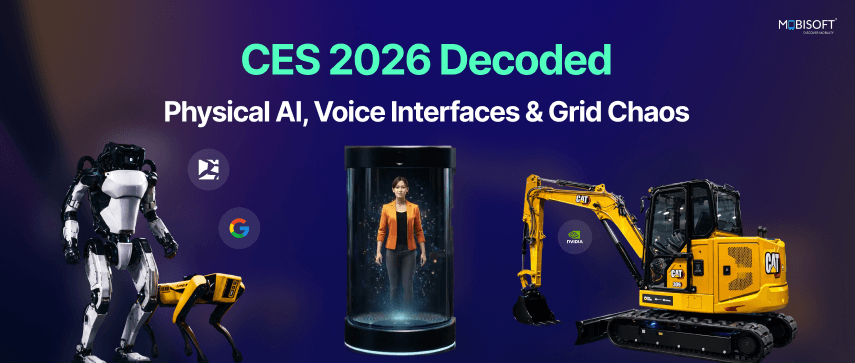
AI is moving from labs into robots, machines, and everyday hardware.
Boston Dynamics and Google DeepMind are bringing Atlas robots closer to real-world work. Using Gemini AI models, the humanoids can see, reason, and act. Research starts this year, with automotive manufacturing as the first area to test safe, practical industrial tasks.
Meanwhile, AI is making its presence felt across other domains. Caterpillar showed Cat AI inside a mini excavator at CES. It helps operators with questions, safety alerts, and service scheduling while feeding data into simulations that support Equipment-as-a-service trends. OpenAI is focusing on audio-first hardware in 2026, emphasizing voice interaction and screen-free computing.
Innovation continues across tech and creativity. Razer launched a holographic AI desk companion, and Lightricks released LTX-2, an open-source 4K audio-video model.
Here’s a closer look at the latest news shaping AI, smart devices, and digital tools this week.
Atlas Meets Brainpower as Two Labs Team Up to Teach Robots Real Shop Floors
Boston Dynamics and Google DeepMind are pairing Atlas with Gemini models. The goal is practical humanoid robotics that can see, reason, and act. Early research starts this year, with automotive manufacturing as the first proving ground for repeatable, safe industrial work.
Heavy Machines Get a Digital Co-Pilot as Caterpillar Tests Smart Assist Tech
At CES 2026, Caterpillar showed Cat AI inside a mini excavator. Built with Nvidia’s Jetson Thor, it answers operator questions, flags safety issues, and books service. Live machine data also feeds simulations, supporting Equipment-as-a-service trends across construction fleets during active jobsite work today.
OpenAI Turns to Voice Hardware as Screens Fade Into the Background Everywhere
OpenAI is pulling audio teams together for a 2026 hardware launch. The focus is voice-first, ambient, and screen-free. This move signals confidence in the Voice interface as the future of computing, and gives marketers an early cue to rethink presence, attention, and brand interaction.
Why AI Agents Fail After Launch and How Evaluation Keeps Them Reliable
AI agents often break after release due to quiet behavioral drift, not weak models. Teams need continuous evaluation systems, not demos. Strong AI agent development depends on tracking decisions, spotting regressions early, and treating evals as a living quality control layer in production environments.
Razer Debuts a Hologram Buddy That Coaches, Organizes, and Watches Your Screen
Project AVA is a 5.5-inch AI desk companion with a holographic display. Powered by Grok, it watches gameplay, answers questions, and offers coaching without playing for you. Razer positions it as a calm digital partner, with esports avatars and a late-2026 release.
Pickle 1 Wants to Remember Your Life With Glasses That Never Look Away From You
YC-backed Pickle Inc. opened preorders for Pickle 1, always-on AR glasses that log daily context. The pitch leans on memory bubbles, cameras, and spatial audio. Early buzz is strong, but the Pickle 1 specifications features review raises privacy, comfort, and real-world usefulness questions.
NVIDIA Rolls Out Rubin and Open Models in a High-Stakes CES Reveal Moment Live
NVIDIA used CES 2026 to reveal Rubin, a six-chip platform built to cut AI compute costs fast. Alongside it came open models and the Cosmos simulation model that Nvidia teams use for autonomy, robotics, and healthcare, all designed for developers deploying large systems at real commercial scale.
Amazon Pushes Ambient AI Forward With Alexa Plus, Ring, and Fire TV
At CES 2026, Amazon showed quieter, proactive tech across devices. Alexa Plus conversational AI assistant now spans voice and web, with partners baked in. Fire TV gets faster discovery. Ring adds smarter alerts. Bee introduces wearable intelligence that fits into daily routines.
Picking the Right TMS: Custom, On-Premise, or White-Label Logistics Guide 2026
Logistics teams face growing freight complexity and tighter margins. This guide breaks down when to choose custom builds, on-premise control, or white-label speed. A modern Transportation Management System (TMS) replaces manual coordination, improves visibility, automates billing, and fits enterprise, transporter, or distribution needs.
Alexa+ Turns Service Booking Into a One-Ask Experience With Major Partners Now
Alexa+ adds Expedia, Yelp, Angi, and Square in 2026. You can find hotels, book services, and schedule appointments by voice. These partnerships expand Voice commerce through natural requests and confirm conversational shopping as a daily habit inside smart homes for many users today.
Lightricks Releases LTX-2, Bringing Open 4K Audio Video Creation Local Workflows
Lightricks open-sourced LTX-2, a 4K audio-video model built to run locally. It ships with full weights, training code, and faster distilled versions. Teams gain private, controllable production pipelines using LTX-2 open source video generation on everyday NVIDIA hardware without cloud dependence. The open weights are available on Hugging Face.
From Rough Idea to Product People Enjoy Using Without Friction or Guesswork
This guide walks through the full UX design process, from research to post-launch learning. It stresses clear problem definition, early testing, and clean handoffs. Teams stop guessing, watch real behavior, and build products users actually understand, trust, and return to over time.
Teachers Can Now Create Podcast Lessons Directly Inside Google Classroom Gemini
Google Classroom now lets teachers create podcast-style lessons with Gemini. You set grade level, topic, and goals. You choose speakers and tone. These Google Classroom Gemini features support audio learning, help varied learners stay engaged, and fit alongside existing lesson plans without extra tools.
Data Centers Push Power Bills Higher as US Grid Costs Jump Billions More Again
Bloomberg reports data centers added $6.5B in new power costs after a PJM auction. Rising Data center energy consumption strains the grid. Regulators now demand fees from developers, while households face higher bills and political pressure keeps building, frankly, nationwide today.
New Zealand Probes Major Patient Portal Hack After Data Exposure Fears Review
New Zealand launched a formal review after a cyberattack on Manage My Health. The breach may expose data from over 100,000 patients. Officials say systems are now contained, but the Healthcare data breach cybersecurity case raises pressure on third-party access controls across health services.
What Else is Happening?
- xAI Hits $230B Valuation After $20B Round
- Warner Bros Rejects Paramount’s Risky Leveraged Buyout
- OpenAI Teams With Zeta to Bring AI Agents Into Campaigns
- WhatsApp Adds Group Tags and New Chat Features
- Samsung Puts AI in Every TV to Make Screens Smarter
- Uber and Lucid Reveal New Nuro Robotaxi for Global Launch
- Over 40 Million Rely on ChatGPT Daily for Health Advice
- Norway Ends 2025 With Nearly All New Cars Fully Electric
- Stanford AI Uses Sleep Data to Predict Diseases Early
- Liquid AI Unveils Powerful New On-Device Models
This week’s news highlights AI and smart technologies stepping into everyday and industrial use. From robots learning on factory floors to construction machines gaining intelligence, and voice-first devices redefining interaction, these updates show practical innovations making an impact today. Staying aware of these shifts can help you anticipate what’s next and make the most of emerging tools.
Subscribe to our tech news newsletter. Receive regular insights that keep you informed. And if you find it valuable, please share it with your network to help spread the word.Catch you next time with fresh insights on AI and Tech, right here.
 Mobisoft Team
 January 8, 2026