From Espionage Target to $300B IPO: How Anthropic is Navigating AI’s Greatest Challenge.
Anthropic finds itself under the spotlight as Congress raises urgent questions about Claude following a suspected cyberattack by a Chinese group. Amid these pressures, Anthropic is pushing ahead with plans for a bold 2026 IPO. Investors are intrigued, with the company leveraging the momentum around Claude while balancing market hype and valuation expectations.
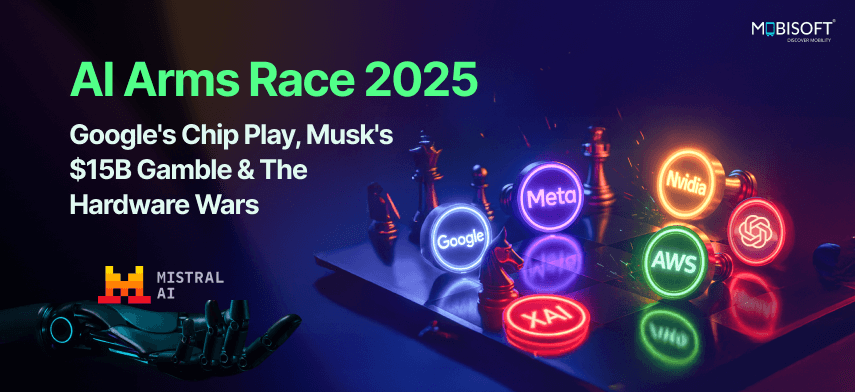
Meanwhile, xAI is racing to close a massive funding round this month, while Meta explores Google TPUs to challenge Nvidia’s dominance. AWS introduces new Trainium3 UltraServers and the $100K Nova Forge platform for customizable models. And, OpenAI unveils its Garlic model and $2M grants for AI in mental health research.
This whirlwind week reflects a market where AI innovation, regulation, and investment collide in real time, keeping tech watchers on their toes.
Congress Presses Anthropic as Claude Espionage Concerns Gain Unexpected Urgency
U.S. lawmakers want answers after a suspected Chinese group used Claude in a major cyber attack effort. They plan to question Dario Amodei about the attack, its broader fallout, and how companies handle Claude security risk without slowing real-world security work that already feels stretched.
Anthropic Sets Sights High as Bold 2026 IPO Plan Sparks Market Buzz
Anthropic aims for a huge $300 billion valuation public debut in early 2026. Investors seem eager, and the company leans into its growth streak while weighing the hype around the Anthropic IPO. The valuation goal raises eyebrows, yet the momentum around Claude keeps pulling attention.
Musk’s xAI Chases Massive Capital as December Deal Draws Fast-rising Attention
xAI plans to wrap up a huge $15 billion funding round next month, pushing its pre-money valuation even higher to $230 billion. Investors keep circling as the company expands Grok and picks up speed. The buzz around xAI funding grows louder, although details keep shifting in odd little ways.
Meta’s Reported Interest in Google Chips Adds Fresh Heat to Big Tech’s AI Rivalry
Meta is discussing a major multi-billion-dollar deal to use Google TPUs in its data centers, hinting at a possible break from Nvidia’s grip. Google gains momentum as it pitches its hardware to more partners, and the talks give the wider chip contest a sharper edge.
Smart Assets Speak: Real-Time Tracking Meets Practical Intelligence
Modern systems now go beyond basic location. Real-time asset tracking with IoT asset tracking collects temperature, vibration, and usage patterns. Companies monitor fleets, warehouses, and equipment, cut losses, boost utilization, and feed insights into ERP and WMS platforms for faster, smarter decision-making.
AWS Unveils New Trainium Hardware as AI Workloads Push Past Old Limits
AWS introduced its latest Trainium3 UltraServers powered by its new 3nm AI chip, giving customers faster training speeds and cleaner efficiency gains. Early users report big drops in cost and latency, and the new setup lets teams run heavier models without wrestling with huge clusters or awkward delays.
Amazon Nova Forge Lets Clients Customize AI Models for $100,000 a Year
AWS introduced Nova Forge, a costly but flexible way for cloud clients to tweak models during training for a fee of $100,000 per year. Teams can plug in their own data earlier and skip the massive build-from-scratch bills. Some firms already claim smoother results, even if the setup feels a bit intense. Amazon positions Nova Forge as a more cost-effective alternative to building custom models from scratch, which can cost hundreds of millions or even billions of dollars.
Mistral Pushes Forward with New Mistral 3 Models to Court Enterprises More Boldly
Mistral introduced Mistral 3, a set of open-weight models ranging from a big multimodal option to smaller customizable versions. The team argues that many business tasks run better on compact setups, and early chatter suggests firms like the lighter approach despite mixed benchmarks. Mistral is positioning these releases as a direct challenge to the dominance of proprietary models from Silicon Valley, emphasizing open-weight, open-source accessibility, and global availability.
OpenAI Unveils ‘Garlic’ as Next-Step Model in Intensifying AI Push
OpenAI revealed the Garlic model, aiming to expand its portfolio and tackle specific use cases with improved efficiency. Early reports highlight ongoing fine-tuning for performance, cost, and safety, signaling the company’s focus on practical deployment in a crowded AI field. Internal benchmarks reportedly show Garlic outperforming both rivals in coding and reasoning tasks, and the model is expected to be released as GPT-5.2 or GPT-5.5 in early 2026.
Control Every Route: Real-Time Vehicle Tracking Powers Smarter Fleets
Transporters gain full oversight with real-time vehicle tracking. Modern TMS platforms track every truck, detect delays, and send instant alerts. Fleet visibility improves resource use, prevents losses, and keeps clients updated, helping teams act fast and maintain reliability across operations.
OpenAI Offers $2M Grants to Explore AI’s Role in Mental Health Research
OpenAI is funding independent studies with up to $2 million to examine AI and mental well-being. The program encourages collaboration between technical researchers and mental health experts, aiming to produce actionable insights, datasets, and tools that strengthen both safety and understanding in AI applications. The grants will support independent researchers and organizations working on projects with budgets ranging from $5,000 to $100,000, focusing on understanding the risks, benefits, and ethical implications of AI in mental health contexts.
Autonomous Driving Breakthrough as Nvidia Goes Open Source
At NeurIPS, NVIDIA introduced its vision model Alpamayo-R1 and new open AI tools for speech and safety. Alpamayo-R1 is described as the first open reasoning vision language action (VLA) model specifically designed for autonomous vehicles. This model enables vehicles to interpret visual data, reason about complex driving scenarios, and make decisions with more human-like judgment, aiming to accelerate progress toward Level 4 autonomy.
Demand Surge Forces Google to Restrict Gemini Access
Google tightened Gemini 3 Pro limits for free users after surging interest. Daily prompts and image generation are now restricted, and some features like Infographics and Slide Decks are temporarily rolled back, highlighting capacity strains while Pro users retain broader access. Free users now receive “Basic access” with fluctuating daily caps rather than the previous fixed limits of up to 5 prompts per day and 3 images per day for image generation and editing.
Meta Forces WhatsApp Users to Switch to Its Own AI Chatbot, Pushing Out Rivals
Starting January 2026, WhatsApp will remove third-party bots like ChatGPT and Copilot, leaving only Meta chatbot for conversations. The new rules affect AI where the bot itself is the product, limiting choice and stirring frustration among users who’ve relied on free alternatives for messaging AI. OpenAI announced its planned departure a few weeks ago, with Microsoft following it this week.
Beyond Code: What Smart Businesses Must Know Before Hiring App Teams
Modern businesses need more than simple apps. Mobile App Development Services now demand strategy, product thinking, and secure design. Choosing the right team affects growth, UX, and long-term operations. Cross-platform, native, or hybrid options must match your goals to avoid costly mistakes.
Black Friday 2025 Sees Digital Dominance as AI Tools Gain Traction in Shopping
This year’s Black Friday sales hit $11.8 billion online in the U.S., exceeding forecasts. AI-assisted shopping tools saw 800% growth, helping consumers compare products faster and make choices efficiently, though overall shopping habits remained steady and cautious rather than dramatically altered.
Massive AI Chip Deal. Marvell Buys Celestial for $5.5B
Marvell is acquiring Celestial AI to integrate photonic interconnect technology, enabling faster, lower-latency connections in AI data centers. Backed by Amazon, the deal is expected to close in the first quarter of 2026 and is aimed at strengthening Marvell’s position in the AI data center connectivity market, allowing it to better compete with industry giants like NVIDIA and Broadcom, with expectations of significant revenue growth from optical technology by 2029.
What Else Is Happening?
- DeepSeek Launches First Gold-Medal-Level IMO AI Model
- OpenAI’s ChatGPT Experiences Brief Service Outage
- MIT Finds 11.7% of Jobs Replaceable by AI
- Instagram Chief Orders Five-Day Office Return
- Anthropic Buys Bun, Claude Levels Up for Enterprise Dev
- AWS Unveils AgentCore. Automated Reasoning Reinvents AI Safety
- Meta Introduces CoT Verification Model for Errors
- Ex Cyber Spy Raises $60M to Battle AI Super Threats
- Nvidia and Fanuc Expand AI Factory Automation
- Bezos’ $6.2B AI Venture Buys Computing Startup
- Alibaba Launches $537 Quark AI Glasses Competitor
This week’s updates show how quickly AI regulation, investment, and infrastructure are moving across the industry. Anthropic’s IPO ambitions, xAI funding, and Claude’s security scrutiny reveal how high-stakes AI has become, where regulatory oversight and investor confidence move in parallel. Meanwhile, new hardware from AWS, Marvell’s photonic push, and innovations from OpenAI and NVIDIA show that speed, customization, and efficiency are driving the next wave, forcing businesses to rethink infrastructure, model deployment, and operational resilience to stay competitive in a rapidly evolving AI ecosystem.
Subscribe to our tech news newsletter. Receive regular insights that keep you informed. And if you find it valuable, please share it with your network to help spread the word.
Catch you next time with fresh insights on AI and Tech, right here.
 Mobisoft Team
 December 4, 2025