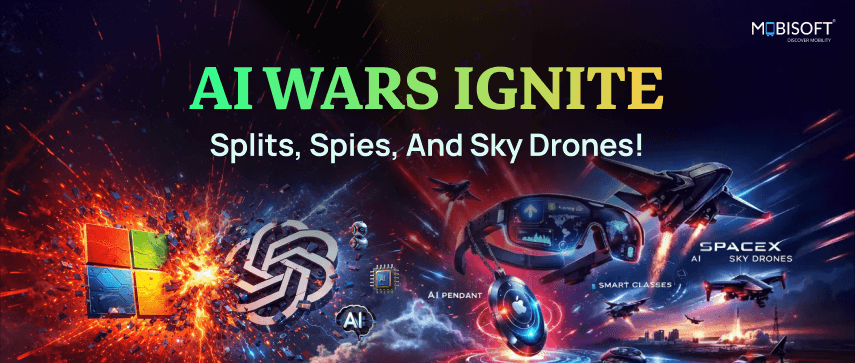
From Microsoft’s OpenAI break to Apple’s AI gear and Meta’s facial recognition, the tone across Big Tech just changed.
Microsoft has pulled back from its deep partnership with OpenAI after pouring in nearly $13 billion. The company now wants tighter control over its AI roadmap and is building proprietary models in-house.
At the same time, Apple is quietly stacking its next wave of AI hardware. Reports point to a camera-enabled pendant, upgraded AirPods, and the N50 Smart Glasses moving closer to reality. Meanwhile, Meta is again exploring facial recognition inside its smart glasses through the Name Tag feature, despite earlier privacy hesitation. Together, these moves suggest devices and identity tech are entering a more assertive phase.
Elsewhere, the pace is just as brisk. Anthropic continues its rapid model releases, Figma is tightening ties with AI workflows, and major infrastructure and defense plays are heating up across the board.
Let’s get into the developments that deserve your attention this week.
Microsoft Walks Away from OpenAI, Draws a New Battle Line
Microsoft has stepped back from OpenAI after investing nearly $13 billion, choosing independence over partnership. The move intensifies the growing AI rivalry as Microsoft builds proprietary models and eyes medical superintelligence. Industry leaders now question how this split will affect competition, research priorities, and control.
Apple Plans AI Pendant, Glasses, and Smarter AirPods
Apple is speeding up development of three AI wearables, including an AirTag-sized pendant and upgraded AirPods. Its upcoming Apple smart glasses, codenamed N50, may enter production by December for a 2027 release. Each device will sync with the iPhone and rely heavily on Siri.
Meta Revives Facial Recognition Plans for Its Smart Glasses
Meta may introduce facial recognition to its Smart AI glasses through a feature called Name Tag. The tool would let users identify people using Meta’s AI assistant. Despite earlier ethical concerns around its Ray-Ban glasses, renewed confidence and shifting political winds have revived the effort.
Enterprise Chatbots Aren’t the Question. Ownership Is.
Many companies treat AI chatbots as quick tools to deploy. That mindset creates integration gaps, rising maintenance work, and long-term costs. The real decision is architectural. Who controls the data, logic, and orchestration layer? Ownership defines scalability, developer effort, and three-year ROI.
Anthropic Drops Another Power Model Just Days After Opus
Anthropic has introduced Claude Sonnet 4.6, its second major release in under two weeks. The model excels in coding, design, computer use, and complex knowledge tasks, demonstrating stronger performance. It now powers the default experience for free and Pro users inside Claude and Claude Cowork.
Figma Turns Live Claude Code into Editable Design Files
Figma now lets teams convert working interfaces from Claude Code into fully editable canvas frames. This new Figma Anthropic partnership bridges live production builds and collaborative design workflows. Developers can capture real UIs from browsers and refine them visually, without rebuilding screens from scratch.
Pentagon Signals Possible Break with Anthropic Over AI Limits
The U.S. Defense Department may end ties with Anthropic after months of stalled talks. At the center of this Pentagon Anthropic dispute lies disagreement over military use of AI models, including weapons and intelligence work. Anthropic has refused unrestricted access, frustrating officials.
A Practical Blueprint for Building Mobile Apps People Enjoy Using
This playbook breaks down mobile app UX design into clear, usable steps for designers, developers, and product teams. It covers research, architecture, accessibility, testing, and performance. The focus stays simple. Reduce friction. Guide users clearly. Build apps people return to, not abandon.
Meta Patents AI That Could Post on Your Behalf After Death
Meta has secured a patent for an AI system that can simulate a user’s social activity, even after they pass away. This proposed Meta postmortem AI would generate posts and replies using past behavior patterns, raising fresh questions about digital identity and consent.
Apple Sets March 4 Showcase, Sparks Buzz Around New Devices
Apple will host a “special Apple Experience” on March 4 with press events in New York, Shanghai, and London. Expected Mac updates 2026 include new MacBook Air and Pro models with M5 chips, alongside fresh iPads and the iPhone 17e.
OpenClaw Creator Joins OpenAI, Pledges Open Future
The creator of OpenClaw is joining OpenAI to build accessible agents while moving the project into an independent foundation. The goal is to expand reach without turning it into a company. With stronger backing, the focus now turns to advancing open AI developer tools for everyone.
SpaceX Enters Secret Pentagon Drone Swarm Challenge
SpaceX and its subsidiary xAI are reportedly competing in a $100 million Pentagon contest to build voice-controlled autonomous swarms. The project centers on advanced SpaceX AI drones that convert speech into coordinated flight commands, marking a bold defense push ahead of SpaceX’s planned IPO.
Sustainable Tactics Small Brands Can Use to Win Worldwide
This guide outlines practical growth strategies for global E-Commerce businesses that want scale without excess. It covers green packaging, smarter shipping, local sourcing, and tech-enabled efficiency. Small brands can cut costs, build loyalty, and compete globally while keeping sustainability central to operations.
Meta Locks In Multi-Year AI Infrastructure Deal With NVIDIA
Meta has entered a long-term partnership with NVIDIA to power its next wave of AI-optimized data centers. The agreement expands large-scale deployment of NVIDIA CPUs, GPUs, and networking tech, boosting performance per watt while supporting AI training, inference, and core platform systems.
IBM Triples Entry Hiring as AI Rewrites Early Career Roles
IBM plans to triple U.S. hiring for entry-level tech jobs in 2026 while redesigning responsibilities around AI-augmented workflows. The move signals that enterprise AI has moved beyond pilots into daily operations. For candidates, the baseline skills employers expect now look very different.
What Else is Happening?
- GPT-5.2 Advances Spark Fresh Physics Breakthrough
- Tesla Rolls Out Grok Across Europe Under Watch
- Baidu Integrates OpenClaw Into Search Platform
- NVIDIA Backs Indian VCs to Expand AI Footprint
- Anthropic Opens Bengaluru Hub With India Ties
- Anthropic Teams Up With Infosys on AI Push
- Perplexity Ditches Ads, Bets on Paid Subscriptions
- Hollywood Takes On Chinese AI Over Cloning
- Google I/O 2026: Android 17 + Gemini Overhaul
- Palantir Moves Headquarters to Miami
Subscribe to our tech news newsletter. Receive regular insights that keep you informed. And if you find it valuable, please share it with your network to help spread the word.
Catch you next time with fresh insights on AI and Tech, right here.
 Mobisoft Team
 February 19, 2026