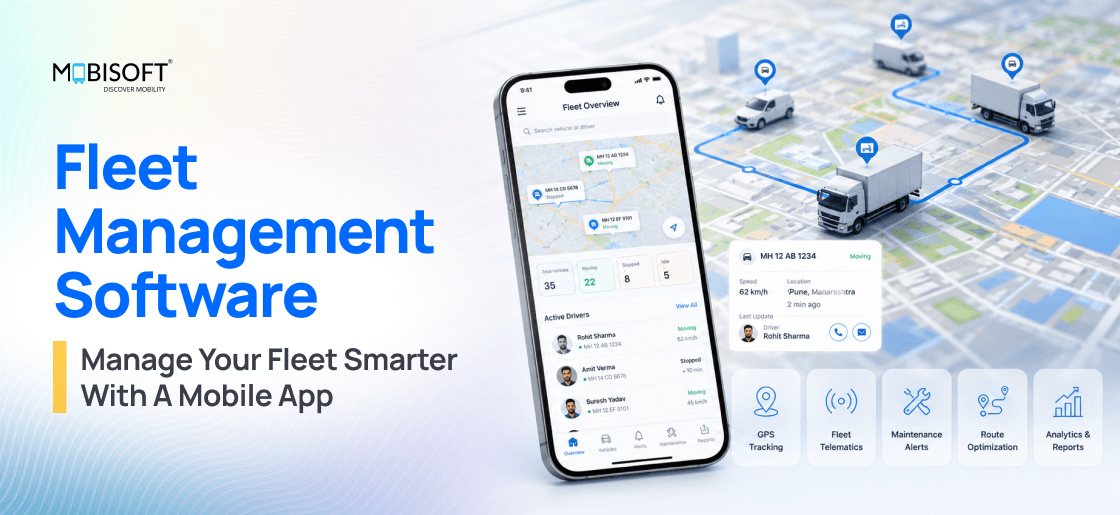
Running a fleet without the right technology creates blind spots everywhere. A regional delivery manager once spent hours each week piecing together driver reports. He added fuel receipts and maintenance notes just to understand the day. Deadlines slipped and costs crept up quietly. No one had a clear answer why. Within weeks of adopting fleet management software, those blind spots disappeared. Reports arrived automatically and costs became visible in real time. Decisions got faster across every department too.
This change is playing out across the transportation industry right now. It is not limited to large corporations with big budgets. Mobile fleet management has become a true operating backbone. This article covers where the market stands today. It also covers the technology changing daily operations. A real example follows, along with what to prioritize when choosing a solution.
The State of Fleet Management in 2026
The fleet management system market has grown substantially in recent years. Fleet operators of every size now recognize that manual processes cannot keep pace. Technology once seen as optional now sits at the center of daily decisions. Budget owners increasingly treat this software as a strategic investment tied to profit. This change shows up clearly in the growth numbers below. Executives now review this spending with the same scrutiny reserved for equipment purchases.
Market Size and Growth Trajectory
The fleet management software market was valued near 37.7 billion dollars in 2025. Industry analysts project it will reach 70.26 billion dollars by 2030. That represents a compound annual growth rate of 13.3 percent. This pace reflects genuine operational demand rather than short-term hype. Investors and vendors are treating this growth as a durable, long-term signal. Even smaller vendors are expanding their product lines to capture market share. Established vendors are also raising prices modestly on proven products. This pricing confidence itself signals how essential these tools have become. Few technology categories in transportation are growing this consistently right now. Buyers should expect this trend to continue well past 2030.
The Adoption Gap Between Large and Small Fleets
Adoption is not even across the industry today. Large fleets with more than 100 vehicles use GPS fleet tracking widely. Adoption rates there sit above 80 percent. Small fleets under 10 vehicles sit much lower, between 40 and 50 percent. Many smaller operators still weigh upfront cost against long-term savings. Every dollar spent on new software competes with other priorities. This gap is closing gradually as hardware prices fall. Subscription pricing is also becoming more accessible to independent operators. Some smaller fleets cite limited staff time as a real barrier too. Vendors are responding with simpler onboarding built for lean teams. A shorter setup process removes one common excuse for delay.
What Is Behind Continued Adoption
Several forces are pushing adoption higher across fleets of every size. Each factor reinforces the others, which speeds up the overall trend.
- Hardware and connectivity costs keep falling for smaller operators
- Insurance carriers offer premium credits for qualifying telematics systems
- Customers and regulators expect documented compliance and reporting
- Competitive pressure pushes operators to match larger fleet service levels
Fleet Telematics Adoption By Fleet Size
The table below breaks down current adoption patterns by fleet size. It also lists the primary motivation and common barrier for each segment. Use it as a quick reference when benchmarking your own fleet.
| Fleet Size Segment | Telematics Adoption Rate | Primary Motivation | Common Barrier |
| Large fleets (100+ vehicles) | Above 80 percent | Cost control at scale | Integration with legacy systems |
| Mid-size fleets (10-99 vehicles) | 55 to 70 percent | Insurance savings and safety | Staff training and rollout time |
| Small fleets (under 10 vehicles) | 40 to 50 percent | Fuel and maintenance savings | Upfront hardware and software cost |
| Owner-operators | Below 35 percent | Compliance requirements | Perceived complexity |
Why This Matters for Fleet Managers Today
Fleets that delay adoption are not standing still. They are falling behind competitors with real-time visibility into costs and safety. A capable fleet tracking software platform is now a baseline requirement for competing fleets. It is no longer an optional upgrade for growing fleets. Customers increasingly ask about tracking capability before signing a contract. That single question can eliminate a bidder from consideration entirely. A modern fleet management system helps smaller operators compete for bigger contracts. Waiting even one more budget cycle can widen the gap further.
Why Mobile Apps Have Become Non-Negotiable
Mobile apps used to sit on top of desktop fleet software as an extra. That relationship has reversed over the past several years. For most managers and drivers, the mobile app is now primary. Desktop tools now play only a secondary, supporting role. Drivers expect the same smooth experience they get from consumer apps. A clunky interface now creates real frustration and slower adoption among staff. Younger drivers in particular judge a company partly by its technology.
Real-Time Visibility Into Vehicle Location and Health
Real-time fleet tracking replaced periodic check-ins with continuous data streams. Managers see vehicle location, engine health, and driver status instantly. This constant flow helps problems get caught before they escalate. It also gives dispatchers confidence when quoting delivery windows to customers. Customers notice this reliability and often mention it in feedback. That feedback loop reinforces trust between a fleet and its clients.
The End of Paper-Based Logs and Manual Reporting
Paper trip sheets used to create delays and transcription errors. Digital reporting through mobile apps captures the same data instantly. It removes most manual entry from daily driver routines. Drivers spend less time on paperwork and more time working. Managers gain a searchable record instead of a paper filing cabinet. Finding a specific trip from months ago now takes seconds.
Faster Incident Response Through Instant Alerts
When an incident occurs, every minute matters for safety outcomes. Instant mobile alerts shrink the gap between event and awareness. This speed improves both safety response and customer communication quality. Nearby vehicles can even be rerouted to cover a delayed stop. Managers no longer wait for a phone call to react.
Reduced Administrative Overhead For Dispatch Teams
Automating scheduling, invoicing, and documentation frees up back-office staff. Teams spend less time on repetitive entry and more on judgment calls. Smaller back-office teams can now support a growing fleet without adding headcount. This efficiency directly improves margins as the fleet expands. Owners can reinvest those savings into vehicles or driver pay.
The Numbers Behind This Change
These improvements translate into measurable financial outcomes for most fleets. The numbers below reflect results reported across a wide range of operators.
- Fuel savings of 10 to 15 percent within the first year
- Maintenance costs drop by an average of 14 percent
- Unplanned overtime falls by 15 to 25 percent within six months
- Administrative hours on manual reporting drop within the first quarter
- Theft recovery rates improve sharply once GPS tracking is active
For fleets exploring dedicated tools, GPS vehicle tracking software offers a strong starting point. Pairing it with strong fleet monitoring software rounds out the picture further.
The AI Layer: What Changed Since Fleet Apps Were Just GPS Trackers
Fleet apps once did one job well, showing where a vehicle was. AI fleet management now does far more across every function. It analyzes patterns in routes, maintenance, and driver behavior. This lets fleets catch problems well before they occur on the road. That change alters how managers plan their entire week ahead of time.
AI-Powered Route Optimization
AI now factors in traffic, weather, and delivery windows together. It also weighs driver availability, something no dispatcher could calculate manually. Routes adjust automatically as conditions change throughout the day. Dispatchers spend less time manually rerouting drivers around delays. This frees them to focus on exceptions that need judgment. Fuel savings from smarter routing add up quickly across a full week. Smaller fleets often see these gains just as clearly as large ones. Carriers using dedicated trucking management software see these gains compound across every load.
Predictive Maintenance Replaces The Fixed Schedule
Sensor data now flags mechanical issues before a breakdown occurs. This is a meaningful upgrade from fixed, calendar-based maintenance schedules. Fleet maintenance software built on this data catches problems while they are cheap to fix. Technicians also gain a documented history for every vehicle in the fleet. This history speeds up diagnosis during any future repair visit. Fewer roadside breakdowns also mean fewer missed delivery windows overall.
AI Dash Cams and Driver Coaching
The results here are striking across the industry today. Fleets using a full AI safety solution saw major gains. This included dual-facing dash cams, in-cab alerts, and driver coaching. Crash rates dropped 73 percent over a 30-month period. Large fleets saw a 96 percent drop in phone use behind the wheel. These gains held up across different regions and vehicle types. That consistency suggests the approach works broadly, not just in ideal conditions. Smaller fleets adopting the same tools reported similar directional improvements. Safety data now informs hiring and training standards across the transportation and logistics industry.
How AI Is Changing The Insurance Conversation
Insurance carriers are paying close attention to this data too. Underwriters increasingly treat telematics history as a core part of pricing.
- Qualifying telematics and dash cam systems earn premium credits of 5 to 15 percent
- AI-enabled dash cams reduce at-fault claims by 20 to 40 percent
- Carriers increasingly request telematics data during underwriting and renewal
- Fleets with documented safety records negotiate better long-term coverage terms
- Some carriers now offer usage-based pricing tied directly to driving data
What Fleet Managers Should Expect Next
AI adoption is heading toward deeper integration across every system. Safety, maintenance, and routing platforms are converging into single tools. They now share data automatically across every function a manager oversees. This is quickly becoming the defining trait of strong AI platforms. Fleets that adopt this early will spend less time reconciling reports. They will also make faster decisions with fewer disconnected dashboards to check. Vendors slow to integrate risk losing customers to more connected competitors.
Electric and Mixed Fleets Bring New Management Demands
Electric vehicles introduced a new layer of complexity for managers. Charging schedules, battery health, and range planning now demand real attention. This work falls under fleet operations management just like fuel once did. Ignoring this planning risks stranded vehicles during peak delivery periods. A stranded vehicle mid-route can cascade into missed appointments across the day. Customers rarely accept excuses tied to internal planning failures.
Why EV Adoption in Commercial Fleets Has Been Uneven
Adoption has not moved in a straight line across categories. Medium and heavy-duty electric trucks hit record deployment levels recently. Cargo van deployments slowed at the same time due to incentives. Softer freight demand also played a role across the broader market. Regional charging infrastructure differences explain much of this variation. Fleet managers in well-served regions tend to move faster on EVs. Others are watching closely before committing to a full transition.
Managing Charging Schedules and Range Planning
Charging windows now factor directly into route and shift planning. Dispatchers need visibility into battery status just like fuel levels before. Route distances must also account for available range beforehand. Some fleets now reserve shorter, priority routes for their electric vehicles. Longer hauls still go to combustion trucks in most cases. This split maximizes efficiency while charging networks continue to expand. Planning software that models range accurately avoids costly surprises mid-route.
Running Gas, Diesel, and Electric Vehicles Under One System
Most fleets are not converting to electric all at once. Many will run mixed fleets for years to come instead. A capable vehicle fleet management platform needs to unify both vehicle types. One dashboard beats forcing managers to juggle separate systems entirely. This single view also makes true cost per mile easy to compare. Managers can then make informed decisions about future vehicle purchases. Vendors offering this unified view often stand out during evaluation. Freight fleets already running a TMS (transportation management system) should confirm mixed-fleet data support.
The Emissions and Sustainability Reporting Angle
Customers and regulators increasingly expect fleets to document their impact. Larger corporate clients often require this reporting as part of vendor selection.
- Fuel and energy consumption tracking across mixed vehicle types
- Emissions reporting tied to corporate sustainability commitments
- Data that supports compliance with regional environmental regulations
- Benchmarking tools that compare performance against industry averages
- Historical trend data that supports long-term sustainability planning
What This Means for Fleets Not Yet Running EVs
Fleets without electric vehicles should still plan for EV support now. Switching platforms later, after EVs join, costs far more overall. Planning ahead now keeps the decision simple and affordable. A forward-looking vehicle fleet management platform saves both time and money later. Vendors already building toward this future tend to offer smoother upgrade paths.
Compliance Still Matters, and It Has Not Gotten Simpler
Regulatory requirements have not eased as technology has advanced recently. If anything, documentation expectations have grown stricter across every fleet type. Auditors now expect digital records as a matter of course. Paper-only fleets face closer scrutiny during routine inspections today. Staying ahead of these expectations protects both time and reputation.
ELD and Hours-of-Service Compliance as an Ongoing Responsibility
Electronic logging device rules remain a constant obligation for carriers. Fleets must maintain accurate records every single day on the road. Even one missing entry can trigger questions during an inspection. This applies equally to large fleets and single-truck operators.
How Mobile Apps Simplify Compliance
Mobile apps have made this responsibility far more manageable overall. Drivers now handle compliance tasks in seconds rather than minutes.
- Automatic logging removes the risk of manual entry errors
- Violation alerts warn drivers before a small issue becomes a citation
- Audit-ready digital records replace paper logbooks entirely
- Historical data stays organized and searchable for years afterward
- Managers can generate compliance reports in minutes, not hours
Staying Current With Device Certification Requirements
Regulatory attention on device certification remains active throughout the year. Registered device lists get periodic updates that fleets must track. Software vendors need to update their systems without any delay. Falling behind on a certification update can create silent non-compliance. Most fleets discover this gap only during an audit.
The Cost of Falling Behind on Compliance
Non-compliance carries real financial consequences that add up quickly. Fines, out-of-service orders, and rising premiums often arrive together. Documentation gaps during a routine audit can trigger all three. Reputational damage with customers often follows soon after that. Contract-based logistics work is especially sensitive to this kind of risk. A single failed audit can jeopardize a long-standing client relationship.
Building Compliance Into Daily Operations
Compliance works best inside the same app drivers already use. A separate, disconnected system raises the chance something gets missed. A single app also reduces training time for new drivers. This kind of unified fleet management system keeps requirements visible in one place. Managers spend less time chasing scattered paperwork across departments. A simpler system also lowers the odds of driver error and confusion.
Core Capabilities Worth Comparing
Not every fleet monitoring software platform offers the same feature depth. Understanding what each capability solves helps managers compare options better. Some vendors bundle every feature, while others charge separately for each. Knowing which capabilities matter most avoids paying for unused extras. A clear checklist makes vendor demos far more productive. Strong fleet monitoring software should also be simple enough for drivers to use daily.
Vehicle Health and Maintenance
Predictive maintenance alerts and mechanical data reporting anchor this category. These tools flag wear and failure risks before repairs get costly. A well-built vehicle tracking system ties maintenance data to location history directly. Managers can then spot patterns tied to specific routes. Rough roads or heavy loads often explain recurring wear issues. Identifying the cause early prevents the same problem from repeating.
Safety and Incident Response
AI dash cams, driver scoring, and real-time alerts work together here. Each tool adds visibility into how safely a fleet operates daily. Managers can identify at-risk drivers early and offer coaching quickly. Early coaching prevents small habits from becoming serious incidents later.
Documentation and Compliance
Digital hours-of-service logging, trip documentation, and cargo paperwork fall here. Together they remove most manual work tied to recordkeeping. Records stay synced automatically, so nothing gets lost before a deadline. Auditors can review months of history within minutes.
Workforce and Operational Visibility
Personnel training records, scheduling, dispatch coordination, and geofencing round out this group. Together they give managers a complete view of people and vehicles. New hires can be onboarded faster with centralized training records. Geofencing alerts also flag unauthorized detours or unexpected stops quickly. This visibility protects both cargo and company reputation.
Core Fleet App Capabilities Compared
The table below maps each capability to the process it replaces. It also shows the business impact each one delivers for fleet optimization. Use it to prioritize which features matter most for your fleet.
| Capability | What It Replaces | Business Impact |
| Predictive maintenance alerts | Fixed maintenance schedules | Fewer breakdowns and lower repair costs |
| Real-time GPS and geofencing | Manual check-ins | Faster dispatch and better route control |
| Digital hours-of-service logging | Paper logbooks | Audit-ready compliance records |
| AI dash cam and driver scoring | Reactive incident reports | Fewer crashes and lower insurance costs |
| Automated dispatch and route planning | Manual scheduling | Reduced overtime and fuel waste |
| Digital trip and cargo documentation | Paper trip sheets | Fewer errors and faster invoicing |
| EV charge and range monitoring | Manual fuel tracking | Reliable mixed-fleet operations |
Real-World Example
Data from the field shows what full commitment to AI safety tools yields. Fleets that adopt these tools halfway see far weaker results. The pattern below offers a useful benchmark for any rollout. It also shows why hardware alone rarely produces lasting change.
The Data Behind the Example
A widely cited fleet safety report tracked outcomes for adopting fleets. This included dual-facing dash cams, in-cab alerts, and driver coaching. Researchers tracked results over a 30-month period across hundreds of vehicles. They compared these fleets against ones using only basic front cameras. The gap between the two groups grew wider over time. Front-only cameras alone produced only modest safety improvements by comparison.
The Results Fleets Saw
The measured outcomes across these fleets were substantial and consistent. These figures represent averages, though individual fleet results varied somewhat.
- 73 percent reduction in crash rates over 30 months
- 96 percent drop in phone use among large fleets
- 63 percent reduction in harsh braking and cornering events
- Measurable improvement in hours-of-service compliance scores
- Noticeable improvement in driver retention tied to safer conditions
What This Looked Like Operationally
The pattern behind these results stayed consistent across fleet sizes. Fleets installed dash cams and kept a steady coaching cadence. Coaching happened at least every three weeks without fail. Managers who skipped regular sessions saw noticeably smaller gains overall. Consistency mattered more than the specific hardware brand chosen.
The Takeaway for Fleet Managers
Technology alone does not create these results by itself. Consistent use and coaching discipline convert raw data into safety outcomes. Fleets that treat coaching as optional rarely see the same payoff.
The Market Is Consolidating Around Platforms, Not Point Solutions
Fleet telematics providers are merging and expanding at a rapid pace. Two recent deals illustrate this trend clearly for buyers today. Both offer useful context for anyone evaluating a long-term vendor. Understanding this market helps buyers avoid picking the wrong partner.
A New Deal Replaces the Old Benchmark
Geotab acquired Verizon Connect's international operations on October 1, 2025. The deal brought over 400 employees across nine countries under Geotab. This gave Geotab immediate presence in markets it previously lacked. The transaction focused specifically on commercial sales and support teams. Product and engineering teams were not part of the deal.
Why Geotab Targeted Small and Mid-Size Fleets
Geotab said the deal was designed to strengthen its position there. Small and mid-size fleets represent the largest pool of untapped adopters. Serving this segment well requires local support in each market.
A Second Data Point: PowerFleet and MiX Telematics
The PowerFleet and MiX Telematics merger shows the same pattern again. Providers are combining resources to compete at a larger scale. Both companies operate in the same connected vehicle software space.
What Consolidation Signals for Fleet Operators
Consolidation means platforms are becoming broader and more capable overall. Vendor stability now matters as much as any feature list. Buyers should ask directly about a vendor's acquisition history and roadmap. Reliable telematics coverage across regions is now a real differentiator. A vendor with global reach can support fleets that expand later.
The Risk of Choosing the Wrong Vendor
Smaller, unproven vendors carry real risk in a consolidating market. Fleets should confirm financial stability before signing a long-term contract. A vendor acquired or shut down mid-contract creates real disruption.
Fleets moving freight professionally face particularly high stakes here. Downtime or lost data directly affects delivery commitments and trust. A single outage during peak season can damage client relationships quickly.
What to Look for When Choosing a Fleet Management App
Selecting the right platform requires more than comparing price and features. A few priorities matter most when comparing vendors seriously. Reviewing each one now prevents a costly platform switch later. A rushed decision often costs far more to fix later. Taking time upfront pays off across the life of the contract.
Scalability for Fleet Size and Vehicle Mix
Software should scale smoothly as a fleet grows over time. It should also support mixed vehicle types, including electric vehicles. Ask vendors how pricing and support change as vehicle count grows. A scalable fleet management software choice avoids a disruptive migration later. Migrating data between platforms often costs more than expected.
Integration With Existing Systems
The platform needs to connect cleanly with dispatch and accounting systems. Fleets running freight operations should confirm compatibility with any existing transportation management system. Poor integration often creates duplicate data entry across teams. That duplication defeats much of the original time savings. Ask for a live integration demo, not just a slide.
Quality and Consistency of Driver Coaching Tools
Coaching features should support a consistent cadence, not just reports. Reports that sit unread in an inbox rarely change behavior. Consistency produced the strong results covered earlier in this article. Look for tools that prompt managers rather than relying on memory. A built-in reminder system removes the guesswork from scheduling sessions.
Compliance Features Specific to the Reader's Industry
Trucking, delivery, NEMT, and service fleets each face different compliance rules. A platform built for one industry may miss another's requirements. Carriers evaluating a dedicated dispatch solution should confirm hours-of-service and load documentation coverage. A generic platform may require costly workarounds for industry-specific needs.
Total Cost of Ownership Versus Measurable ROI
Roughly 71 percent of fleets recoup their investment within 12 months. Use this figure as a benchmark for vendor claims. Any vendor unwilling to share realistic timelines deserves closer scrutiny. Request references from similar fleets before committing to a contract. Speaking directly with existing customers often reveals details no brochure covers.
- Request a full cost breakdown for hardware, software, and support
- Ask vendors for documented ROI timelines from comparable fleets
- Confirm compliance coverage matches your specific vehicle and industry type
- Compare contract terms carefully, including cancellation and renewal conditions
- Test the mobile app yourself before rolling it out to drivers
- Ask about data ownership and export options before signing anything
Conclusion
Digital fleet management apps have moved from convenience to a core operating need. They now drive safety, cost control, and daily competitiveness. Growth toward 70 billion dollars by 2030 confirms this is lasting. It is not a passing trend tied to one vendor. Fleets that adapt early will spend less time reacting overall.
Fleet management platforms like TrackRobo help manage vehicles and personnel easily. No extra hardware or multiple logins are needed to start. Setup stays simple even for teams without dedicated technology staff. Operators running healthcare transport can also explore dedicated NEMT dispatch software. It supports HIPAA-compliant scheduling and Medicaid billing workflows specifically. Both solutions share one goal, turning scattered data into clear decisions. That clarity helps managers act faster and with more confidence. Connect with our team today to see how this fits your operations and budget.

Frequently Asked Questions
How Long Does It Take To See Results After Adoption?
Most fleets notice measurable change within the first few months. Fuel and maintenance savings often appear within the first year. Safety gains take longer since coaching needs time to work. Full ROI typically arrives within 12 months for most fleets.
Do Small Fleets Really Need This Technology?
Small fleets benefit just as much as large ones do. Fuel savings, safety gains, and compliance help apply at any size. Many customers now expect tracking capability before signing a contract. Waiting only widens the gap with competitors who already adopted.
What Happens To Existing Data During A Platform Switch?
Reputable vendors offer migration support to move historical records safely. Always confirm data export options before signing a new contract. This protects maintenance history, driver records, and compliance documentation. A clean migration plan prevents gaps in your audit trail.
Can One Platform Handle Both Gas and Electric Vehicles?
Yes, most modern platforms now support mixed fleets by design. A single dashboard tracks fuel, charging, and maintenance together. This avoids juggling separate systems for each vehicle type. Confirm EV support even if your fleet has none yet.
How Often Should Driver Coaching Sessions Happen?
Research points to a cadence of at least every three weeks. Fleets that coach less often see noticeably smaller safety gains. Consistency matters more than the specific tool or hardware used. Set a recurring schedule rather than coaching only after an incident.
This content is for informational purposes only and may include AI-assisted research or content generation. While we strive for accuracy, information may evolve over time. Readers are advised to independently verify critical information before making decisions.

Nitin Lahoti
Read more
Nitin Lahoti is the Co-Founder and Director at Mobisoft Infotech. He has 15 years of experience in Design, Business Development and Startups. His expertise is in Product Ideation, UX/UI design, Startup consulting and mentoring. He prefers business readings and loves traveling.
 Nitin Lahoti
 October 5, 2018