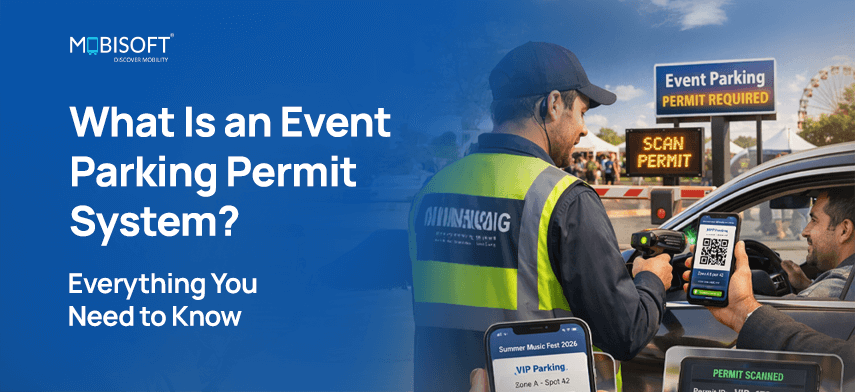
Event parking is often the biggest hurdle for attendees, and many organizers accept it as inevitable. They budget for the delays and brace for the complaints. Yet that first moment of arrival holds a powerful leverage point. A disorganized lot signals poor planning. It tells your attendees that their experience was not fully taken into account.
A streamlined, professional entry does the opposite. It shows respect and creates an atmosphere of quality before the main event begins. Setting up an organized parking permit system gives you a chance to do this. This takes you from just fixing a problem to making your brand look better. You want to make the first impression so smooth that it proves your skill. This guide will teach you how.
What Is an Event Parking Permit System?
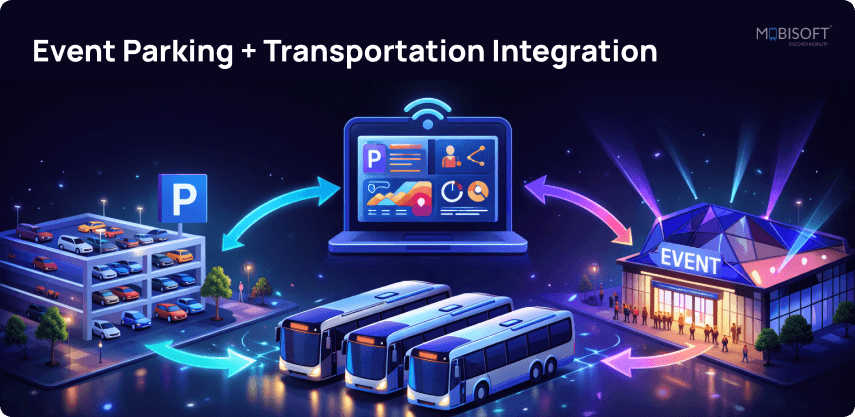
An Event Parking Permit System is a digital tool to handle parking for specific events, often built as a component of larger event transportation systems that manage everything from vehicle access to attendee flow. It lets organizers give out, keep track of, and check event parking permits for guests, workers, sellers, and VIPs without using paper passes or handwritten lists.
You can think of TMS systems as smart traffic guards for your venue. It knows who is authorized to enter before they arrive. It can assign specific zones for different vehicles. It also maintains a live count of available spaces. These systems are versatile tools. They can be deployed for small corporate gatherings or massive music festivals, anywhere you need organized and controlled parking.
How Does an Event Parking Permit System Work?
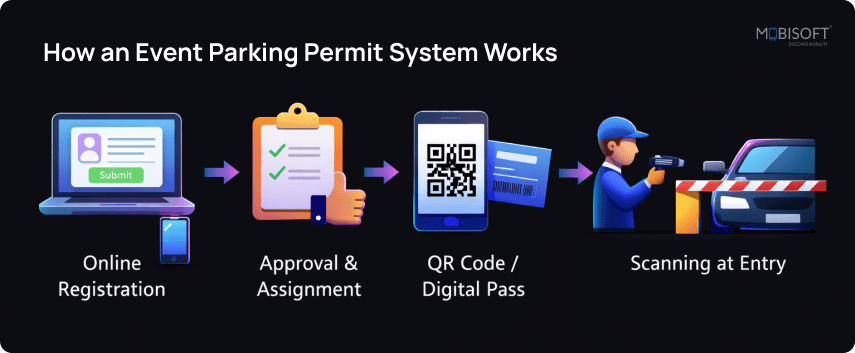
Let’s walk through how most systems work step-by-step.
Setup and Configuration
Organizers first configure the digital environment for their event. This involves defining all parking zones, such as VIP, staff, media, and general admission. Capacity limits are set for each zone, and different permit types are created with specific rules and access rights.
Permit Distribution
Once configured, permits are distributed digitally through an online parking permit process. They can be sent via email or SMS as QR codes or barcodes. For a fully streamlined experience, some systems use license plate recognition, where the vehicle's license plate is the permit itself, requiring no physical pass.
On-Site Access Control
During the event, verification is fast and automated. Security staff or gate systems scan the digital QR code, or a camera automatically reads the license plate upon entry. This process removes manual checks and significantly reduces wait times.
Real-Time Monitoring
A central dashboard provides a live overview of operations through the parking management software. Organizers can monitor occupancy levels in each zone, track vehicles as they check in and out, receive alerts for overcapacity, and see any unauthorized entry attempts in real time.
Post-Event Reporting
When the event ends, the system creates detailed reports. Organizers can study when most people came and left, see how well each parking area worked, and look at traffic patterns. This information helps a lot when planning and making future events better.
When parking data connects with scheduling and vehicle assignments, event booking & dispatch management software helps streamline end-to-end event mobility planning.
Why Event Organizers Use It?
A dedicated permit system converts the complex operation of parking into a strategic advantage with:
Faster Entry and Exit
Long car lines are more than an annoyance. They represent a critical failure point. Digital permit validation slashes processing time to mere seconds. Attendees keep moving. This efficiency prevents traffic from backing up onto public roads, which maintains community relations and keeps entry points safe and clear.
Reduced Operational Chaos
The alternative is a fragmented mess of clipboards, paper lists, and radio chatter. A unified system replaces that chaos with a single source of truth. Your team gains a clear, real-time view of the entire parking operation from one dashboard. This central control reduces stress and allows for calm, informed management.
Improved Attendee Experience
The parking experience frames the entire event. A slow, confusing entry breeds frustration. A quick, seamless process sets a positive tone. Guests remember the ease of having a digital parking permit on their phone and driving directly to an authorized spot.
Better Space Utilization
Guessing where cars should go is pointless without data. vehicle fleet tracking software reveals the live location to show which areas fill up quickest.This lets you redirect traffic before jams happen. You get the most out of every inch of your parking space, fitting in more cars.
Enhanced Security
A digital system acts as a strict gatekeeper. Only pre-authorized vehicles gain entry. This significantly lowers the risk of unauthorized parking or security incidents. Every entry creates an audit trail, adding a layer of accountability that paper passes cannot provide.
Clear Revenue and Cost Control
For paid parking, integrated systems simplify finances. Every transaction is automatically logged and matched to a vehicle. This eliminates cash handling errors and makes reconciliation straightforward. The efficiency gains also reduce the staffing hours needed for manual tasks, improving your bottom line.
Sustainability
Moving away from paper passes is a direct environmental win. For large events specially, enterprise fleet management system reduces the carbon footprint by cutting down on idling vehicles stuck in queues. This commitment to efficiency is both operationally smart and increasingly valued by partners and attendees alike.
For large-scale coordination beyond parking, many organizers rely on event transport solutions to manage vehicle flow, routes, and on-ground operations seamlessly.
Real-World Use Cases
These systems are flexible and fit virtually any kind of event, from corporate conferences and music festivals to wedding guest transportation, where seamless arrival and departure coordination is equally critical, making them an essential part of broader event transport services for organizers managing large or complex gatherings:

Multi-location events benefit even more when parking strategies align with broader planning, as outlined in Optimizing Event Transportation for Multi-Venue Logistics.
Key Features of a Modern Event Parking Permit System

Evaluating a system means looking past the marketing. You need to identify which features deliver genuine control and insight in a modern parking management system. These are the components that turn a simple utility into a strategic partner for your team.
Digital Permits (QR/Barcode)
This is your foundation. A digital parking permit sent to a smartphone is convenient for your guest. For you, it is a versatile tool. You can invalidate a code after one use or set it to activate only during specific time windows. This control prevents sharing and unauthorized re-entry, solving problems that physical passes created.
License Plate Recognition (LPR)
Think of LPR as your silent attendant within an advanced event parking solution. It reads a plate and checks your database instantly. The vehicle does not need to stop. The real test is how the system handles real-world variables. Can it accurately read plates in rain or low light? Does it give your staff a clear alert with a photo log when a mismatch occurs? This is where technology meets practical security.
Real-Time Dashboards
Your dashboard should be a command center, not a spreadsheet. Can you see a simple color-coded map of lot capacity across your event parking areas? Will it alert you before a zone is full? This predictive insight lets you reroute traffic proactively. You manage flow not based on gut feeling, but on live data. That is the difference between reacting and truly directing.
Zone Management
Basic zone setup is simple. Advanced management is dynamic. Can you temporarily redesignate an area for a surprise VIP convoy using your parking permit system? Can you set a rule that allows certain permits entry only during specific hours? Your parking rules need to mirror the fluid nature of live events. Granular control like this makes that possible.
Mobile App or Web Portal
Attendees need easy access to their permits. The online parking permit interface allows them to quickly access it. Your team needs power in their hands. Can a staff member validate a permit, issue an upgrade, or see the live count from a phone in the field? This mobility decentralizes your command. It empowers your team to solve problems on the spot, right where they are standing.
Online Payments
Integrated payment is about more than collecting fees. It is about closing your financial loop within a broader parking management software setup. When payment and permit issuance are linked, reconciliation becomes automatic. You also gain subtle insights. You can see purchase patterns, like a surge of last-minute sales. That data can quietly inform your pricing and sales strategy for next time.
Security Integrations
True security is connective. Your software should speak directly to your physical gates and barriers. A valid scan should trigger the arm to rise. An invalid attempt should trigger an instant alert. This creates a unified parking management system that reduces human latency and error, letting technology handle the routine, so your team can focus on genuine exceptions.
Reporting & Analytics
Post-event data should tell the story of what happened. Look beyond the total number of cars in your event parking permit records. Which entry lane was most efficient? What was the average processing time per vehicle? Did one zone empty faster, suggesting a poor exit flow? These insights are your blueprint. They turn the raw data of one event into a smarter plan for the next, creating a cycle of continuous improvement.
Traditional vs. Digital Parking Management
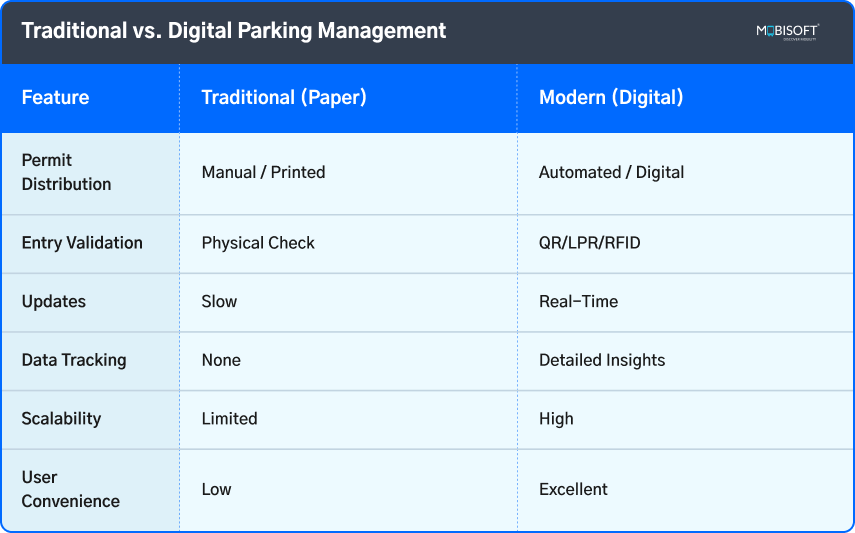
The Technology Behind It
The seamless operation of a modern parking management system rests on a layered technology stack. These components work in concert to replace manual processes with automated intelligence:
Cloud-Based Architecture
The entire system lives online. This gives you access from any device with internet, allowing for remote management and real-time updates. More importantly, it ensures all your data is securely centralized and instantly accessible to authorized users anywhere, at any time. This is an essential requirement for managing event parking at scale.
AI and Machine Learning
This is where data becomes predictive. Algorithms can analyze incoming traffic patterns to forecast peak arrival times. They might suggest dynamically opening another entry lane or alert you that a zone will likely fill within thirty minutes. This moves you from passive observation to proactive management.
ANPR Cameras
Automatic Number Plate Recognition technology is the engine of hands-free entry in an event parking permit system. These specialized cameras capture and digitize plate images in milliseconds. The real sophistication lies in software that can accurately interpret various plate fonts, materials, and conditions, turning a visual image into reliable, actionable data.
IoT Sensors
Internet of Things devices, like in-ground vehicle detection sensors, provide a secondary layer of truth. They verify the physical presence of a car in a specific space, cross-referencing the digital parking permit data. This prevents occupancy fraud and delivers precise, real-time space counts that cameras alone might miss.
Mobile Integration
Tech needs to work for people, not the other way around. You can't skip having a solid mobile setup for guests and workers. It requires websites that adapt to various screen sizes and establish secure connections. This makes sure every time someone gets an online parking permit or checks in, it's simple for them and secure for you.
APIs
APIs are the quiet links in the background. They help your parking management software communicate with other key platforms, like ticket sales systems or customer databases. This teamwork builds a unified data environment, removes information gaps, and ensures a guest’s journey flows smoothly from registration to parking.
The ROI of an Event Parking Permit System
Here’s what you gain when you go digital:
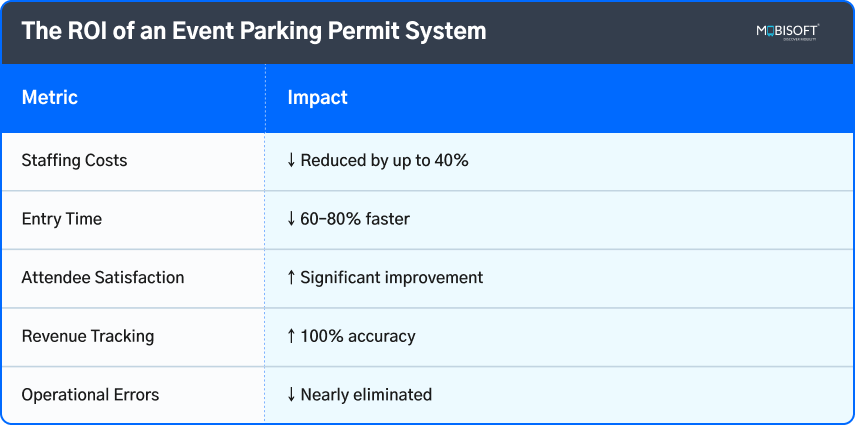
Even small to mid-size events see ROI within one or two uses through reduced labor, smoother vehicle flow, and repeat attendance driven by a better event parking experience. Delays don’t just frustrate guests; they impact revenue, as explained in The True Cost of Poor Event Transportation: Time & Revenue.
How to Choose the Right Event Parking System
Selecting a platform is a strategic decision with lasting impact. The right choice streamlines operations for years; the wrong one introduces new complications. Your evaluation must move beyond price to assess how the system will perform under real-world pressure. Here is how to think it through when selecting an event parking system.
Scalability and Flexibility
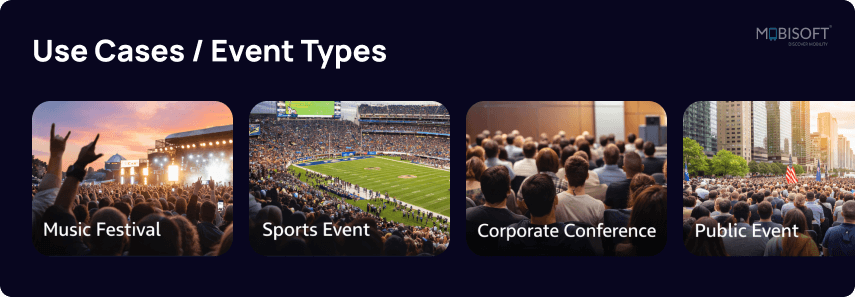
Your needs will change. A system perfect for a 500-person conference may crumble at a 10,000-attendee festival. You need a parking management system that scales effortlessly. More importantly, assess its flexibility. Can it handle varied event types, from a weekly farmer's market and transportation for a wedding to a black-tie gala or a multi-day music festival? True scalability is about architectural robustness and adaptable workflows.
Ease of Use for All Parties
If the system is cumbersome for your staff or confusing for guests, it will fail. Evaluate the administrator interface for intuitive design. Can your team learn it quickly? Then, experience the guest journey yourself. How many steps does it take to receive and use a permit? Friction here directly translates to support calls and delays at the gate during event parking operations.
Integration Capability
No system is an island. It must connect to your existing tools. Verify robust API availability for key integrations with your event registration software, payment gateways, and access control hardware. A platform that cannot speak to your other systems creates data silos and manual work, erasing the efficiency you aimed to gain from a parking permit sypara-after-small-headingstem.
Depth of Analytics
Reporting should empower better decisions. Look beyond basic headcounts. Can you analyze dwell times, peak ingress rates, or staff efficiency per lane? The quality of analytics determines your ability to optimize continuously, turning each event into a learning opportunity for the next.
Security and Compliance Posture
Ask about how they encrypt data, what certifications they have (like SOC 2), and where they keep data. Find out where they store attendee info and how they protect it. Your parking system holds sensitive data; its security needs to be rock-solid.
Quality of Technical Support
When something goes wrong at 6 PM on event day, you need help fast. Evaluate the vendor’s support structure. Is it 24/7? Do they offer phone support, or only email tickets? Ask for references regarding their responsiveness. Reliable support is essential for any parking management software deployed in live environments.
Customization and Branding
Your event’s identity matters. The platform should allow white labeling and branding across communications. Can you tailor the digital parking permit, email templates, and confirmation pages to match your event’s aesthetic? This touchpoint extends your brand experience and should feel cohesive.
For events with unique workflows or integrations, partnering with a custom software development company ensures the parking system aligns precisely with operational needs.
Future Trends in Event Parking
The technology is not standing still. What we consider advanced today will be standard tomorrow. The forward momentum is moving these platforms from reactive tools into intelligent components of the connected event parking ecosystem.
Here is where the industry is heading.
AI-Powered Predictions and Automation
Artificial intelligence will move beyond basic analytics. Future systems will forecast arrival surges with high accuracy by analyzing ticket scan data, local traffic patterns, and even weather. They will automatically adjust resource allocation, perhaps opening additional entry lanes or pre-alerting staff before congestion forms. The goal is predictive mitigation.
Dynamic Pricing and Demand Management
Static parking fees will seem outdated. For paid events, expect platforms to implement subtle dynamic pricing models. Rates could adjust automatically based on real-time demand, purchase timing, or vehicle type. This maximizes revenue optimization while managing demand distribution across various lots and entry times.
EV Friendly Infrastructure Integration
As electric vehicle adoption grows, parking systems will merge with energy management. This could involve directing EV drivers to spaces with charging stations, integrating with charging networks for payment and scheduling, and providing organizers with data on energy usage and carbon offset. Parking becomes part of the sustainability narrative.
Hyper Personalized App-Based Navigation
The journey will not end at the gate. Deeper integration with mapping services will guide attendees turn by turn to their specific assigned space within a vast lot. This reduces internal circling and confusion. The same attendee app could provide post-event directions back to their vehicle, a simple feature that greatly enhances the departure experience.
Sustainability and Carbon Impact Analytics
Reporting will expand beyond logistics. Organizers will receive detailed analytics on the environmental impact of their parking operations. This includes metrics on total idling time reduced, paper waste eliminated, and even estimated carbon emissions saved through optimized traffic flow. This data supports broader corporate sustainability goals and reporting.
The common thread is a change from isolated operations to connected intelligence. The event parking system evolves from a simple gatekeeper into a central data hub that supports revenue optimization, sustainability reporting, and a more seamless attendee journey.
Common Challenges (and How to Avoid Them)
Even great systems can stumble if setup isn’t planned well. Watch out for:
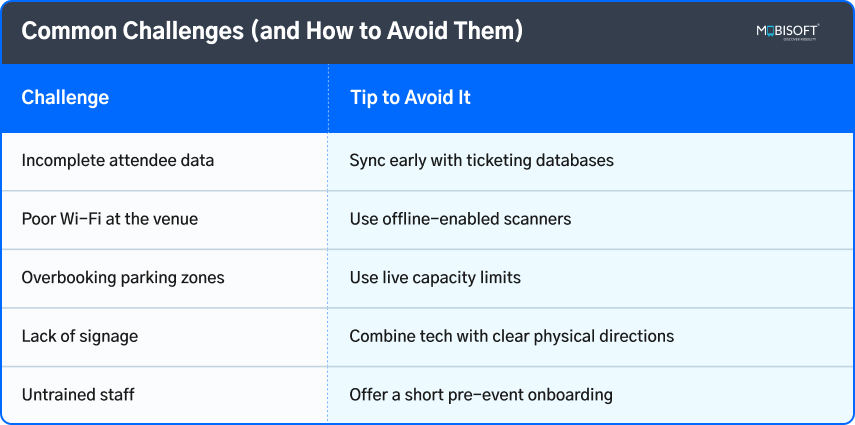
Case Study Example: The 10,000-Car Festival
A real-world example clarifies the impact of a modern event parking system. Consider a major multi-day music festival in California, a logistical puzzle with over ten thousand vehicles expecting access across varied ticket tiers. The previous system relied on paper hangtags and manual verification at each lot. Inevitably, long queues formed, unauthorized entries occurred, and staff struggled with outdated lists.
The organizers implemented a full digital parking permit system with LPR capabilities. Each ticket tier was linked to a specific digital permit and zone. Staff used tablets for real-time validation, and major entry points employed automated license plate readers.
The results were measurable. Vehicle processing time at entry dropped by an estimated seventy percent. Unauthorized entry attempts fell sharply, by over ninety percent, because the parking permit system automatically flagged mismatches. Post-event surveys showed a marked increase in attendee satisfaction scores related to arrival and departure.
Perhaps most importantly, the data revealed unseen bottlenecks. Analytics from the parking management software showed that a specific entry lane was consistently underused. By rebalancing traffic flow the following day, they further smoothed the peak entry rush. The combined savings in reduced labor hours and improved efficiency translated into a direct cost saving of over twenty-five thousand dollars for that single event.
Smarter Parking Powering Memorable Events
Parking is the unspoken chapter of your event's story. It does not have to be a tale of frustration. With the right parking management system, this logistical necessity converts into a seamless extension of your planning. You gain more than efficiency; you gain insight and control.
The data collected helps you refine future events, creating a cycle of improvement. Attendees leave with a positive first and last impression, one defined by smoothness rather than stress. This investment elevates your entire operation. It protects your revenue and your reputation by ensuring the experience begins the moment a guest arrives. Ultimately, mastering event parking is not just about managing cars. When integrated with TMS software logistics, it becomes part of a complete, cohesive experience from curb to content and back again. For a broader view on how mobility planning shapes attendee perception, explore how to Elevate Guest Experiences with Event Transportation Management Solution across large-scale events.
Key Takeaways
- Parking shapes first and last attendee impressions
- Digital permits replace paper and manual checks
- Faster entry reduces queues and road congestion
- Real-time dashboards give full operational visibility
- Zoning improves space utilization and traffic flow
- Automated validation strengthens security and compliance
- Integrated payments simplify revenue tracking and audits
- Data insights optimize future event planning
- Scalable systems support events of any size
- Smart parking elevates brand trust and experience

FAQs
How does a digital permit actually improve security over a paper hangtag?
A paper pass can be copied or passed to another car. A digital permit is a unique, encrypted key. More importantly, it logs every scan with a timestamp. This creates an audit trail. You know exactly which car entered when, and if a code was reused. It replaces guesswork with evidence.
Can our VIP attendees still get a premium experience with this system?
Absolutely. It actually enhances it. You can assign VIPs to a specific, closer zone. Their permits can be set for express lanes using faster LPR. The system ensures that only their vehicles have access to that premium area. It delivers a seamless, exclusive arrival that feels deliberately orchestrated, not just lucky.
What happens if someone tries to use a screenshot of a friend's QR code?
The system is designed to catch this. Many platforms use rotating QR codes that refresh every minute, making a screenshot obsolete. Others validate each code only once. The second scan attempt would be flagged instantly at the gate, allowing your staff to intervene. It protects your capacity planning.
We have a mix of free and paid parking. Can one system handle both?
Easily. This is where the configuration shines. You can issue free permits to specific groups, like staff or performers, while paid permits are managed through integrated checkout. The parking permit software treats both equally at validation, ensuring smooth access control from a single dashboard.
How reliable is the license plate recognition in real conditions?
Modern ANPR is highly robust. It uses infrared to read plates in darkness and handles most weather. The true reliability comes from the process. Good systems pair the plate read with a secondary check, like a vehicle make and model, and provide a clear photo for staff if there's any doubt. It's built for reality.
Do we need dedicated IT staff to run this during the event?
Not typically. The best platforms are built for event managers, not technicians. The interface is designed for quick learning. Once the initial setup is done, day-of operations often involve monitoring a simple dashboard and handling rare alerts. Support is usually a phone call away for peace of mind.
Can the system help us with post-event disputes over parking charges?
Yes, definitely. This is a major advantage because every transaction and entry attempt is logged with proof. If a guest claims they paid but were denied entry, you can instantly verify their payment time and check the gate camera log for their license plate number. It resolves conflicts with data, not arguments.

Nitin Lahoti
Read more
Nitin Lahoti is the Co-Founder and Director at Mobisoft Infotech. He has 15 years of experience in Design, Business Development and Startups. His expertise is in Product Ideation, UX/UI design, Startup consulting and mentoring. He prefers business readings and loves traveling.
 Nitin Lahoti
 December 19, 2025