Everyone has that first spark of a new mobile app idea. The next part is somehow building that idea into software that people want to use. It can be a difficult transition, facing rows of potential mobile app development companies, all promising excellence. The choice feels overwhelmingly difficult because its consequences are so profound. A wrong turn here does not just waste budget; it costs you time, morale, and market opportunity. We want to move beyond the checklists and sales scripts. We want to discuss how you find a mobile app development partner who treats your project with the same intensity you do, becoming a genuine extension of your mission.
To explore proven approaches from experienced teams, check our mobile app development company expertise.
Are You Ready to Start Your Mobile App Build?
If you're an agency, consultant, or MSP evaluating how to support clients who need this kind of build without doing it in-house, our affiliate partner program lets you refer projects like this and earn commission.
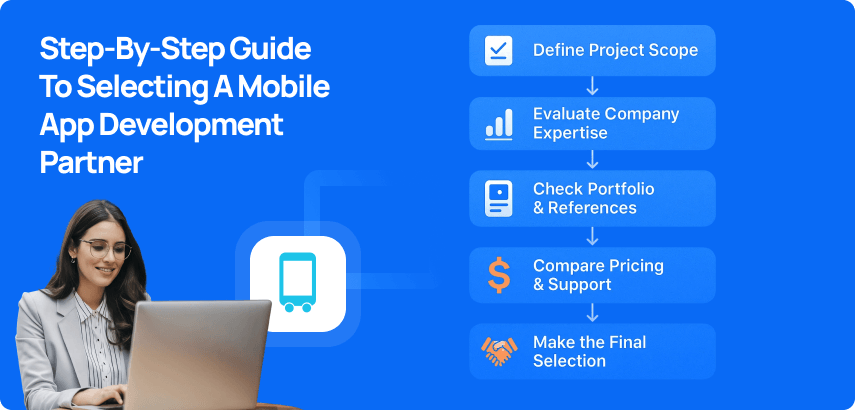
You cannot find the right partner until you become the right client. This foundational step happens long before you contact any mobile app development company.
Conduct an Internal audit
Gather your stakeholders and ask the difficult questions upfront. What problem are we truly solving? Who are we solving it for? Avoid vague answers like "build an app." Define the specific business pain. This clarity prevents scope creep later and aligns your team before external partners join.
Establish non-negotiable goals
Identify the single key performance indicator that will define success for this project. Is it user retention, transaction volume, or operational cost reduction? Every subsequent decision, from features to technology choices, should ladder up to this primary objective. This focus prevents building a product that is wide but shallow.
Define the core KPI
Divide your initial wishlist into three categories. The first is the Minimum Viable Product, without which the app cannot launch. The second contains important features for subsequent iterations. The third holds nice-to-have elements that may never get built. This exercise creates crucial alignment and sets realistic expectations for what phase one entails. It also helps when considering how to choose a mobile app development company for each stage.
For a deeper understanding of planning your app journey, visit this detailed mobile app development services guide for businesses.

What to Look For in App Agency Portfolios?
A portfolio is more than a gallery of polished screenshots. It is a narrative about how a mobile app development company approaches problems, values quality, and sustains partnerships over time. Learning to read between the lines of their showcased work reveals their true capabilities and priorities. Anyone can assemble a beautiful user interface with modern tools. The real test is the substance and longevity of the work beneath that surface.
Case studies
You are looking for a narrative, rather than a brochure. A genuine case study walks you through the problem from the very beginning. It explains the client's stubborn challenge, then outlines the strategic choices made to tackle it. Crucially, it finishes with tangible results. Did user engagement increase? Was there a measurable reduction in operational costs? This focus on measurable outcomes shows a team that is accountable to business goals, not just aesthetic ones. It proves they are a trusted mobile app development partner invested in delivering value, not just deliverables.
App store forensics
This goes beyond simply looking at their work. You need to actively investigate it. Download their apps and interact with them, and notice the details. How long does it take to load a new screen? Do animations stutter, or do they flow smoothly? This feel, often called perceived performance, is what users believe about your app's quality. Then, check the public update history. If the last update you see is from months ago with only a vague note about fixes, that is a meaningful data point. It suggests the relationship may have ended at delivery. In contrast, a history of consistent, substantive updates paints a different picture. This ongoing support is what you require for a product meant to last.
Complexity quotient
Furthermore, you should assess the complexity quotient of their work. Look for one project that seems to break their mold or defy the technically ordinary. Find the one element that demonstrates a unique technical or creative challenge they successfully overcame. This single data point is the best evidence of their depth. It proves they have the engineering muscle and creative problem-solving skills to handle unexpected challenges, moving them from a superficial shop to a reliable engineering partner.
Explore how emerging teams benchmark against the top mobile app developers in the industry.
Measure Cognitive Alignment With Your Team
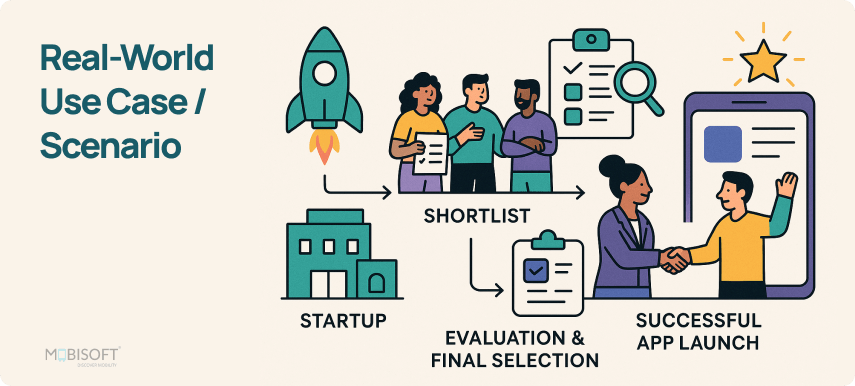
The initial calls with a potential mobile app development partner are your best opportunity to move past their sales pitch and understand their intellectual operating system. This is where you discover if they are strategic thinkers or just order-takers. The goal is to have a dialogue, not an interrogation.
You will gain far better insight by presenting a genuine puzzle from your project rather than quizzing them on tools:
- Describe a real complexity you face, like handling live updates for thousands of users or crafting a seamless checkout flow.
- Listen for the questions they ask back. Do they probe the user's motivation or challenge initial technical assumptions? This curiosity is a hallmark of tips for choosing a mobile app development partner.
- Observe their problem-solving rhythm. Do they immediately jump to a solution, or deconstruct the problem into manageable parts?
- Ask how they would structure a core piece of the system to accommodate future needs. Their explanation shows strategic thinking.
- Do they build rigidly for today, or plan for inevitable change? This balance reflects the approach of top mobile app development companies.
The real purpose of this talk is not to verify their skill; you must assume they are technically capable. It is to see if their problem-solving rhythm matches yours. You are listening for cognitive alignment, finding the best custom mobile app development partner whose thought process complements yours.
Learn how future-ready ecosystems support scalable strategies through modern enterprise mobility solutions.
Decoding the Proposal: The Subtle Art of Seeing Red Flags in Green
Technical skill is the price of entry. The true differentiator, the element that will make or break your project's journey, is temperament. You are assessing whether you can weather storms together, something every leader must evaluate when considering a mobile app development partner.
Transparency
Ask a direct question about how they handle bad news. Do they have a clear escalation path? A mature team will explain its communication cadence for reporting problems early, without sugarcoating. They understand that surfacing issues quickly is a form of professionalism, not a sign of failure. This builds trust that can withstand project uncertainties, which is essential when following the tips for choosing a mobile app development partner.
Testing Compatibility
During your conversations, gently challenge one of their suggestions. Present an alternative viewpoint. Their reaction is incredibly telling. Do they dig in defensively, or do they engage with your perspective and refine their own? A partner sees collaboration as a dialogue, not a monologue. This intellectual flexibility becomes a key factor in any thoughtful mobile app development company selection guide, helping you evaluate how they think under pressure.
Business-outcome curiosity
A developer focused solely on execution will talk about features and functionalities. A partner will steer the conversation toward your revenue streams, how you acquire customers, and what makes you different. When they probe these areas, they are connecting technical decisions to business outcomes. This demonstrates their work is guided by your commercial success, which is what you expect from a trusted mobile app development partner rather than a task-focused vendor.
If you're evaluating the right mobile app development partner for startups, choosing a team with proven expertise can help you launch faster and avoid costly mistakes.
Final Checks Before Hiring Your App Agency
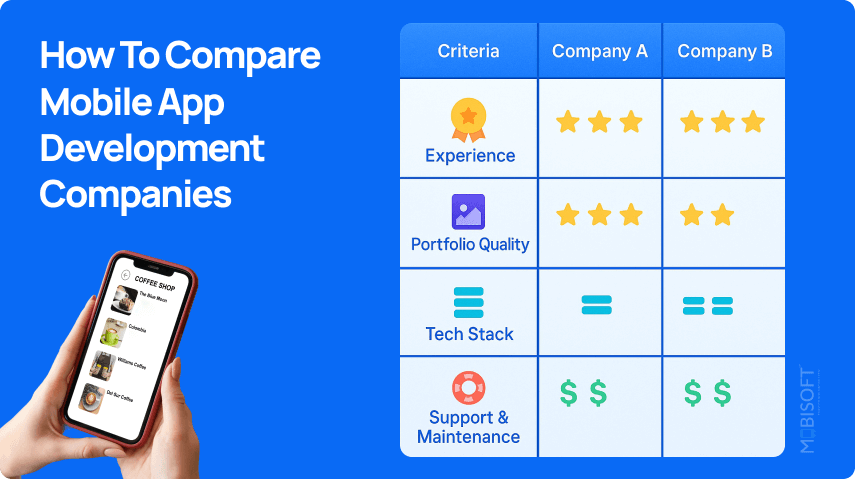
The final checks before signing often focus on contracts and costs. The most revealing insights come from questions that measure character and long-term thinking, not just immediate capability, the same qualities you assess when reviewing factors to consider when choosing an app development company.
Looking for high-performance cross-platform solutions? Explore our React Native app consulting services to build scalable and intuitive mobile apps.
Team continuity checks
- Look beyond their technical roster and ask how long their key people have been on board.
- Frequent team turnover creates hidden drag. It leads to repeated knowledge transfers and a loss of cohesive vision.
- A group that has worked together over multiple projects has likely built a shorthand and a shared history of solving problems.
- That stability translates directly into efficiency and predictability for your build.
Define post-launch success
- Pose this simple question: "What does a successful partnership look like to you six months after we go live?" Their answer reveals everything.
- A project-focused vendor will talk about deliverables and deadlines. A true partner will discuss user feedback, performance metrics, and iteration plans.
- They should see their reputation as tied to your product's ongoing success, not just its initial deployment.
- This alignment matters when you’re deciding how to choose a mobile app development company that will support your product beyond launch.
Ask for constructive hindsight
- When you finally get a reference on the phone, skip the usual questions. Try something different instead.
- Ask them, "Knowing what you know now, what would you do differently when picking and working with your team?" It is a simple change.
- This kind of question tends to lower defenses. People will often share a small, honest piece of advice they would not volunteer in a formal testimonial.
- You might learn about a communication habit to insist on, or how they really handle deadlines under pressure.
These practical nuances about the daily grind of collaboration are what you need.The answer gives you something far more useful than glowing praise ever could.
Ensure long-term stability with consistent mobile app maintenance and support after launch.
Your App Is Ready for a Successful Next Phase
This search ultimately transcends technical vetting. It is a quest for alignment. You are selecting the minds and the temperament that will shape your digital product. You will know you have found the right team, not because they promise perfection. You will know because their questions show they have truly considered your challenges. Your talks will start to feel like joint strategy meetings. Their proposals will feel like blueprints you drafted together. This entire, careful process is how you avoid the common headaches of development. It steers you toward people who see themselves as builders of your long-term asset, not just short-term contractors, the kind of best custom mobile app development partner that supports your vision for years. Stay ahead by exploring insights into the future of mobile app development.
Key Takeaways:
- Start by getting brutally honest with your own team about the single goal this app must achieve; this internal clarity is your strongest filter.
- Treat their portfolio like an investigative reporter. Download their apps, read the update notes, and look for the story of long-term partnership behind the pixels.
- Replace your technical checklist with a problem-solving dialogue. Present a real challenge and watch how they think it through with you.
- Listen for the questions they ask about your business. A true partner is curious about your market and model, not just your feature list.
- In their proposal, the most telling section is the assumptions. A detailed, honest list there signals maturity and realistic planning.
- When checking references, ask what they would do differently. You will learn more from one honest regret than a dozen perfect testimonials.
- You will know the choice is right when working together feels less like managing a vendor and more like collaborating with colleagues.

FAQs
We have a tight deadline. Should we prioritize speed over thorough vetting?
Rarely. Rushing this choice almost guarantees you will lose more time later correcting the course. A proper vetting process is your best method for preventing costly delays during development itself. The right team, selected carefully, will actually accelerate the work through clarity and competence.
How do we evaluate their project management approach if we're not experts?
Ask for a specific instance when a core requirement changed midway. Pay attention to their story. Do they describe a chaotic scramble, or do they outline a structured approach to reassessment and scope adjustment? Their recounting will reveal their true relationship with flexibility.
What's a subtle sign of a truly collaborative partner?
They send you a follow-up email after your initial call with new thoughts or a relevant article. This shows they were actively thinking about your challenge beyond the scheduled meeting hour. It reveals an intellectual investment that separates a true collaborator from a vendor just moving to the next call.
Our project is technically niche. How specific should their prior experience be?
Depth in a core technology matters more than industry buzzwords. A team that has built deeply with your required stack, say a particular real-time engine, is stronger than one with shallow experience in your sector. Probe for proof of advanced implementation, not just familiar terminology.
How should we handle their request for an NDA very early on?
It is a standard and reasonable request. Its presence signals professional caution. However, you can learn from their focus. An NDA that aggressively claims ownership over basic, universal concepts can be a warning sign. It may point to a reliance on process over substantive innovation. A fair agreement focuses on protecting genuine confidential exchange. It establishes a foundation of professional respect, acknowledging that trust is the first deliverable in any partnership.
What if their development team is in a different time zone?
This is common. The critical factor is the intentional overlap. Do they proactively establish a daily core window for synchronous communication? The best distributed teams design their workflow around predictable collaboration time, ensuring issues are resolved quickly, and you never feel out of the loop.

Nitin Lahoti
Read more
Nitin Lahoti is the Co-Founder and Director at Mobisoft Infotech. He has 15 years of experience in Design, Business Development and Startups. His expertise is in Product Ideation, UX/UI design, Startup consulting and mentoring. He prefers business readings and loves traveling.
 Nitin Lahoti
 December 5, 2025