
Honestly, most custom mobile app development teams offer a familiar sequence of plan, design, build, and launch. It's logical, but also a bit like being handed a list of ingredients without knowing what you're actually cooking, or more importantly, who you're serving it to.
The real journey isn't about ticking off technical stages. It's about navigating the deeper decisions that determine whether your app becomes a genuine business asset or a costly lesson. This guide walks that different path. We'll move through essential steps, but through the lens of strategic value, lasting partnership, and tangible return. Consider this a conversation about building not just software, but capability within your mobile app development for business efforts.
Why Clear App Goals Drive Real ROI?
We often jump straight to solutions. The market always has a new feature or a competitor app. The pressure builds as a result, and you are expected to respond. So we start listing functions and screens, imagining the polished final product. This is where the first, and most common, strategic leak happens. We bypass the foundational question that shapes any thoughtful approach towards mobile app development services.
Your Objective Comes First
That question isn't "what should the app do?" It's "What must the app accomplish for our business?" The distinction is everything. A feature list describes mechanics. A business objective defines value. Are we aiming to reduce customer service calls by 30%? Do we need to improve field team productivity by two hours per day? Is the goal to unlock a secondary revenue stream from an engaged user base?
Anchor Decisions With Clarity
Writing down a clear, measurable objective feels basic. And that is why it is likely to be glossed over in the excitement to build. Without it, you have no true north. Every later decision, from selecting a mobile app development partner to prioritizing features, becomes subjective. Budgets can balloon as "nice-to-haves" creep in. Timelines stretch.
Avoiding Costly Guesswork
Your genuine "why" is the keystone. It transforms the project from an IT cost center into a strategic business initiative with a defined return. It gives you the firm ground needed to make tough calls later. When a stunning but complex animation is proposed, you can ask a simple, powerful question: "How does this help us achieve our core objective?" If there isn't a clear answer, you have just saved time, money, and focus within your custom mobile app solutions planning.
This clarity is your first and most important investment. It costs nothing but thought, yet it determines the worth of everything that follows.
If you're evaluating potential partners for long-term collaboration, exploring our custom app development services may help you compare capabilities more effectively.
How to Pick a Reliable App Development Team?
This might be the most important mental transition you make. It sounds simple, but its implications change everything. You are not purchasing a product off a shelf. You are initiating a deep, temporary collaboration to build a piece of your business's future. The dynamic you establish here dictates the quality of the entire journey and influences your overall direction for enterprise mobile app development.
Questions That Reveal Fit
You want your tech partner to know how to handle turbulence. Do they understand your destination, and whether their communication style keeps you informed? Technical skill is your baseline requirement, an entry ticket. What you're really evaluating is partnership character.
Reading Between the Lines
So how do you see past the polished sales pitch? Listen more than you talk. Pay acute attention to the questions they ask in that first meeting. Are they probing your business model, your users' frustrations, your internal processes? Or are they just nodding at your feature list, eager to give you a price? A true partner needs to understand the ecosystem your app will live in. They should be curious about the problem behind the problem.
Spotting Red Flags Early
You can ask them to describe a past project challenge, not just the win. How did they navigate a moving deadline or a key misunderstanding? Their answer will reveal more about their operational integrity than any testimonial. This relationship will have unexpected moments; you need a team that problem-solves with you, not one that hides behind a contract. That’s the signal.
You can ask them to describe a past project challenge, not just the win. How did they navigate a moving deadline or a key misunderstanding? Their answer will reveal more about their operational integrity than any testimonial. This relationship will have unexpected moments; you need a team that problem-solves with you, not one that hides behind a contract. That’s the signal you look for when working with a dedicated app development team.
To explore more structured approaches that support clear goal-setting, you can review our mobile app development process.
Using Prototypes to Validate Product Direction
It's easy to think of a prototype as just a visual preview, a sleek model of the final product. That underestimates its power considerably. In truth, a working prototype is your first real chance to pressure-test your business logic in the context of custom mobile app development services. It turns abstract ideas into something you can click, tap, and genuinely experience. This is where concept meets reality, often with surprising results.
Finding Friction Points
What makes perfect sense in a meeting room can become confusing in practice. A user flow that looks logical on a whiteboard might feel convoluted when your finger has to navigate it. The prototype makes this friction tangible. It transforms "Will this work?" into "This works, but it feels awkward here." That’s invaluable information for teams preparing for mobile application development services. It's the difference between theorizing and knowing.
User Reactions That Matter
So you treat this prototype not as a presentation tool for stakeholders, but as a research artifact. Put it in front of people who mirror your end-user, not just decision-makers. Watch them. Don't speak. Where do they hesitate? What button do they expect to be clickable when it's not? Which feature do they ignore completely? Their silent struggle is your purest form of feedback at this stage. It’s unbiased and direct, and essential before you invest in mobile application development services.
Turning Feedback Into Proof
This process does something else vital. It creates a shared, tangible vision for your entire team and your development partners. Everyone is literally on the same page, interacting with the same model. It eliminates a world of misinterpretation. "I thought you meant the user would do this first," becomes a conversation resolved by simply interacting with the prototype. It aligns everyone, from marketing to engineering, around a single, testable reality, especially important before deeper custom mobile app development begins.
Investing deeply in this phase feels like a delay. It isn't. It is the single most effective way to de-risk the entire project. Changing a flow in a prototype takes hours. Changing that same flow in coded production takes days or weeks, and costs real money. The prototype is your safe, low-stakes environment to experiment, to fail quickly, and learn faster. It validates not just design, but the underlying strategic premise of your app. You emerge with confidence, not just pretty pictures.
For deeper insight into how businesses approach app development, read our mobile app development services for businesses.
Demystifying the Development Process
What Agile Actually Means
It is common to hear agencies say they use an agile process. The word gets used so often that its meaning can blur. For you, the business leader, it shouldn't signify chaos or a lack of plan. Instead, view it as a method of reducing your biggest risk: building the wrong thing. A traditional, linear waterfall approach asks for every detail upfront and builds to that spec, come what may. Agile, when done well, is a recognition that learning happens as we build. It incorporates checkpoints to ensure this learning actively shapes the product.
Review, Refine, Repeat
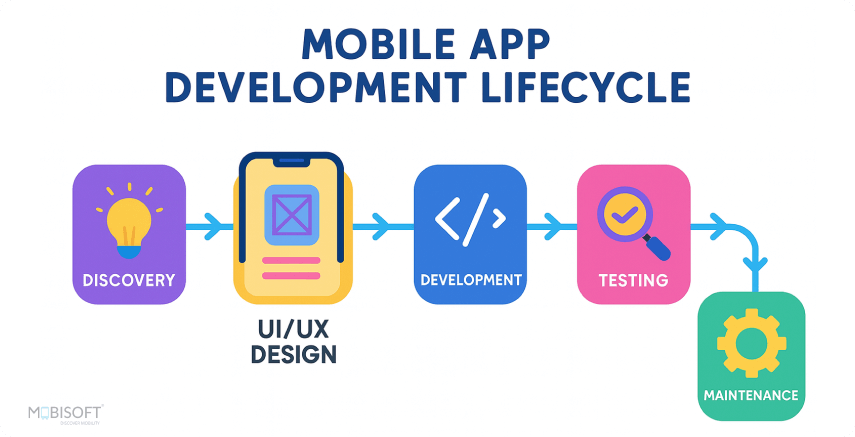
This means development occurs in short, focused bursts called sprints, usually lasting two weeks. At the end of each sprint, you don't just get a report. You get a working piece of software to review. You can see progress tangibly. More importantly, you can provide feedback that gets incorporated into the very next cycle. This regular rhythm creates a constant dialogue between your business needs and the technical build. It turns the project from a monologue into a conversation.
Cut Risk Through Iteration
The feeling this creates is different. Instead of waiting months for a big reveal that might miss the mark, you are involved in a continuous, incremental unveiling. You steer as you go. If a feature isn't hitting the mark, you can pivot or refine it before more resources are invested. This requires trust and active participation, yes. But the reward is control and confidence. The final product is far more likely to be what you need because it was shaped by what you learned throughout the journey, not just by what you guessed at the start, a benefit that strengthens your relationship with your mobile app development partner.
Rigorous App Testing Safeguards Your Brand
We often think of testing as the final gate before launch. A checklist. A hurdle to clear. That view underestimates its role. In truth, quality assurance is an ongoing dialogue with your product, a conversation that safeguards your business reputation every single day. It is the process that ensures your strategic investment functions as promised in the unpredictable real world.
Thorough QA Testing
This goes far beyond hunting for crashes. A good QA process probes the user experience you designed. It asks difficult questions. Ask:
- Does the checkout flow work seamlessly on an older phone with a poor connection?
- Does the app respect a user's privacy settings and data?
- If a notification arrives, does it guide the user to the right place within the app?
These aren't just bugs. There are moments where user trust is either built or broken. A single frustrating experience can lead to an uninstall and a lost customer. Your QA team is the advocate for those users before they ever touch the product.
Immediate Resolution
Integrating this mindset early changes everything:
- When testing is woven into each development sprint, issues are found and resolved when they are small and inexpensive to fix.
- It prevents the terrifying, last-minute scramble before launch where critical problems surface under pressure.
- This proactive stance is what separates a reliable app from a fragile one. It builds a foundation of stability that your marketing can confidently promote and that your customers can rely on.
Review Analysis
Think of your app's store listing. Those reviews are public currency:
- A pattern of one-star reviews citing bugs, battery drain, or glitches is incredibly difficult to overcome. It directly sinks conversion rates.
- A rigorous, empathetic QA process is your primary defense against that fate. It quietly ensures the first impression is solid, and the hundredth use is still smooth.
- In this way, your testing team isn't just fixing code. They are protecting your brand's promise and nurturing the user's goodwill, which is perhaps the most valuable business outcome of all.
To strengthen enterprise-level reliability and governance, you may want to explore our enterprise mobility solutions.
Post-Launch Steps That Drive App Success
There is a palpable energy on launch day. You have earned that moment of celebration. But after that, prepare to change your mindset entirely. If the development phase was about building the right thing, the period after launch is about understanding the thing you built. Especially if it began as custom mobile app development services shaped around your specific goals.
Analyse and Improve
That first version is a hypothesis. You believed a specific set of features would solve a core problem for a defined group of people.
- Now you get to test that belief with real data, not assumptions. This is where your investment in analytics proves its worth.
- You need to move beyond vanity metrics like download numbers. Look at behavioral analytics. How much are they engaging, and at what point are they dropping off?
- Separate the features used daily from the ones less commonly used. This criticism is data and your most valuable strategic guide in ongoing mobile app development for businesses.
Budget and Planning
You transition from a project-based team to a product-focused operation:
- This often means a retained relationship with your developers for ongoing iterations or building internal capacity to manage updates.
- The work now is cyclical: analyze, hypothesize, improve, release. Perhaps a small, overlooked feature is a runaway hit, suggesting a new direction.
- Treating your app as a continuous service is what separates a static digital artifact from a growing business asset.
The market changes. User expectations evolve. Your app can, too. This ongoing evolution, guided by real-world use, is how you build lasting relevance. The launch did not finish the work. It simply handed you the tools to begin the most important part: learning, adapting, and truly serving your audience, the foundation of custom mobile app solutions.
If you're planning long-term evolution for your app, this article on the future of mobile app development offers strategic context.
Turning Custom App Development Into Ongoing Value
When you reach the end of this process, if you have approached it with the mindset we've discussed, you will have something far greater than a piece of software. You will have cultivated a new capability. You will have forged a partnership based on shared challenges and solved problems. And you will possess a digital asset that actively works to further your business goals. That is the true outcome of treating custom app development as a strategic endeavor, not a procurement task.
Look back at the path. It began with your clear "why," the compass for every decision. It moved through selecting a co-pilot, not just a coder. It embraced the prototype as a truth-telling tool and respected the technical foundations as business-critical choices. It unfolded through a collaborative, iterative build, was hardened by rigorous advocacy for the user, and launched into a cycle of perpetual learning. Each of these stages was connected by a common thread: the integration of your business wisdom with technical expertise.
This is not a linear checklist you finish. It is a methodology you adopt. The market will not stand still. Your customers' needs will evolve. The beautiful part of a well-architected custom application is its ability to evolve with them. As a result, you are not left with a static product that slowly becomes obsolete, especially when supported by a dedicated app development team that understands your long-term needs. To work with a team skilled in long-term partnership building, explore our mobile app development company and learn how our professional mobile app developers support ongoing growth.
Key Takeaways
- Begin with a single, quantifiable business goal. This objective anchors every subsequent decision, from partner selection to feature prioritization.
- Treat your development team as an integrated strategic ally. Their depth of inquiry into your operational challenges matters more than a generic portfolio.
- Leverage the prototype phase to interrogate your core assumptions. This interactive model exposes flaws in user logic that documents cannot reveal.
- Approach technical architecture with a long-term perspective. The chosen framework and backend design dictate your future costs and capacity for adaptation.
- Embrace an iterative development rhythm. This method replaces speculative builds with tangible, fortnightly progress you can assess and guide.
- Consider quality assurance a fundamental component of user experience. It safeguards functionality across countless devices and scenario combinations.
- Plan for your launch as the commencement of a learning cycle. Genuine insight emerges from observing how real users interact with your deployed application.
- Ultimately, you are cultivating a lasting digital capability and a collaborative partnership, not merely receiving a finished software product.

FAQs
Our field isn't very digital. Is a custom app overkill? Wouldn't a simple template work?
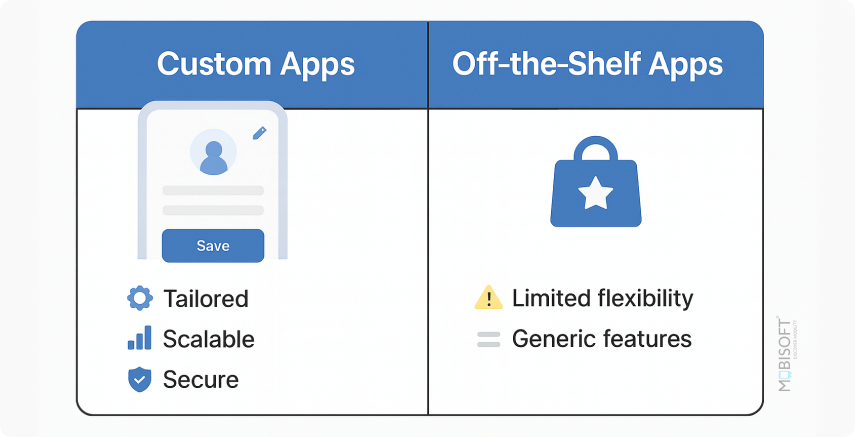
That perceived gap is precisely where the advantage lies. A template answers generic needs. A custom application solves your specific, perhaps unique, operational problems. It can digitize a niche process your competitors ignore, creating a tangible efficiency no off-the-shelf product offers. It’s less about industry trends and more about capturing your own operational intelligence in a tool that gives you a quiet, sustained edge.
How should we handle unexpected delays or technical hurdles during development?
A smart piece of advice is to actually expect them. The difference between a good and great partnership is how they're communicated. You should want early, transparent warnings with clear options: "We hit this. Here's the impact on the timeline. We can meet the original date by simplifying X, or keep Y and adjust the schedule." This puts the business decision back in your hands, collaboratively.
How do we actually measure the return on a custom app? Some benefits feel abstract, like better brand perception?
It's a fair concern. The trick is to connect the app's function to existing metrics you already track. For instance, if the app offers self-service, track the corresponding drop in customer service calls and calculate the cost savings. If it's for loyalty, measure the increase in repeat-purchase frequency or average transaction value among app users versus others. The financial picture emerges by linking new behaviors to traditional business data.
During development, how involved should we be without micromanaging the team?
The agile rhythm is designed for this balance. Your crucial involvement occurs during sprint reviews, where you see working software and provide strategic feedback on direction. Between these reviews, the team needs to focus on building what you just approved. It’s a structured dialogue. Trusting this cycle gives them the space to execute while keeping you firmly in the loop on progress and empowered to steer.
What does the ideal internal team look like to manage this project successfully?
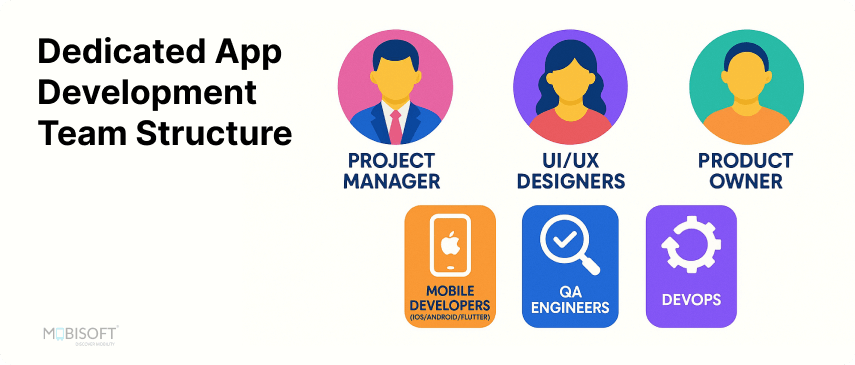
You need a single decision-maker with business authority, like a Product Owner. They bridge the gap between your company's needs and the technical team, making timely calls without committee delays. Support them with a small, dedicated group from key departments for feedback. This creates a clear channel for input without drowning the process in consensus.

Nitin Lahoti
Read more
Nitin Lahoti is the Co-Founder and Director at Mobisoft Infotech. He has 15 years of experience in Design, Business Development and Startups. His expertise is in Product Ideation, UX/UI design, Startup consulting and mentoring. He prefers business readings and loves traveling.
 Nitin Lahoti
 December 10, 2025