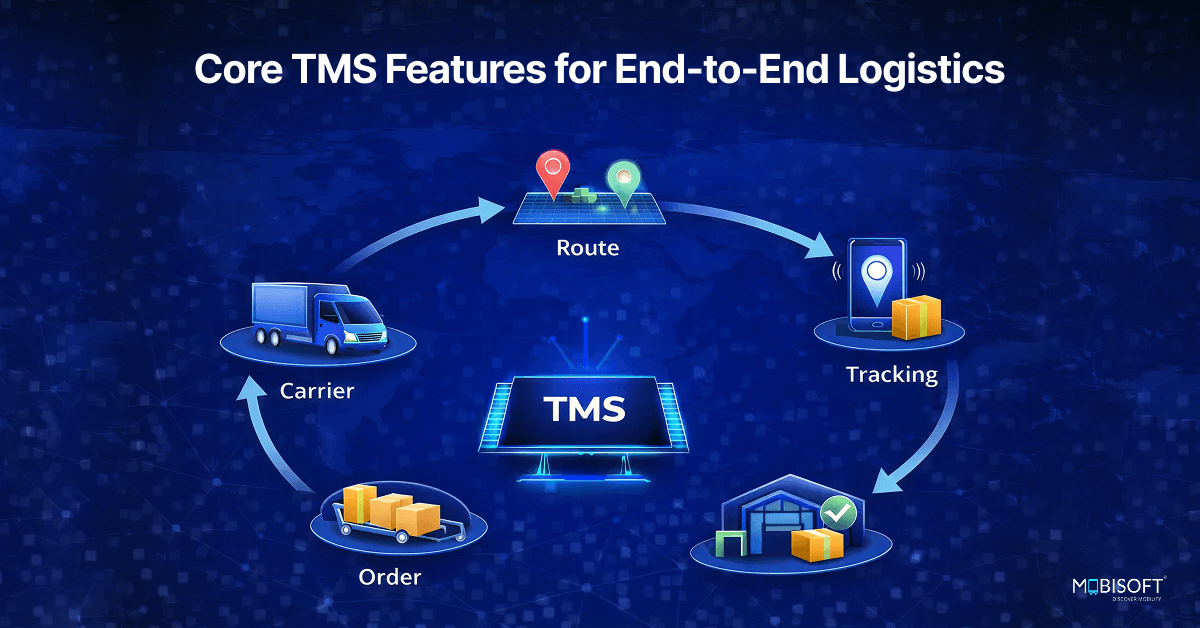
Picture the flow of goods as the definitive pulse of your enterprise. Its rhythm influences cost, dictates customer satisfaction, and measures resilience. Yet for many, this pulse grows faint across vast distances, lost between systems and partners. The complexity of modern supply chains can obscure clarity and take away control over end-to-end logistics management.
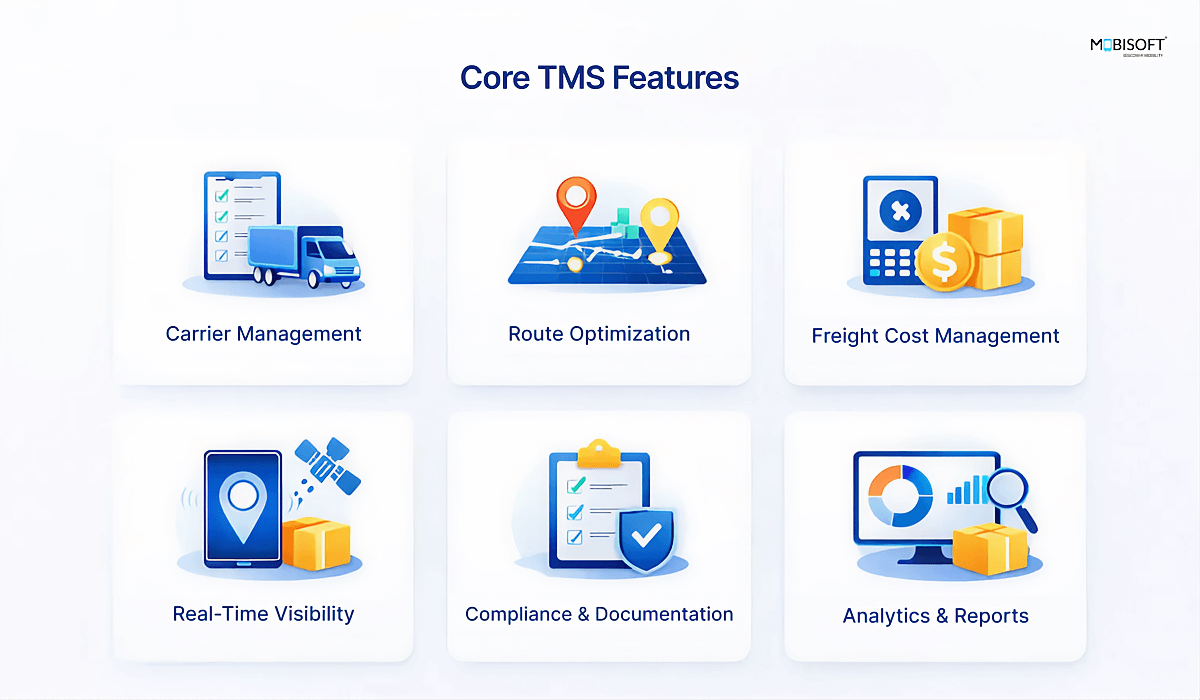
We believe logistics management must now be a conscious, strategic discipline. This demands a different kind of technological partner. An enterprise Transportation Management System (TMS) built on core TMS features should act as the unifying intelligence. Market forecasts show TMS solutions will add an estimated USD 4.74 billion in market value by 2029, largely driven by AI, automation, and smart-connected device integration. This is because TMS translates sprawling complexity into coherent, manageable action. What specific capabilities define this kind of system? The capabilities outlined here are fundamental TMS features. They are the required elements for genuine command over your logistics performance, for turning latent data into a decisive advantage. This is how enterprises secure their operational future.
Explore how a transportation management system brings structure, visibility, and control to complex enterprise logistics operations.
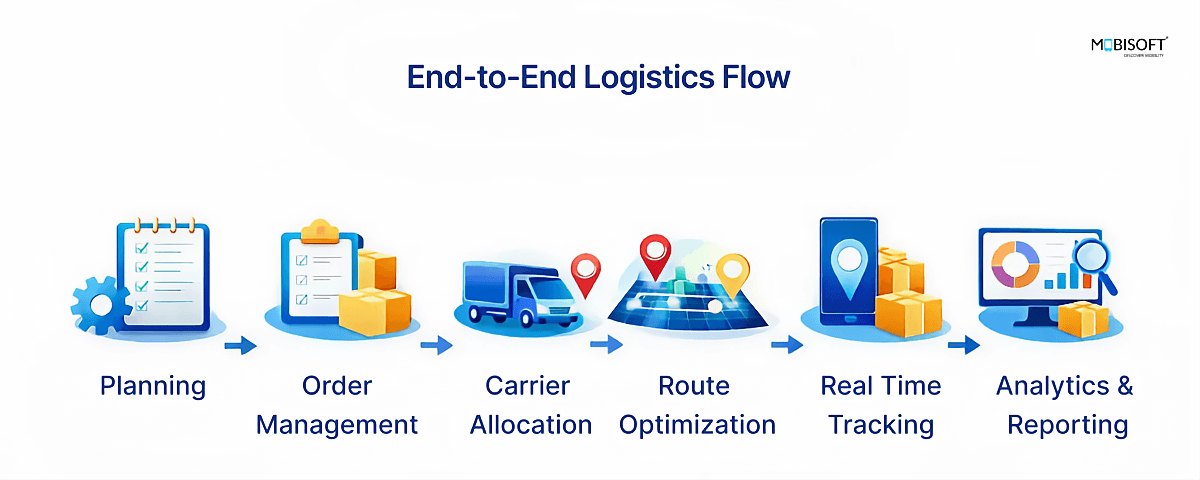
Enterprise Order Management & Shipment Orchestration
Logistics begins long before a vehicle is ever assigned. For an enterprise, the process starts with a flood of orders from diverse systems and geographies. Managing this demands more than simple data entry; it requires intelligent consolidation and strategic routing built on deep operational logic using transportation management system features.A capable TMS integrates seamlessly with your ERP, WMS, and order platforms through TMS integration with ERP and WMS. The system evaluates multi-warehouse priorities, combines orders for efficiency, and plans intricate multi-leg journeys. Perhaps most crucially, it executes this daily orchestration for thousands of shipments without constant manual intervention. The outcome is a foundation of perfect data accuracy with real-time shipment tracking and full traceability from the very first step.
See how modern transportation and logistics solutions help enterprises streamline operations, improve visibility, and reduce freight risk.
Multi-Business Unit & Multi-Entity Support
An enterprise rarely operates as a single system. Different brands, legal entities, and business units each have unique logistics needs. Working in siloes results in fragmented systems, inconsistent data, and obscured financial clarity. Whereas true multi-entity support provides a unified foundation while preserving absolute operational independence in TMS for enterprises.
Governance Through Configuration
Separate master data is non-negotiable. Each unit requires its own customer lists, material codes, and carrier contracts supported by built-in carrier management features. The system must enforce this separation intrinsically, allowing personalized workflows without cross-contamination. This granular configuration is the bedrock of clean data and process integrity.
Clarity Without Compromise
A common platform should not force common practices. The architecture permits tailored operations for each unit while consolidating information for leadership using enterprise TMS software. You gain holistic visibility, alongside the ability to isolate any single unit's performance. This dual perspective turns data into decisive insight.
Ultimately, this structure is about strategic agility. It allows for seamless expansion, ensuring the logistics framework scales effortlessly with corporate growth through a scalable TMS solution. The system maintains order, providing a clear window into every moving part while keeping them perfectly distinct.
Learn how an enterprise transportation management system supports scalability, security, and deep integrations for large, distributed logistics networks.
Transporter, 3PL & Vendor Lifecycle Management
Your logistics network is a living ecosystem, composed of dozens of external partners across enterprise logistics management operations. Managing these relationships manually is untenable. It introduces risk, creates inconsistency, and obscures performance. A mature TMS with strong enterprise TMS features must therefore govern the entire partner lifecycle, transforming vendor management from an administrative task into a strategic function of quality control and continuous improvement.
Onboarding as a Foundation for Trust
The initial onboarding sets the tone. A digital portal for carriers and 3PLs to submit documents, insurance certificates, and service agreements replaces chaotic email exchanges supported by built-in logistics compliance and documentation. This creates an immediate, searchable repository of compliance. It signals professionalism and establishes clear expectations from the very first interaction.
Performance as a Dynamic Metric
Static contracts are insufficient. The system must track real-world performance against agreed SLAs using core transportation management system features. This includes on-time-in-full rates, damage frequency, and communication responsiveness. This data moves evaluations from subjective opinion to objective fact. It identifies your most reliable partners and highlights those requiring discussion or development.
The Mechanisms of Governance
Insight without action is merely observation. The platform needs built-in tools to apply what it learns. Automated scorecards, structured rating systems, and formalized blacklisting procedures allow for reasoned, data-driven decisions about partner allocation using advanced carrier management features. This ensures underperformers face consequences while top performers receive appropriate reward and volume.
This lifecycle approach cultivates a healthier, more responsive partner network. It builds relationships on transparency and mutual accountability, which directly translates to a more resilient and predictable supply chain execution with improved supply chain visibility for your enterprise.
Discover how TMS software for transporters improves carrier collaboration, performance tracking, and fleet optimization across enterprise networks.
Advanced Rate, Contract & Freight Cost Management
Freight expenditure is a primary variable in logistics profitability within any Freight Management System. Managing things by hand, using spreadsheets and individual conversations, breaks down when dealing with enterprise projects. This leads to wrong billing, lost money, and long conversations. To keep things in check, you need a system that captures every little detail about pricing and uses it without making mistakes, supporting continuous freight cost optimization.
Complex Rate Structures
The system must embody your entire pricing reality using modern TMS software features. This means concurrent management of FTL, partial loads, milk runs, and multi-modal journeys across multimodal transportation. It requires zone-based pricing, lane-specific rates, and intricate calculations based on weight or volumetric slabs. Handling minimum charges, breakpoints, and dynamic fuel surcharges is essential. Your real-world complexity needs a digital counterpart.
Automated Calculation
When a shipment is created, the correct rate must be applied instantly, every time through intelligent route optimization in TMS logic. This automation eliminates manual lookup errors and intentional rate manipulation. It ensures invoices generated for your customers and received from carriers are perfectly accurate from the start, closing the door on costly disputes and leakage.
Contract Integrity
Rate agreements are living documents within an enterprise transportation management system. A robust TMS maintains full version control and a clear audit trail for every change. You can see who changed a rate, when, and why. This historical clarity is vital for reconciling charges and provides undeniable evidence during partner negotiations. It turns your contract portfolio from a static filing cabinet into a dynamic, accountable asset.
This financial precision does more than save money. It builds a foundation of trust and clarity with your partners, allowing collaboration to focus on service and innovation rather than correcting administrative errors across end-to-end logistics management.
Freight Allocation, Bidding & Load Optimization
Transportation costs accumulate quickly with every suboptimal decision. Which carrier gets this shipment? Was that the best price available? Is this truck half-empty? Without a structured approach, the answers are inconsistent and expensive. This is why sophisticated allocation and procurement are not just optional TMS features. They are essential disciplines for controlling spend.
- Move beyond manual assignment by using rule-based automation to allocate loads based on cost, historical performance, lane specialization, and available carrier capacity.
- Ensure consistent decision-making by applying the same allocation logic across teams, while using operational data to reinforce partnerships with the most reliable carriers.
- Handle unplanned volumes and new lanes through spot bidding, enabling faster access to capacity without disrupting existing contract strategies.
- Introduce reverse auction workflows to create controlled competition, helping uncover market-aligned rates during volatile or peak demand periods.
- Avoid being locked into unfavorable terms by dynamically procuring capacity when market conditions or volume patterns change.
- Evaluate consolidation opportunities across orders and business units to reduce fragmentation and improve network efficiency.
- Assess vehicle utilization across shipments, identifying underused space and recommending configurations that improve load density.
- Reduce wasted mileage by optimizing routing and load combinations, cutting down unnecessary trips across the network.
- Convert per-shipment decisions into system-wide savings that lower total transportation costs over time.
- Support sustainability goals by reducing total trips and associated emissions through smarter network-level planning.
We believe this way of allocation, procurement, and optimization is where significant margin protection occurs. It transforms freight from a simple cost center into a category managed with strategic precision and tangible financial returns.
Dispatch, Execution & Documentation Management
Execution in reality is quite difficult because of delayed drivers, crowded docks, and urgent customer calls. This is logistics at its most tangible and vulnerable. A Transportation Management System must do more than simply relay instructions here. It needs to provide decisive clarity amid constant change, ensuring control does not dissolve when operations intensify across end-to-end logistics management.
Coordinating the Live Network
The system needs to make changes in real-time, matching trucks with open loading spots and new time slots as they happen, with built-in real-time shipment tracking. It thinks about how one delay affects everything else, suggesting other options before things get too backed up. This kind of strict operation keeps goods on the move.
Documents as Integral Steps
Every shipping tag and proof that something was delivered plays a key role in the process, not just as paperwork. The platform should make accurate, rule-following documents on its own, putting them right into the shipment's digital record with logistics compliance and documentation. This gets rid of passing things from person to person and creates a perfect, easy-to-access record of who had the goods and when.
Anticipating the Exception
Monitoring progress is basic. True insight involves recognizing patterns that signal potential disruption using improved supply chain visibility. A capable system alerts managers to deviations from planned transit times or geofence breaches, providing a crucial window for intervention before service levels are impacted.
Structured Response Protocols
When exceptions occur, ad-hoc responses introduce risk and delay. The technology should guide teams through defined workflows for shortages, damages, or returns supported by enterprise TMS software. This ensures a consistent, audit-ready resolution, allowing personnel to apply their expertise to complex problems rather than being hindered by procedural uncertainty.
We find that execution separates competent logistics from exceptional performance. Real-time freight visibility demand jumped by nearly 47% globally in 2025, underscoring visibility as a core driver of modern TMS value. The right system provides the authoritative clarity and structured flexibility needed to navigate daily volatility, ensuring strategic plans culminate in reliable, documented delivery.
Real-Time Visibility & Control Tower
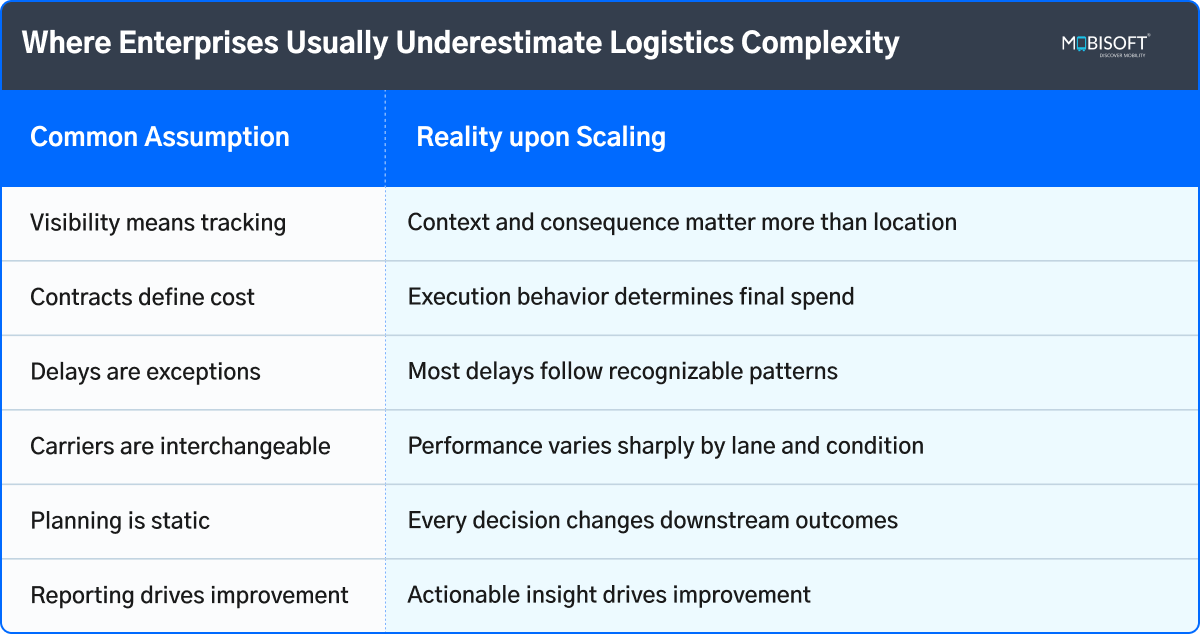
Many logistics platforms offer tracking. Very few deliver genuine visibility. There is a profound difference between receiving sporadic updates and possessing a living, breathing understanding of your entire supply chain in motion with true supply chain visibility. This distinction defines modern logistics competitiveness. Real-time visibility is the critical capability that replaces uncertainty with actionable insight, transforming passive monitoring into active command.
- Seeing a moving dot on a map barely helps at scale. Real visibility connects GPS, telematics, and operational signals into a usable context.
- Geo-fenced arrivals and departures are captured automatically, dock wait times are measured, and every shipment journey is organized into a clear narrative view.
- Precise location and operational data become insights that teams can act on, converting raw numbers into clear, usable intelligence for teams.
- Address issues by examining live and historical transit patterns, allowing the system to identify potential problems before escalation occurs internally.
- Predictive ETAs surface probable delays, giving managers enough time to respond early instead of reacting later operationally.
- All this data converges inside a single control tower dashboard, creating one place to view operations without losing the broader picture entirely.
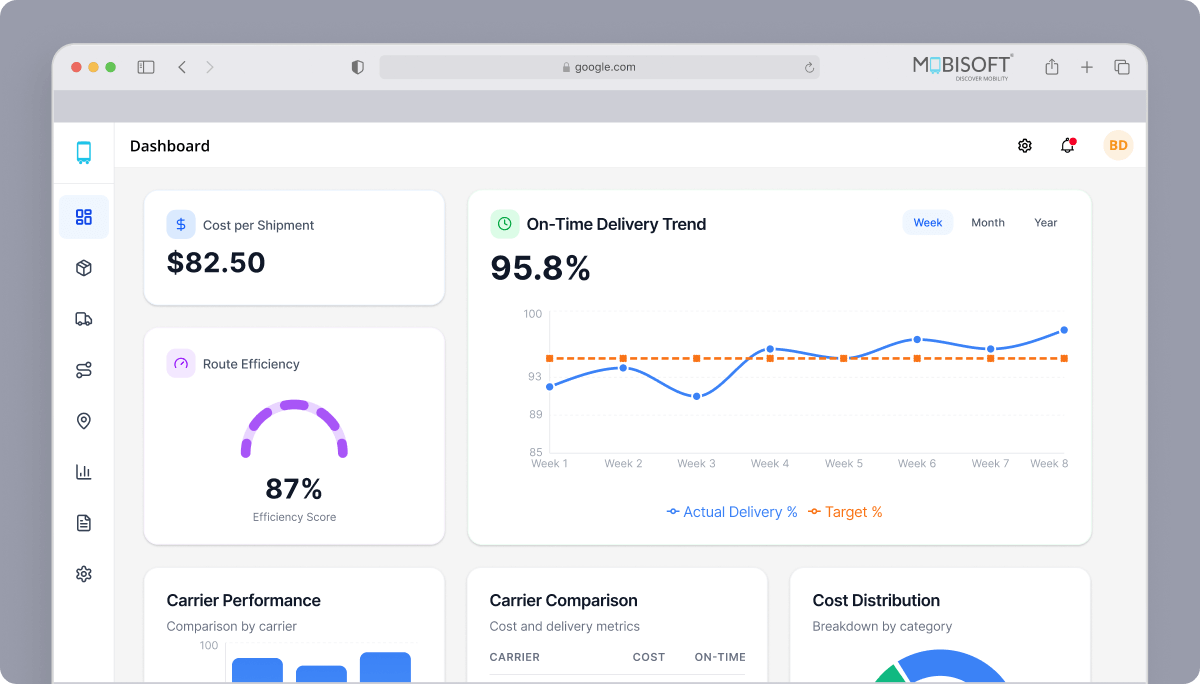

- Thousands of data points across shipments, modes, and partners are synthesized into a panoramic view that reads clearly at a glance.
- Exceptions stand out, bottlenecks become visible, and key performance indicators stay clear, helping teams prioritize what matters.
- The dashboard becomes the central command for logistics decisions, enabling smarter actions that reduce delays and friction across operations.
We believe this elevated visibility is non-negotiable. It is the foundation for proactive service, intelligent exception management, and credible customer communication. It shifts the entire operation from a state of reaction to one of informed, strategic oversight.
Proof of Delivery (POD) & Exception Management
For the customer, delivery is a conclusion. For your enterprise, it is the beginning of a critical financial and analytical process within enterprise logistics management. The moment of handover generates the only immutable truth in a shipment's lifecycle. Capturing this truth accurately and managing the occasions where reality diverges from plan is where logistics accountability is finalized. This stage determines cash flow velocity and provides the raw data for root-cause analysis.
POD as a Financial Trigger
A digital POD is more than a receipt; it is a validated accounting event. The system must capture signature, timestamp, geotag, and images, then instantly link this package to the original order using logistics compliance and documentation. This direct linkage allows for automated invoicing, as the financial system receives irrefutable proof that the contractual obligation was fulfilled. Revenue cycles accelerate.
Intelligent Exception Classification
Not all exceptions carry the same weight. Shortages, damages, or refused items must be categorized immediately at the point of capture by the driver. The platform should guide this process through structured digital forms, capturing data with precision to trigger the correct downstream workflow, whether that is a claim, a return, or a partial credit.
Systematic Resolution Pathways
Once classified, exceptions should follow predefined resolution paths automatically. A return to origin initiates a reverse logistics workflow, while a damage report alerts quality and finance teams. This approach is structured, less ambiguous, and consistent in handling and complying with security across end-to-end logistics software operations.
Data for Network Health
Aggregate data from proof-of-delivery and exception reports provides critical insights. It measures carrier performance beyond standard OTIF metrics, highlights lanes with recurring damage, and flags delivery points with frequent issues. This creates a direct connection between execution and strategizing by being informed about the future carrier selection, packaging strategies, and route planning supported by route optimization in TMS.
We find that excellence here directly strengthens the bottom line. It minimizes disputes, accelerates revenue, and transforms daily problems into a systematic driver for network optimization.
Freight Invoicing, Auditing & Financial Integration
Freight invoicing often feels like the final process to optimise within a modern Freight Management System. Charges arrive from multiple carriers, each with its own formats and interpretations of your contract. Manually piecing this together invites error and delay. The goal here is to establish airtight financial accountability for every mile traveled, which requires a system that acts as your financial gatekeeper and supports freight cost optimization.
Precision in Bill Creation
The engine must automatically generate customer invoices and verify carrier bills against the original shipment execution data using core TMS software features. It natively handles the convoluted math of multi-stop trips, cross-dock charges, and nuanced accessorial fees. This precision ensures that what you bill and what you pay reflects the actual service rendered.
Constant Auditing
Think of auditing not as a periodic task, but as a continuous, integrated function. The technology should scrutinize every line item in real-time, flagging a fuel surcharge that doesn't match the index or a detention fee that violates your agreement. This happens before payment is released, stopping revenue leakage and overpayment permanently.
Closing the Books with Confidence
Validated logistics data must then flow directly into your financial systems through TMS integration with ERP and WMS. Seamless ERP integration ensures freight costs hit the correct general ledger accounts immediately. Your finance team gains clarity with accurate, timely accruals and cleansed data for the month-end close.
The contentious billing cycle becomes a streamlined, trusted exchange. It strengthens partner relationships through transparency and gives you definitive cost intelligence. That intelligence is what turns accounting from a historical record into a tool for forecasting and negotiation.
Compliance, Security & Audit Readiness
For an enterprise, logistics is conducted under the microscope of regulatory and internal governance across enterprise logistics management. The stakes extend far beyond on-time delivery. If you slip up once on rules or let data leak, it can hit your finances and reputation hard. Your TMS needs to be like an intelligent layer, embedding governance into every process within an enterprise transportation management system.
Proactive Compliance Posture
The system must actively manage the lifecycle of all critical documents from carrier insurance certificates to tax exemption forms using built-in logistics compliance and documentation. It should validate their expiry and prompt for renewals, ensuring your network's legal operating status is never in question. This moves compliance from a reactive scramble to a managed discipline.
Centralized Document Hub
All transactional documents, such as e-way bills, shipping manifests, and delivery proofs, must be stored and instantly retrievable within the platform supporting end-to-end logistics software. This creates a single source of truth for any audit, internal or external. It eliminates the frantic, last-minute search through emails and shared drives.
Audit Trails as Assets
Every user action, rate change, and rule modification should be logged as part of the core TMS software features. These detailed records are valuable tools. They give clear proof that you're following the rules, back up your internal checks, and demonstrate operational rigor to auditors and partners alike.
We see this capability as fundamental operational due diligence. A robust framework here does more than prevent fines. It builds institutional trust, secures sensitive data, and allows your logistics team to operate with the confidence that comes from full accountability. It turns a mandatory burden into a tangible mark of reliability.
Understand how a TMS for risk management in enterprises strengthens compliance, audit readiness, and operational resilience.
Analytics, MIS & Decision Intelligence
Data accumulates in logistics operations, but its value remains locked without proper interpretation through transportation analytics and reporting. The transition from simple reporting to genuine decision intelligence represents a significant evolution. We believe the right analytics go beyond describing events to reveal their root causes and suggest actionable pathways forward.
Transforming Reporting into Insight
Standard reports provide historical accounting. True intelligence delivers context. A sophisticated platform analyzes patterns across time, lanes, and partners to improve supply chain visibility. It might reveal that rising costs on a route correlate not with distance, but with specific facility handling patterns. This depth transforms data from a passive record into an active diagnostic tool.
Granular Cost Intelligence
Effective cost analysis requires dissection supported by freight cost optimization. The system must enable examination of spend by lane, weight bracket, service type, and individual accessorial charge. This precise view identifies the true drivers of expenditure. It provides factual support for procurement discussions and highlights opportunities for consolidation or modal shifts that generic summaries miss entirely.
Performance with Context
Evaluating carrier performance requires more than percentage scores. Advanced analytics contextualize performance against market conditions and operational complexities using enterprise TMS features. They help distinguish a systemic carrier issue from a delay caused by a one-time port congestion event. This fairness fosters more productive partnerships and sharper capacity planning.
The objective is clarity that prompts action. A well-designed system presents information intuitively, answering the next logical question before it is formally asked. It turns intelligence into a routine instrument for optimization, ensuring continuous improvement is grounded in evidence rather than instinct.
Learn how smart logistics integrations with TMS connect ERP, WMS, and 3PL systems into one operational ecosystem.
Integration, Scalability & Future Readiness
Choosing a logistics platform is a decision that affects your operations for years to come, with TMS for enterprises. The initial features matter, but the architecture beneath them matters more. You need to ask: Will it connect effortlessly to your other systems? Can it handle the growth you anticipate? Perhaps most importantly, does it have the innate capacity to adopt tomorrow's technology? These questions define strategic viability.
The Necessity of Open Connection
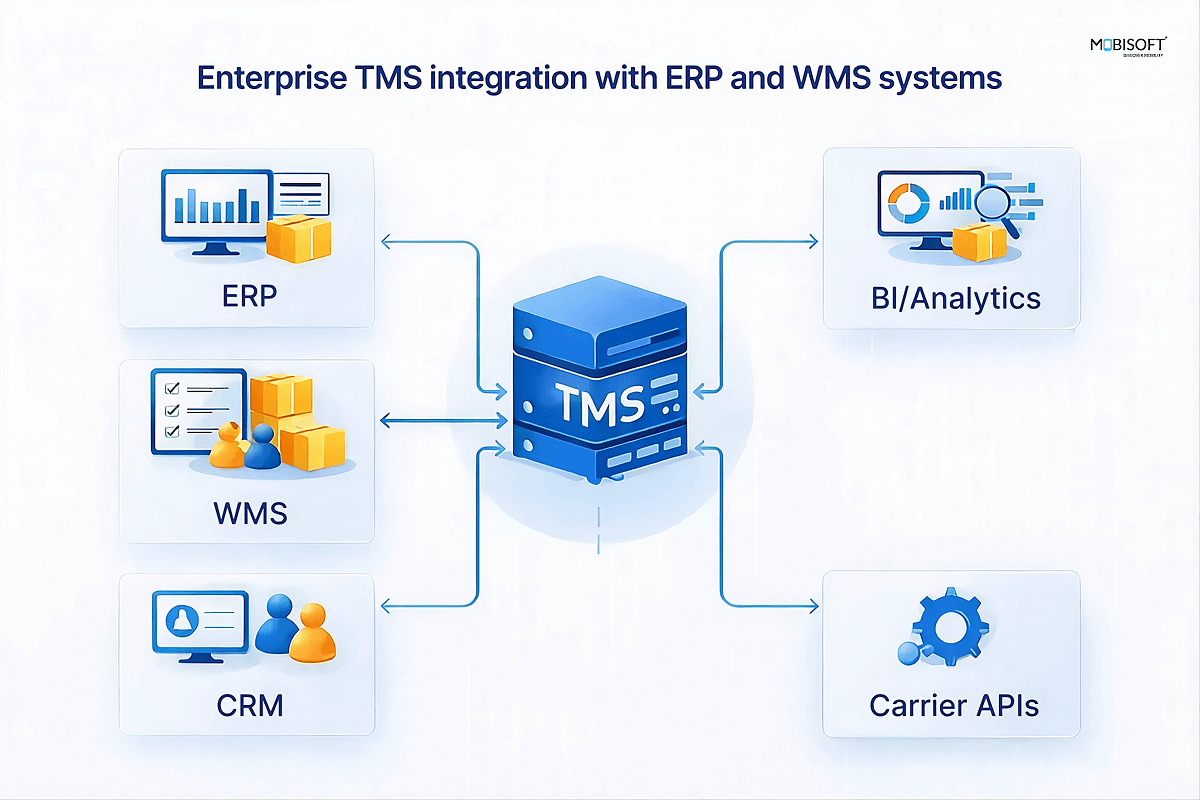
True integration is conversational. An API-first design allows your TMS to have a continuous dialogue through TMS integration with ERP and WMS with your ERP, warehouse systems, and customer portals. This isn't about data transfer; it's about maintaining a single, unified truth across every business function.
Built for Geographic Growth
Scalability is not just about handling more orders. It's about maintaining control as you enter new markets with a scalable TMS solution. The platform must inherently manage different currencies, tax regimes, and regional compliance rules from a single instance. This global capability means expansion doesn't necessitate a new logistical framework or compromised reporting.
An Inherently Adaptive Core
Future-proofing is a practical concern, not an abstract idea. The system should be built on a foundation that welcomes new capabilities. Whether it's embedding AI for predictive load matching or incorporating real-time sustainability tracking, the architecture must allow these tools to plug in seamlessly within cloud-based TMS for enterprises.
We see this as the cornerstone of lasting value. A platform with this forward-looking DNA protects your investment. It ensures your logistics operations are supported by a partner that grows in sophistication alongside your needs, always providing a contemporary foundation for whatever comes next.
See what defines a scalable and secure TMS for enterprises built for growth, governance, and long-term adaptability.
Conclusion
A Transportation Management System brings clarity to logistics. It acts as the central logic that organizes how goods move across your network. Instead of reacting to disruption, you manage a visible, measurable, and continuously improving process.
The features we have discussed are the components of that control. They translate the raw data of daily operations into a strategic overview. This overview lets you diagnose problems, not just react to symptoms. It allows you to negotiate from a position of knowledge, build partnerships on transparency, and promise customers with certainty.
As a result of installing a higher standard of execution, your logistics operation actively strengthens your business. It turns what is often a source of stress into a documented source of reliability and profit. Understand how a TMS for risk management in enterprises strengthens compliance, audit readiness, and operational resilience.
Key Takeaways
- An enterprise TMS brings orders, partners, and execution into one coherent system that replaces operational guesswork with clarity.
- Control begins at order intake, where intelligent orchestration and multi-leg planning establish clean data, traceability, and consistency before freight moves.
- Scalable logistics depends on true multi-entity design, allowing each business unit to operate independently while leadership retains consolidated visibility.
- Structured carrier and vendor lifecycle management replaces ad-hoc coordination with governed relationships built on measurable performance and accountability.
- Precise rate and contract management eliminates billing ambiguity, protects margins, and reduces disputes by enforcing financial accuracy at the system level.
- Rule-based allocation, bidding, and load optimization bring discipline to daily freight decisions, turning fragmented choices into network-level savings.
- Strong execution capabilities keep plans intact during real-world disruption through live dispatch control, automated documentation, and guided exception handling.
- Control tower visibility replaces passive tracking with predictive insight, allowing teams to intervene early rather than react after failure.
- Digital proof of delivery and exception workflows accelerate billing, reduce disputes, and feed execution data back into planning decisions.
- Embedded analytics, compliance controls, and open integration ensure logistics operations remain auditable, adaptable, and prepared for future growth.

Frequently Asked Questions
How does a TMS handle different operational models across business units?
It provides dedicated configuration spaces within a single platform. Each unit operates with its own rules, carriers, and customers. This structure maintains strict data separation for daily operations while allowing leadership to see consolidated performance reports. It supports both independence and unified oversight.
What makes rate management "advanced" in an enterprise context?
It automates the application of complex, real-world contracts. The system calculates charges using multi-dimensional logic like weight slabs and fuel indices without manual input. This precision turns your negotiated agreements into an enforceable standard, directly preventing billing errors and protecting margins.
Can a TMS improve relationships with transporters?
Yes, through transparency and objective data. Shared performance dashboards and digital communication create alignment. The system highlights reliable partners and pinpoints specific issues for others. This fosters fair, fact-based partnerships focused on mutual improvement rather than constant negotiation.
Why is real-time visibility considered a strategic tool?
Because it enables proactive management. Seeing a delay early allows you to reroute shipments, adjust schedules, and inform customers before a service failure occurs. This forward-looking control protects service levels and reduces costly exception management.
What is the practical benefit of an API-first architecture?
It ensures the TMS can connect deeply and seamlessly with your existing enterprise systems, like ERP and WMS. This creates a unified data flow, eliminates information silos, and allows your technology stack to evolve without replacing core components.
How do integrated analytics provide more value than standard reports?
They connect cause and effect. Analytics can link rising lane costs to specific carrier performance issues or warehouse dwell times. This reveals the root of problems, offering actionable intelligence for strategic change, not just historical summaries.
Is digital Proof of Delivery just for verifying delivery?
Its greater value is in accelerating business cycles. An instant digital POD automatically validates the shipment completion. This triggers invoicing and payment processes, greatly improving cash flow and providing an immutable record for accountability.

Ankita Lohakare
Read more
Ankita Lohakare is a TMS expert and Business Development Manager at Mobisoft Infotech. With 3+ years in logistics tech, she helps enterprises, transporters and distributors optimize operations through customized TMS solutions. Her approach delivers 15-30% cost savings, real-time visibility and process automation, ensuring measurable ROI by aligning technology with each clients unique operational needs and growth goals.
 Ankita Lohakare
 February 3, 2026