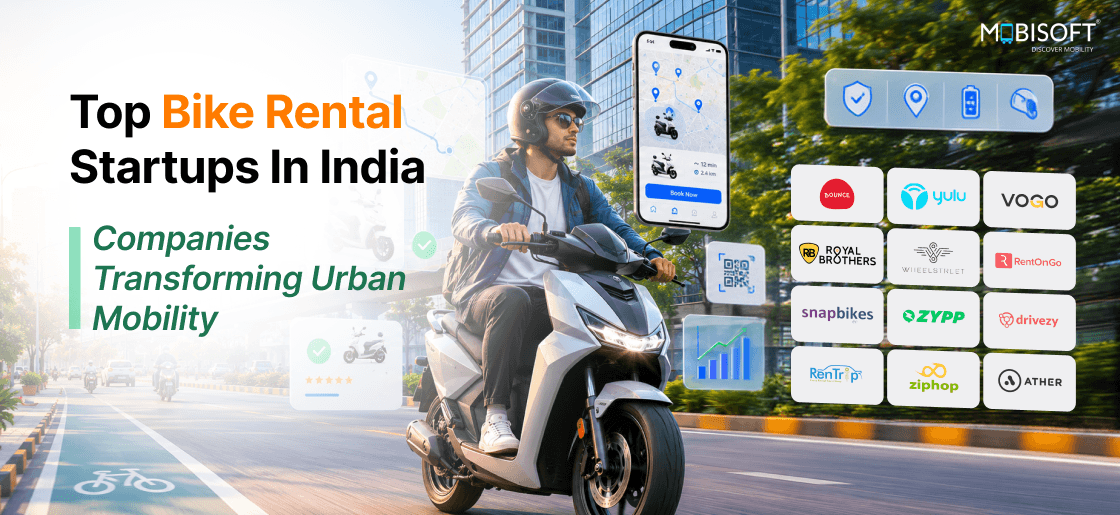
Two wheelers play a central role in how Indians travel and explore cities. This demand has fueled real growth for bike rental startups in India. Entrepreneurs are taking notice of this behavior change. If you are evaluating this space, studying the companies already succeeding matters. It matters as much as understanding the market itself.
Riders today expect quick bookings, fair pricing, and reliable vehicles. Meeting these expectations consistently is what separates lasting businesses from short-lived ones. Building that kind of reliability takes more than a good idea alone. A dependable bike rental booking software is often what makes this possible.
This blog looks at the companies leading this industry today. It also covers the business models behind them. You will also learn what a founder needs before launching a similar venture. By the end, you should have a clearer picture of the real opportunities.
The India Two Wheeler Rental Market in 2026
The bike rental market in India has outgrown its early phase. According to Mordor Intelligence, the market will touch USD 0.39 billion in 2025. It is projected to reach USD 1.06 billion by 2030. That growth reflects a compound annual rate of 18.15 percent. Few transportation segments in India match this pace of expansion. This kind of growth attracts serious investors and ambitious new founders alike.
Several factors explain this rapid growth pattern. Scooters hold 65.18 percent of total market share. Their convenience makes them the top choice for daily commuters. Short-term rentals account for 73.45 percent of total revenue. This shows how travelers and occasional riders drive demand. Corporate and delivery-fleet contracts are expanding fast too. These contracts are growing at roughly 18.25 percent CAGR. Businesses increasingly prefer flexible vehicle access over ownership.
This growth is not limited to major metro cities anymore. Smaller cities are seeing rising demand from tourists and students. Riders want affordable access without the burden of maintenance. Platforms that recognize this shift early tend to grow faster. The market rewards operators who treat every city as genuinely unique. Copying a Bengaluru or Mumbai playbook rarely works elsewhere without changes.
How Urban Transportation Habits Are Changing
Traffic congestion and parking shortages have pushed riders toward flexible options. Owning a vehicle in a crowded city creates constant, avoidable hassle. Renting removes the burden of parking, servicing, and insurance paperwork.
Urban transportation habits are adjusting quickly across income groups. Office commuters, students, and weekend travelers all rent for different reasons. This variety of use cases keeps demand steady throughout the year. A platform built only for tourists misses the larger daily commuting opportunity nearby.
Why This Market Appeals to New Founders
Several practical realities make this a good time to build the bike rental services India wants.
- Vehicle ownership costs have climbed due to fuel prices and maintenance.
- Younger professionals in metro cities now prefer flexible access over ownership.
- Tourism in tier-two and tier-three cities is fueling fresh rental demand.
- Gig economy riders need affordable vehicles without any upfront investment.
- Corporate offices increasingly offer rental partnerships as an employee benefit.
- College towns generate steady, recurring demand across every academic term.
Each trend points toward a market that rewards strong execution. Fleet size alone no longer guarantees success. Technology and thoughtful planning matter just as much as the vehicles themselves. Founders exploring adjacent options often study rideshare app development before finalizing product scope.
Business Models Behind These Startups
Before exploring the companies themselves, it helps to understand their foundations. Most successful platforms follow one of three bike rental startup business model approaches.
Aggregated Fleet Model
In this model, the platform connects riders with vendor-owned bikes. Independent vendors maintain their own vehicles and service quality. The platform manages bookings, payments, and customer support centrally. This approach needs less upfront capital to start.
It also allows businesses to expand into new cities quickly. Growth depends on onboarding reliable vendors rather than buying vehicles. This makes the model attractive for asset-light founders.
The main challenge lies in maintaining consistent quality across vendors. Every vendor may follow different maintenance habits and pricing expectations. Strong vendor vetting and clear service agreements become essential here. Without these safeguards, customer experience can vary widely between bookings.
Self-Owned Fleet Model
Here, a single company owns and maintains every vehicle. This structure gives the business complete control over quality. It also protects consistency across pricing and customer service. Building a fleet requires a heavier upfront investment than aggregation.
Many established bike rental platforms in India still prefer this model. Full ownership protects brand reputation more effectively over time. It also simplifies maintenance scheduling and vehicle standardization. Platforms built on flexible bike sharing software make this standardization far easier to manage.
Capital requirements grow quickly as the fleet expands into new cities. Founders need strong financial planning before committing to this path. The payoff comes through tighter quality control and predictable service standards.
Dockless and EV-First Model
This newer model relies on GPS-enabled vehicles without fixed docking stations. Riders can pick up and drop bikes almost anywhere. It works especially well for short trips within a service zone.
Many EV-focused startups favor this approach for urban commuting. It supports last-mile connectivity between transit hubs and final destinations. Running this model well demands strong GPS tracking and real-time coordination.
Operators need constant visibility into where every vehicle sits. Without this, bikes end up clustered in low-demand areas. Rebalancing vehicles across zones becomes a daily operational task. This model rewards businesses that treat data as a core asset.
Each business model carries different capital needs and operational demands. Choosing the right one shapes nearly every future decision. Many successful companies eventually blend elements from more than one model as they grow.
How Bike Rental Startups Work Day to Day
Understanding how bike rental startups work helps clarify daily operations. Riders typically register through an app and verify their identity first. They then search for available bikes near their current location.
Once a rider selects a vehicle, the app confirms pricing and duration. Payment happens instantly through UPI or a saved digital wallet. The rider unlocks the bike using an in-app code or scan. At the end of the trip, the app closes the booking automatically.
Behind this simple experience sits a layer of constant coordination. Teams monitor vehicle locations, battery levels, and maintenance schedules continuously. This operational layer often relies on strong bike taxi software development expertise. It separates a smooth platform from a frustrating one.
Startups Making It Big in India
The companies below represent different paths within this growing industry. Each one offers a lesson worth studying before you launch.
Self-Drive Rental Veterans
These are some of the longest-running self-drive bike rental companies in India. Their staying power says a lot about steady execution.
Wheelstreet
Pranay Srivastava, Moksha Srivastava, and Mrityunjay Jha founded Wheelstreet in 2014. It began as an aggregator platform based in Bengaluru. The company connects riders with two-wheelers sourced from verified vendors. Its network now spans multiple cities across India.
The founding team built booking technology into its core early on. Most competitors treated technology as an afterthought at the time. For new entrants, Wheelstreet proves something important. A well-managed vendor network can scale without owning a single vehicle.
The company also built a separate application for its vendor partners. This tool helps vendors manage fleet availability and payment records. Giving vendors their own visibility keeps the whole network transparent and reliable.
Royal Brothers
Abhishek Chandrashekar, Akash S, and Kuldip Purohit founded Royal Brothers in 2015. It has grown into one of India's largest fleet-owned operators. According to the company, it now spans 14 states and over 40 cities. This includes a few international markets outside India.
Royal Brothers became known as the largest fleet owner of Royal Enfield motorcycles. The lesson here applies to almost any founder. Specializing in one bike category can build a strong brand identity.
Riders associate the brand with a specific riding experience instantly. This recognition helps attract customers even in unfamiliar cities. A clear category focus can outperform a broad, generic fleet strategy.
RentOnGo
Nikhil Chhabra and Vikas Jalan founded RentOnGo back in 2012. It operates across Bengaluru, Hyderabad, Pune, Delhi-NCR, and Mumbai. Beyond two-wheelers, the company also rents electronics and event equipment. This diversification helps balance revenue across different seasons.
RentOnGo received funding from TVS Motor Company back in 2017. That investment helped expand operations and strengthen its technology platform. Diversifying offerings can support a core rental business during slow periods.
A partnership with an established manufacturer also added credibility instantly. New customers often trust platforms backed by recognizable industry names. This kind of validation can shorten the trust-building process considerably.
Snapbikes
Aditya Puglia founded Snapbikes in 2015, based primarily in Pune. The company later expanded into hill stations and tourist towns. It positions itself as a government-authorized rental operator in the region. This distinction builds trust among customers unfamiliar with rental platforms.
Snapbikes shows the value of targeting underserved regional markets directly. Competing only in metro cities is not the only path forward.
A few smaller regional players continue serving focused customer segments well. ZipHop operates a self-drive model across Goa and nearby regions. RenTrip built its reputation around Pan-India roadside assistance for riders. Their survival proves that a national scale is not always necessary.
These smaller operators often succeed by knowing their local customers deeply. A tourist in Goa has different needs from a commuter in Pune. Founders entering tier-two markets should study these regional players closely. Local knowledge frequently beats sheer scale in these focused segments.
EV and Dockless Micromobility Leaders
This category represents the fastest-growing corner of shared mobility today.
Bounce
Bounce grew out of the Wicked Ride founding team's broader vision. When Bengaluru's metro network expanded, an opportunity became clear. Riders needed a reliable way to cover first and last-mile gaps. The founders built Bounce around dockless, GPS-tracked scooters for this purpose.
According to Inc42, Bounce raised INR 36 crore in 2026. The round came from existing investors, including Accel and B Capital. This funding supports the expansion of its EV rental ecosystem. Bounce demonstrates how infrastructure changes can create entirely new opportunities.
Founders should watch how public transit expansion affects rider behavior. New metro lines, bus corridors, or transit hubs open fresh gaps. Businesses ready to fill those gaps quickly gain a strong advantage.
VOGO
VOGO runs a scooter-sharing network built for short urban trips. Its scooters are often positioned near metro stations and offices. The platform focuses heavily on affordability for daily commuters. Long tourist rentals are not part of its core focus.
VOGO shows how a narrow, well-defined use case builds loyalty. Riders return because the service solves one specific problem well. Trying to serve every rider type at once often dilutes focus and service quality.
Yulu
Yulu operates with backing from Bajaj Auto, a major two-wheeler manufacturer. The company focuses on lightweight electric bikes for short trips. These vehicles suit congested city routes where car ownership feels impractical.
Yulu positions itself as a smart mobility solution for urban India. Partnering with an established manufacturer accelerated its fleet expansion significantly. This case shows the value of strategic manufacturing partnerships early on.
Access to manufacturing scale can solve supply problems many startups face. Building vehicles from scratch takes time, capital, and engineering expertise. Partnering with a manufacturer removes much of that early burden.
Delivery-Fleet Specialists
As e-commerce and food delivery grow, this segment keeps expanding rapidly.
Zypp Electric
Zypp Electric supplies electric scooters and cargo vehicles for delivery riders. According to Mercom India, the company raised USD 15 million in Series C funding. This investment supports EV fleet expansion across 15 Indian cities.
Zypp also runs a franchise model for individual fleet ownership. Entrepreneurs can operate small EV fleets under the Zypp brand. This proves that fleet management expertise can become its own business.
This franchise structure lowers the barrier to entry considerably. Smaller investors can participate without building an entire company alone. It also helps the parent brand scale faster across new territories.
Drivezy
Drivezy built its early reputation on peer-to-peer vehicle rentals. Individual owners could list bikes and cars for rent. Drivezy handled bookings, insurance, and payments on their behalf. This marketplace model created opportunities for everyday vehicle owners.
The company's journey highlights both opportunity and operational complexity. Managing thousands of individually owned vehicles is genuinely difficult work. Founders considering this model need strong systems for quality checks and dispute resolution.
OEM-Backed and Subscription Plays
A newer trend involves vehicle manufacturers entering the rental space directly.
Ather Subscription
Ather Energy, known for its electric scooters, now offers subscription access. Riders can use Ather vehicles without committing to full ownership. This model appeals strongly to EV-curious customers testing the waters.
Subscriptions also give Ather valuable usage data from real riders. That data can improve future vehicle designs and service planning. This feedback loop between rental use and product design is hard to replicate otherwise.
Royal Enfield Rental Alliance
Royal Enfield partners with select operators to offer official rental access. This protects brand standards while still meeting strong rider demand. Riders get a premium motorcycle experience without needing full ownership.
This model shows manufacturers can enter rentals without building fleets themselves. Partnership can be just as effective as direct ownership.
The Role of AI in Bike Rental Platforms
Artificial intelligence has moved from an experimental feature to a practical necessity. Founders entering transportation technology today have tools unavailable just a few years ago. What once required large engineering teams is now available through ready-made platforms. This makes AI adoption realistic even for smaller, newer businesses.
Demand Forecasting and Fleet Redistribution
AI models can study booking history, weather, and local events together. These patterns help predict where demand will spike next. Platforms then redistribute bikes across zones before shortages actually occur.
According to Frost & Sullivan, technology integration is central to this market's maturity. Fragmented operations are steadily becoming organized, data-driven businesses. Founders who plan for this forecasting capability early avoid costly guesswork later.
Dynamic and Demand-Based Pricing
Fixed hourly rates are slowly giving way to smarter pricing. AI-driven engines adjust costs based on demand and availability. This helps operators earn more during peak commuting hours.
Prices stay competitive during quieter periods of the day. Car rental platforms already use similar systems successfully today. Two-wheeler operators are now adopting this same pricing logic. Getting this balance right can meaningfully improve overall fleet profitability.
Predictive Maintenance Through IoT Data
Modern rental bikes often include sensors tracking engine and battery health. AI systems continuously analyze this incoming sensor data closely. They flag vehicles needing service before an actual breakdown happens.
This approach reduces downtime across the entire operating fleet. It also protects the rider experience, which drives meaningful repeat business. Preventing breakdowns before they happen keeps operating costs lower over time, too.
Fraud Detection and Instant Verification
AI-powered verification confirms a rider's license within just seconds. This speeds up onboarding while still reducing fraud risk. Faster signups keep customers from abandoning the process midway.
Manual verification simply cannot scale for high booking volumes. Businesses processing thousands of daily rentals need automated systems here. This also protects the business from repeat offenders using fake credentials.
Customer Support Through Chatbots
Many platforms now rely on chatbots for common customer questions. These bots handle queries about bookings, pricing, and vehicle availability. This reduces pressure on human support teams significantly.
Customers get instant answers regardless of the time of day. Staff can then focus on complex issues needing human judgment. This balance keeps service quality high without inflating support costs.
Damage Assessment Using Computer Vision
Some platforms use computer vision to inspect vehicles automatically. Photos taken before and after a rental get compared closely. This detects scratches, dents, or missing parts without manual checks.
Disputes between riders and operators drop significantly with this system. Manual inspection becomes impractical once a fleet grows large. Automated checks also create a clear, timestamped record for both parties.
AI is no longer reserved for large, well-funded companies only. It is becoming a baseline expectation across serious mobility solutions businesses. Founders who delay adopting these tools risk falling behind competitors quickly.
Challenges Faced By Bike Rental Startups
Understanding these difficulties matters just as much as spotting opportunities.
Vehicle Theft and Damage Risk
Two-wheelers are easier to steal or damage than cars. This raises insurance costs and overall operational risk significantly. Strong GPS tracking and geofencing systems help reduce this exposure. Real-time alerts allow operators to respond before a small issue grows larger.
Regulatory and RTO Compliance
Rental businesses must meet registration rules that vary by state. This creates administrative overhead, especially during multi-city expansion. Founders need local expertise to navigate these requirements smoothly. Working with local legal advisors early can prevent delays during launch.
Fleet Utilization Economics
Idle vehicles generate no revenue while still costing money daily. Maintenance and depreciation continue regardless of actual usage rates. Balancing fleet size against real demand takes constant, careful monitoring. Data dashboards showing utilization by location help founders make faster decisions.
EV Charging Infrastructure Gaps
Operators running electric fleets often face inconsistent charging access. Metro cities generally have better infrastructure than smaller towns. This gap limits how fast EV-first models can expand outward. Some businesses address this by installing their own charging points.
Customer Trust and Onboarding Friction
New riders often hesitate before sharing deposits or personal documents. Unfamiliar platforms naturally raise questions about safety and reliability. Building trust early through transparent pricing matters significantly here. Clear refund policies and visible customer reviews also help ease this hesitation.
These challenges faced by bike rental startups are manageable with proper planning. Problems become far harder once a business ignores them early.
What A Founder Needs Before Launching
Launching a rental business needs more than genuine enthusiasm for bikes. It requires careful planning across several distinct operational areas.
Fleet Sourcing Decisions
Founders must decide early between ownership, vendor partnerships, or both. This choice affects capital needs and control over service quality. It also determines how quickly the business can realistically scale. Many businesses start with one model and gradually blend in the other.
City and Location Strategy
Choosing the right cities matters as much as choosing vehicles. Tourist destinations, college towns, and metro suburbs each behave differently. Every location attracts a distinct customer profile and rental duration. Studying local competition before entering a city saves considerable time and money.
Insurance and Compliance Groundwork
Every rental business needs solid insurance before accepting its first booking. RTO-compliant documentation must be ready ahead of launch day. Skipping this step creates a legal risk that can end operations. Founders should treat compliance as a foundation, not a formality.
The Right Technology Platform
None of this works well without a dependable technology platform. A reliable booking system manages reservations and real-time availability accurately. This backend also needs to support both dockless and station-based models well.
Founders exploring adjacent services have more options worth considering too. On-demand ride features and shared trip functionality both extend the core rental offering. Choosing the right technology partner early prevents costly rebuilding later on.
How Mobisoft Infotech Can Help You Build This Platform
Riding an expensive bike on a long road trip is no longer a dream. Affordable rental access has made this a reality for many riders. This same accessibility is why the founder opportunity keeps growing. Many bike rental startups now offer vehicles for every segment. Some cover short errands, while others focus on multi-day trips.
Self-drive two-wheelers remain reasonable and simple to use for most riders. A portion of riders prefer not to drive themselves at all. Bike taxi app solutions extend the same rental business into driver-assisted rides. Companies like RoadPanda, Wheelstreet, Royal Brothers, and Snapbikes built entire marketplaces around this idea. Their fleets range from a basic Honda Activa to a high-performance superbike.
Mobisoft Infotech builds feature-rich, fully customized platforms for this exact market. Our team provides custom bike rental app development for both Android and iOS. This is backed by scalable software that handles real-world booking volumes. Founders do not need to build this technology from scratch on their own.
How the Platform Works for Riders
A good bike rental experience should feel effortless from booking to return. Our platform is designed around three simple steps.
- Search for bikes and select a choice using a smart booking system.
- Review booking details and pay securely through integrated payment options.
- Pick up the preferred bike and track the ride in real time.
This flow removes friction at every stage of the rider journey. Fewer steps mean fewer opportunities for riders to abandon a booking midway.
What the Rider App Includes
The rider-facing app is built to make bike seeking simple and enjoyable.
- Native Android and iOS apps let riders book any bike in one tap.
- Multiple signup and login options make onboarding quick and easy.
- A seamless browsing experience shows every available rental option clearly.
- Quick search lets riders enter a city and travel dates to see options.
- Rich listings display bike type, ratings, mileage, rent, and availability together.
- Additional details cover insurance, free maintenance, and live tracking information.
- Push notifications, email, and SMS keep riders updated on every booking.
- Seamless payment options let riders pay securely at checkout.
- Promo codes and offers can be applied directly within the app.
- Riders can leave ratings and reviews to share their experience.
- In-app help and support give riders quick access to assistance.
Why Founders Choose Our Bike Rental App Development Solution
Building a platform in-house often costs more time and money than expected. Our end-to-end solution removes that burden for founders entering this space.
- The solution is white-label and fully customizable to fit any brand.
- A pre-built base solution keeps development time and cost efficient.
- Our on-demand expertise gives client partners a genuine competitive advantage.
- The platform is built on a robust stack that handles simultaneous bookings.
- Third-party integrations connect the platform to external tools with ease.
- Founders can choose their preferred payment gateways and currencies freely.
- The solution supports global launches through full language localization.
- Every screen, from the rider app to the admin panel, favors intuitive use.
- Dedicated support helps founders achieve maximum return on their investment.
Our Implementation and Launch Process
Our team follows a structured process to take founders from idea to launch.
- Requirement analysis helps us understand the client's exact needs.
- Popular payment gateways get integrated, with support for new additions.
- Push notifications, email, and SMS alerts get configured across the platform.
- Integration with popular analytics platforms enables ongoing performance tracking.
- On-premises or cloud deployment is offered based on business requirements.
- A full security compliance check runs against relevant regulations.
- Submission and publishing are handled on the Google Play Store and Apple App Store.
- Dedicated technical support continues after launch for smooth operations.
If you are ready to build your own bike rental marketplace, this is the moment. Mobisoft Infotech can help you become the next name here.
Where This Market Is Headed
The Indian two-wheeler rental market is heading toward deeper consolidation ahead. Technology adoption will likely accelerate over the coming years. Electric fleets will probably become the default rather than the exception.
Smaller operators without strong technology foundations may struggle to compete. Better-equipped platforms will likely capture a larger share of riders. This trend rewards founders who invest early in solid systems.
AI-run operations, from pricing to maintenance, will likely become standard practice. This applies across pricing, fleet management, and customer support alike. It may stop being a differentiator within the next decade entirely.
Founders building with this expectation will be better positioned overall. Those treating technology as an afterthought risk falling behind quickly. The gap between early adopters and late movers will only widen further.
Riders themselves are also becoming more comfortable with digital-first services. They expect instant bookings, transparent pricing, and quick support responses. Businesses that meet these expectations early build lasting customer loyalty. Those that ignore them will likely lose riders to faster competitors.
Investors are also paying closer attention to this space than before. Funding rounds across EV mobility and delivery-fleet startups continue steadily. This signals confidence in long-term demand rather than short-term interest. Founders entering now can benefit from this growing investor appetite.
Building for the Long Term
A successful bike rental business is rarely built overnight. It grows through careful city selection, steady fleet expansion, and reliable technology. Founders who focus on these fundamentals tend to outlast market shifts.
Patience matters as much as ambition in this industry. Rushing into too many cities too quickly often strains operations. A steady, well-planned approach usually outperforms aggressive, unplanned growth.
If you are planning to launch a bike rental business, this opportunity is real. Growth here depends on more than fleet size or city coverage. It depends heavily on the strength of the platform behind it. Mobisoft Infotech builds custom mobility platforms for founders entering this space. Our team is ready to help you build the right one from day one.

Frequently Asked Questions
How long does it take to build my bike rental app?
Timelines depend on the features you choose and the platforms you target. A pre-built base solution speeds up development compared to building from scratch. Most founders can launch a functional version within a few months using our bike rental booking software. Custom features or advanced integrations may extend this timeline slightly.
Can I customize the app to match my brand?
Yes. Our solution is white-label and fully customizable from the ground up. You can adjust the app design, features, and user flow to fit your brand. This flexibility also extends to how your fleet management dashboard looks and functions. Founders are not locked into a fixed template or rigid structure.
Will the platform support both dockless and station-based rentals?
Our technology is built to handle multiple operating models within one system. Whether you run a dockless fleet or fixed pickup points, the backend adapts accordingly. This flexibility relies on strong GPS tracking to manage vehicle location across both formats. You can switch models later without rebuilding the platform.
What happens after my app goes live?
Launch is not the end of our involvement with your platform. We provide dedicated technical support to handle issues as they come up. Our team also helps with updates, new integrations, and platform improvements over time. This ongoing support is part of our broader mobility solutions for founders in this space.
Can the platform scale if I expand to more cities?
Absolutely. The platform is built on a robust stack designed for growth. It handles multiple simultaneous bookings without slowing down as your fleet expands. Adding new cities mainly involves configuration rather than rebuilding core transportation technology. This is one reason founders choose a scalable solution from the start.
This content is for informational purposes only and may include AI-assisted research or content generation. While we strive for accuracy, information may evolve over time. Readers are advised to independently verify critical information before making decisions.

Nitin Lahoti
Read more
Nitin Lahoti is the Co-Founder and Director at Mobisoft Infotech. He has 15 years of experience in Design, Business Development and Startups. His expertise is in Product Ideation, UX/UI design, Startup consulting and mentoring. He prefers business readings and loves traveling.
 Nitin Lahoti
 August 8, 2018